
Grandstream On-Premise PBX in Dubai, UAE
A Grandstream UCM appliance gives a business a locally deployed IP PBX for extensions, call control, collaboration and centralized communications, with model options for voice-first or voice-and-video environments.
The right choice depends less on the name printed on the chassis and more on the number of users, peak simultaneous calls, analog line requirements, meeting needs, remote workers and the way the existing LAN and SIP services are designed. FourTeck can help turn those requirements into a practical UCM6300 or UCM6300 Audio configuration.
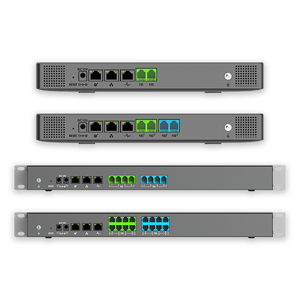
Local PBX Control with a Modern Collaboration Layer
The Grandstream On-Premise PBX UAE requirement usually comes from an organization that wants its core call control to remain on a physical appliance while still supporting current business communication methods. Grandstream addresses that requirement through the UCM6300 family. Instead of treating the PBX only as a dial-tone controller, the platform centralizes extensions, SIP trunks, inbound and outbound routing, interactive voice response, call queues, conferencing, endpoint provisioning, remote collaboration and administrative visibility.
For a buyer, the important distinction is between the full UCM6300 Series and the UCM6300 Audio Series. The full series is intended for unified communications that can include voice, video calling, video conferencing, meetings and related collaboration functions. The Audio range focuses on fundamental business communications such as voice, instant messaging, audio conferencing and web meetings. Both sit within the broader Grandstream ecosystem and can work with Wave for user communications and UCM RemoteConnect for secure remote connectivity. This makes the platform useful when a company wants a locally managed PBX without forcing every employee to remain physically attached to the office network.
What problem does it solve?
It gives businesses a structured way to replace or modernize legacy PBX environments, consolidate extensions and call flows, connect SIP services, and manage communications from a central platform. Organizations can preserve local control while adding mobility and remote-user options when needed.
Who should consider it?
SMBs, larger offices, hospitality sites, clinics, schools, service desks, warehouses, multi-department businesses and multi-site organizations can all be valid candidates. The decisive factor is whether the chosen UCM model has enough user, call and interface capacity for the real deployment.
Where does it sit in the network?
The PBX typically connects to the business LAN and to SIP endpoints or gateways, while SIP trunks link the system to an external voice service. Analog FXS and FXO requirements differ by model. Network quality, VLAN design, QoS and firewall rules remain important parts of a reliable deployment.
For UAE procurement teams, this means a useful quotation should describe the communication design, not merely ask for “a Grandstream PBX.” FourTeck can review the number of extensions, peak call volume, expected SIP trunks, analog lines, branch links, remote users, endpoint quantities, recording needs and installation expectations. That review helps narrow the family to an appropriate model before commercial decisions are made, and it reduces the risk of purchasing too little capacity or paying for expansion headroom the organization is unlikely to use.
Key Business Benefits
The platform is most valuable when its technical capabilities are translated into easier communication, manageable growth and clearer operational control.
Keep Core Call Control On Site
An on-premise appliance gives the organization direct control over extensions, dial plans, routes, queues, IVR structure and many day-to-day PBX settings. This can suit companies that prefer a local communications core, have established IT administration, or need a predictable appliance-based architecture. It also provides a clear boundary between the local PBX role and optional cloud services used for remote access.
Match Capacity to Real Call Demand
The UCM6300 family spans multiple models rather than forcing one appliance size on every business. Buyers can plan around users and concurrent calls, then leave sensible room for growth. This is especially important because extension count alone does not describe a busy service desk, reservation team or support environment.
Simplify Grandstream Endpoint Rollout
Grandstream provides ZeroConfig provisioning for compatible SIP endpoints. In a deployment with many handsets, this can reduce repetitive configuration work and make standard profiles easier to maintain. The business benefit is more consistent endpoint setup and less manual effort during moves, adds and changes.
Extend Communication Beyond the Office
Wave gives users a software-based path to calls, messaging and collaboration from supported desktop, web and mobile platforms. UCM RemoteConnect can support secure remote connectivity and NAT traversal. That combination helps a local PBX serve hybrid workers without redesigning the whole communications model around a cloud-only PBX.
Connect Business Applications
The UCM6300 platform exposes an API for third-party integration, including CRM and property-management scenarios. Integration planning can improve how call information reaches staff and applications, but the exact project still needs compatibility validation with the target software and workflow.
Design for Uptime Instead of Assuming It
Grandstream documents high-availability options in the UCM6300 family, but business continuity is broader than one feature. Reliable voice also depends on power protection, stable switching, correctly designed SIP trunks, backup connectivity, configuration backups and a clear recovery process. FourTeck can help buyers identify which resilience elements belong in the equipment request and which should be addressed as part of installation design.
What Makes the UCM6300 Family Practical
Grandstream combines appliance-based call control with a broad communications feature set. The full UCM6300 range supports voice and video communications, web meetings, mobility and related unified communications functions, while the UCM6300 Audio range concentrates on voice, instant messaging and audio collaboration. Both offer multiple hardware sizes so the PBX can be chosen around the deployment rather than forcing the deployment around a single chassis.
Across the range, buyers can expect three Gigabit network interfaces, integrated PoE+ on the network interface design, Grandstream endpoint provisioning, an Asterisk-based telephony platform, security mechanisms such as secure boot and unique certificates, media protection options, GDMS compatibility and API access. Model-level differences include user and simultaneous-call limits, FXS/FXO port counts, physical mounting and certain redundancy characteristics. Those differences are why a family page should be used to start selection, not to assume every UCM6300 appliance has identical capacity.
Grandstream UCM6300 Family Specifications
This table summarizes verified family capabilities. Exact values must be matched to the selected UCM6300 or UCM6300 Audio model before ordering.
| Specification | Verified family information |
|---|---|
| Brand | Grandstream |
| Families | UCM6300 Series; UCM6300 Audio Series |
| Product type | On-premise IP PBX and unified communications appliance |
| Maximum users | UCM6300: up to 3,000. UCM6300 Audio: up to 1,500. Model dependent. |
| Concurrent calls | UCM6300: up to 450. UCM6300 Audio: up to 200. Model and codec dependent. |
| Analog interfaces | FXS/FXO capacity varies by model. Full UCM6300 models provide 1/2/4/8-port options across UCM6301/6302/6304/6308; Audio models range from no analog ports on UCM6300A to 2/4/8 on selected models. |
| Network interfaces | Three self-adaptive Gigabit ports, switched/routed/dual mode, with PoE+ support. |
| Voice codecs | Includes Opus, G.711, G.722 family, G.723.1, G.726-32, G.729A/B, iLBC, GSM and T.38 fax support. |
| Video codecs | Full UCM6300 Series supports H.265, H.264, H.263, H.263+ and VP8. Audio Series is voice-focused. |
| Quality of Service | Layer 2 and Layer 3 QoS mechanisms including 802.1Q/802.1p, ToS and DiffServ support. |
| Provisioning | Grandstream ZeroConfig and mass provisioning options for compatible endpoints. |
| Management | Web UI, Grandstream Device Management System compatibility and firmware management tools. |
| Integration | Full API available for third-party platform and application integration, including CRM/PMS use cases. |
| Security | Secure boot, unique certificate, randomized default password and support for SRTP, TLS, HTTPS, SSH and 802.1X. |
| Remote access | Wave application support and UCM RemoteConnect compatibility; service options may depend on selected plan and deployment. |
| Mounting | Desktop/wall or desktop/rack depending on model. |
| Warranty / availability | Configuration and channel dependent. Contact FourTeck for current options and warranty guidance. |
The two fields most likely to change the buying decision are simultaneous calls and interface requirements. A 150-user office may need a relatively modest appliance if only a small portion of staff are on calls at once, while a smaller service operation can require more call capacity because agents spend most of their day on the phone. Analog ports are similarly important: a pure SIP environment may not need the same FXS/FXO layout as a site retaining PSTN lines, fax devices, analog handsets or lift/emergency interfaces. Buyers should also separate present capacity from planned expansion so that the chosen model has reasonable headroom without being oversized. Meeting, video, recording, remote-user and high-availability requirements should be confirmed at the same stage because they affect whether the full UCM6300 Series or the Audio family is the better fit.
Configuration and Buyer Guidance
The safest way to choose a UCM is to size the communications workload first and choose the appliance second. A model number without a call-volume, trunk and endpoint plan can produce either unnecessary cost or an undersized PBX that becomes a bottleneck as the business grows.
Peak Concurrent Calls
Estimate how many calls are active at the busiest time, not just how many extensions exist. Include reception, sales, support, queues, conference participants, SIP trunks and any expected seasonal peaks. This is the highest-risk sizing question because call capacity can be reached long before the user count limit.
SIP, PSTN and Analog Needs
Document the intended SIP provider, number of trunks or channels, existing PSTN lines, analog extensions and devices that must remain. FXS and FXO ports vary by UCM model, and a gateway may be more appropriate when legacy connections exceed the appliance interfaces.
Network Readiness
Confirm switching, VLAN design, DHCP, DNS, firewall policy, internet reliability and QoS. Voice quality is affected by latency, jitter, loss and congestion. PoE switching for IP phones, structured cabling and UPS protection often matter as much as the PBX hardware itself.
Endpoints and Applications
List Grandstream phones, third-party SIP devices, door intercoms, paging devices, soft clients, CRM/PMS integrations and special call flows. Compatibility should be checked before purchase, especially where a business application expects a specific API, event or call-control behavior.
Remote and Branch Users
Count home workers, travelling staff and remote offices. Decide whether Wave, remote SIP endpoints and UCM RemoteConnect will be used. This affects security design, internet dependency, account planning and the amount of external call traffic the system must handle.
Quote Information
For a useful quote, send FourTeck the expected users, concurrent calls, SIP/analog line count, number and type of endpoints, remote-user requirement, office locations, desired redundancy, installation scope, quantity and target date. These details make model selection faster and more defensible.
Ideal Business Use Cases
A Grandstream UCM is not tied to one industry. Its fit depends on communication patterns, number of users, call flow complexity and the need to combine on-site telephony with mobility or remote collaboration.
Office and Headquarters Telephony
For a head office with reception, departments, meeting rooms and a mix of desk phones and software users, the UCM6300 family can centralize extensions, auto attendants, ring groups, queues, voicemail, conference functions and SIP trunks. The platform is particularly useful when the IT team wants a predictable local appliance and the freedom to add remote-user capability without moving the complete PBX into the cloud. Model selection should reflect both normal call traffic and busy-hour peaks, with enough room for staff growth.
Customer Service and Call Queues
Organizations that route callers through queues and agents can use the platform’s call-center functions, configurable queues and automatic call distribution capabilities. The buyer should focus heavily on concurrent call capacity, trunk channels, recording expectations and reporting needs because queue environments are typically more demanding than ordinary office telephony.
Hotels and Hospitality Operations
Hotels can combine front-desk communications, room extensions, service departments and property workflows around an IP PBX. Grandstream documents API support that includes PMS integration use cases, but the target property-management system and required integration behavior should be validated before purchase.
Clinics, Schools and Campuses
Sites with many departments can benefit from extension dialing, reception routing, paging/intercom integration and centralized management. Where multiple buildings are involved, the network between locations, failover strategy and emergency-call procedures should be mapped before deployment.
Hybrid and Mobile Teams
A business can keep the PBX appliance on site while giving selected users access through Wave and supported remote connectivity. This is useful when remote work is part of the communication plan but local control remains a requirement. Internet quality and security policy become part of the PBX design.
Multi-Site and Branch Environments
For businesses with branches, the UCM can participate in a wider voice architecture linking sites and users. The design should define whether branches use local survivability, centralized trunks, site-to-site routing or separate appliances, and how failure of internet links affects calling.
Grandstream On-Premise PBX Capacity and Call Architecture
Is this model suitable for a small office or a larger enterprise? The family covers both, but the exact UCM model must be chosen from the expected users and simultaneous calls. Full UCM6300 models scale from hundreds of users to a documented family maximum of 3,000 users and 450 concurrent calls, while UCM6300 Audio models extend up to 1,500 users and 200 concurrent calls.
Concurrent calls are the practical constraint that buyers often underestimate. If 300 employees have extensions but only 30 are typically on outside or internal calls at once, the traffic profile is very different from a 100-agent service desk where most users are continuously active. Conference calls, call queues, recording, remote extensions and SIP trunk channels can also increase demand. A sensible design therefore starts with a busy-hour call estimate and adds growth headroom.
The second capacity question is interface mix. A fully SIP-based office may rely on Ethernet and SIP trunks, while another site may need analog FXS ports for legacy devices or FXO ports for PSTN lines. The UCM6300 models expose different analog port counts. Buyers should list every line and endpoint that cannot move to SIP before choosing the chassis.
Grandstream UCM6300 Remote Collaboration and Hybrid Work
Can an on-premise PBX still support remote staff? Yes. The UCM6300 ecosystem is specifically designed to combine local PBX control with remote collaboration options. Wave provides a supported user application for communication from desktop, web and mobile environments, while UCM RemoteConnect is designed to simplify secure remote connectivity and NAT traversal for remote users and devices.
This hybrid approach is useful when a company wants its call-routing logic and appliance to remain within its own site but still has sales staff, managers, home workers or travelling employees who need access to business extensions. It can also reduce the complexity of exposing PBX services directly through custom firewall rules. Remote access still requires security planning, supported software, reliable internet and the correct RemoteConnect service choice where applicable.
The full UCM6300 Series adds video-oriented collaboration capabilities that are not the focus of the Audio family. Buyers deciding between the two should therefore ask whether video calling and richer meeting use are part of the communication requirement or whether the project is principally voice, messaging and audio collaboration. That single distinction can prevent paying for a platform direction the users will not actually adopt.
Grandstream UCM6300 Security, Management and Integration
Can the PBX fit into a managed business IT environment? The platform includes web administration, GDMS compatibility, security features and an API intended for integration with external applications. That gives IT teams several ways to standardize configuration and connect communications to wider business processes, but the deployment still needs policy, backup and access-control discipline.
Management and Provisioning
ZeroConfig can reduce manual endpoint setup for supported Grandstream SIP devices, while GDMS provides centralized management capabilities for Grandstream deployments. Administrators should still define device templates, firmware policy, administrator roles, configuration backups and change-control procedures.
Application Integration
The UCM API can support third-party integration scenarios such as CRM and PMS workflows. A buyer should provide the software name, version, required call events and expected workflow before assuming compatibility. Integration often needs testing even when both platforms advertise API support.
Grandstream documents secure boot, unique certificates and randomized default passwords as platform security measures, along with protocols such as SRTP, TLS, HTTPS, SSH and 802.1X. These controls are useful, but no PBX is secure merely because features exist. The implementation should define who administers the system, how logs and alerts are reviewed, how trunks are protected against abuse, and how remote access is granted and revoked. For regulated or sensitive environments, the communication design should be reviewed against the organization’s own security and retention requirements.
What Buyers Should Check Before Purchase
The biggest purchase risk is selecting a PBX from the extension count alone. A correct Grandstream On-Premise PBX UAE deployment also depends on simultaneous calls, trunks, analog interfaces, endpoints, network quality, remote access, integration and recovery expectations. Confirm these points before a quotation is finalized.
Configuration Fit
Confirm users, peak calls, SIP channels, queue agents, conferences, recording and future growth. Decide whether the project needs the full UCM6300 Series for voice/video collaboration or the Audio Series for a voice-first design. For analog environments, list every FXS and FXO requirement before selecting a model.
Compatibility Check
Provide the SIP service, phone models, gateways, switches, VLAN plan, CRM/PMS software, door or paging devices and remote-user method. If an integration is business-critical, validate the exact API workflow rather than relying on broad compatibility language. Check rack space, power, UPS capacity and cabling at the same time.
Availability and Warranty
Ask for the exact model code, included accessories, commercial terms and applicable warranty path. Availability can change with model, quantity and supplier status. Cloud companion services, support plans or installation work should be itemized separately where relevant so the buyer understands what is included in the appliance quote and what is optional.
Quote Preparation
Share user count, estimated simultaneous calls, number of locations, SIP and analog requirements, endpoint quantity, remote staff, integration needs, delivery location, required date and installation scope. If replacing an older PBX, include the current trunk type and any analog devices that must remain. FourTeck can then propose a model instead of quoting blindly.
Long-term cost also deserves attention. The appliance is only one part of a communications system. Budget for IP phones, PoE switching where required, structured cabling, UPS power, SIP service, gateways for legacy devices, installation, configuration, number migration, maintenance time and any optional remote-access services. If the organization expects rapid growth or a new branch, tell FourTeck during the initial request so expansion can be planned into the model and network design rather than added as an emergency later.
UAE Availability and Service Support
FourTeck supports Grandstream PBX inquiries in Dubai and across the UAE with model selection, configuration review, quotation assistance, delivery coordination and warranty guidance. Availability can vary by UCM model, order quantity, supplier position and project timing, so the practical next step is to confirm the requirement and request current commercial options rather than assuming a particular appliance is immediately available.
For a replacement project, it helps to provide a simple network and telephony inventory. Include the current PBX, trunk provider, phone models, extension count, analog lines, call queues, receptionist requirements, recording requirements, remote workers and any planned changes. This gives FourTeck enough context to recommend whether the project should remain close to the existing design or use the replacement cycle to simplify the communications environment.
Dubai, Abu Dhabi, Sharjah and Ajman Coverage
Businesses in Dubai, Abu Dhabi, Sharjah, Ajman and other UAE locations can contact FourTeck for Grandstream IP PBX selection and procurement assistance. The city does not change the core product specifications, but it can affect site coordination, delivery planning, installation scope and the way multi-location requirements are structured.
For multi-office projects, send one combined requirement rather than treating each site as an unrelated PBX purchase. Include the user and call profile at every location, local internet connections, SIP trunk arrangement, whether extension-to-extension dialing between sites is required, and what should happen when a WAN link fails. That information lets the architecture be reviewed as a business communications system instead of a collection of appliances. It can also help identify where one model can be standardized across locations and where a higher-capacity appliance is justified.
GCC and Africa Availability
FourTeck also supports business technology inquiries through regional channels serving selected GCC and Africa markets. Requirements from Saudi Arabia, Qatar, Oman, Kuwait, Bahrain, Kenya, Uganda and other locations can differ in supply route, local telecom services, import arrangements, warranty handling and project delivery. For that reason, the correct UCM model should be technically defined first and commercial availability confirmed for the destination country afterward.
A regional deployment should include the number of sites, country for each site, expected user and call count, SIP provider or carrier arrangement, endpoint quantities, installation responsibility and target rollout schedule. Where several countries are involved, standardizing the PBX family and phone models can simplify administration, but each location still needs its own connectivity and regulatory review. FourTeck can use the requirement to coordinate product inquiries and related options through the appropriate channel.
Other Grandstream UCM Options Buyers May Consider
The right alternative is usually another UCM model in the same family. The decision difference is mainly capacity, analog interface count, physical deployment and whether the project needs full voice/video collaboration or a voice-focused Audio platform.
Grandstream UCM6301
A full UCM6300-series option for smaller deployments that still need voice/video unified communications capabilities and limited analog interfaces. It should be evaluated when the expected user and concurrent-call load is comfortably within the model limits.
Grandstream UCM6302
Suitable for buyers needing more user and call headroom than the entry full-UC model while retaining two analog FXS and two FXO ports. Consider it where the communication plan includes mixed SIP and legacy telephony connections.
Grandstream UCM6304
Higher capacity for larger organizations and busier communication environments, with more analog interfaces and rack-mount suitability.
Grandstream UCM6308
The largest full UCM6300 model in the documented series, intended for organizations with the highest user, call and analog-interface requirements.
UCM6300 Audio Series
A voice-first alternative for businesses that prioritize telephony, instant messaging and audio collaboration rather than full video conferencing capabilities.
If two models appear suitable, choose based on the factor most likely to become constrained during the expected service life. For a growing office that may be users; for a contact-heavy operation it may be simultaneous calls; for a legacy site it may be FXS/FXO ports; and for a collaboration-led organization it may be the difference between the full and Audio families. FourTeck can compare the requirement against those decision points before a quote is prepared.
Why Business Buyers Contact FourTeck
A PBX purchase touches telecom services, IP networking, endpoints, power, security and user workflows at the same time. FourTeck’s value in the buying process is helping the customer convert those dependencies into a clearer product request. The goal is not to add complexity; it is to expose the few decisions that matter before equipment is ordered.
This approach is especially useful for replacement projects. Instead of buying the closest modern equivalent to an old PBX, the business can reassess which analog lines remain necessary, whether remote working has changed call patterns, whether PoE switching needs expansion, and whether a modern SIP trunk can simplify the design. The quotation process then becomes part of the migration plan rather than a simple hardware substitution.
Frequently Asked Questions
What is a Grandstream on-premise IP PBX used for?
It provides local business call control for extensions, SIP trunks, inbound and outbound routing, voicemail, IVR, queues, conferencing and related unified communications. The UCM6300 ecosystem can also support Wave users and remote connectivity, so an on-site appliance can serve both office and remote workers when the system is designed for that purpose.
How do I choose between UCM6300 and UCM6300 Audio?
Choose the full UCM6300 family when voice and video collaboration are part of the requirement. Consider the UCM6300 Audio family when the project is principally voice, instant messaging, audio conferencing and audio web meetings. Capacity also differs, so user and simultaneous-call requirements must be checked alongside the collaboration features.
How many users can the Grandstream UCM6300 support?
Capacity depends on the exact appliance. Grandstream documents the full UCM6300 series up to 3,000 users and 450 concurrent calls, while the UCM6300 Audio range reaches up to 1,500 users and 200 concurrent calls. Smaller models have lower limits, so the quote should always identify the exact model and expected call load.
Can FourTeck help size the correct PBX?
Yes. Provide the number of users, peak simultaneous calls, SIP trunk channels, analog line requirements, endpoint quantity, remote workers, integration needs and expected growth. FourTeck can use those inputs to narrow the UCM family to a suitable model and identify related phones, gateways or infrastructure that should be considered in the quotation.
Does a Grandstream UCM work with remote employees?
The UCM6300 ecosystem supports Wave for user communications and UCM RemoteConnect as a companion cloud service for secure remote connectivity and NAT traversal. Exact service options and deployment requirements should be confirmed for the selected project. Reliable internet, firewall policy and user-security practices remain important even when remote access is simplified.
Do I need analog FXS or FXO ports?
Only if the deployment must connect analog devices or traditional telephone lines. FXS typically serves analog endpoints, while FXO connects to analog PSTN lines. Port counts vary by UCM model, and the UCM6300A has no analog FXS/FXO ports. A gateway can be considered when the required analog interface count exceeds the chosen PBX.
What network preparation is required before installation?
Check structured cabling, PoE switching for phones, VLAN design, DHCP/DNS, QoS, firewall rules, internet reliability and UPS protection. Voice quality depends on the network carrying the traffic. A PBX can be correctly configured and still deliver a poor user experience if congestion, packet loss, unstable power or incorrect firewall behavior is left unresolved.
Is the Grandstream On-Premise PBX UAE product always available?
Availability should be confirmed for the exact UCM model and quantity required. Family-level availability does not guarantee that every appliance is immediately available. FourTeck can check current options after the buyer provides the requested model or the technical requirement, delivery location, quantity and target date for the project.
What details should I send when requesting a quote?
Send the preferred model if known, required quantity, number of extensions, peak concurrent calls, SIP trunk or analog line count, phone quantities, remote-user requirement, integration needs, installation scope, delivery location and required date. If the model is not known, FourTeck can start from these requirements and recommend the more appropriate UCM option.
Need Help Choosing the Right UCM Configuration?
FourTeck can review the intended use, required quantity, users, simultaneous calls, SIP and analog connections, endpoint plan, remote access, integration needs, delivery location and warranty expectations before preparing a quote.
Share the model if known. If not, send your user count, busiest-call estimate, trunk type, phone quantity, locations and project date.