Grandstream HT814 v2 in Dubai, UAE
A four-port FXS gateway for bringing analog phones and compatible fax devices onto a SIP-based voice network without replacing every endpoint at once.
The HT814 v2 combines four RJ11 FXS ports, two Gigabit Ethernet interfaces, two SIP profiles, T.38 fax support, secure voice technologies and automated provisioning. It is best suited to offices and projects where analog endpoints must remain in service while call control moves to an IP PBX or SIP platform.
A Practical Bridge Between Analog Endpoints and Modern VoIP
The Grandstream HT814 v2 is designed for a very specific business problem: an organization wants the flexibility of SIP-based communications but still has analog phones, fax machines or specialty endpoints that remain useful. Instead of replacing those devices solely because the phone system has moved to IP, the gateway provides four Foreign Exchange Station (FXS) interfaces. An FXS port supplies the analog line interface expected by a telephone or compatible fax device, while the gateway handles communication with the IP side of the voice environment.
That distinction matters when buying. The HT814 v2 is not intended to accept traditional public telephone network lines as FXO trunks. It is primarily for connecting analog endpoint devices to a SIP service, IP PBX or compatible voice platform. If the requirement is to bring external analog PSTN lines into a PBX, an FXO gateway is normally the relevant product class. Confirming this one point before ordering prevents one of the most common analog-gateway selection mistakes.
For an office, clinic, small hotel area, warehouse, retail branch or facilities team, four FXS ports can be a useful middle capacity. A two-port adapter may not provide enough room when several analog devices must remain active, while an eight-port or high-density gateway may be unnecessary for a small site. The HT814 v2 therefore fits deployments where the required analog extension count is known and modest, but the surrounding network already uses Ethernet and SIP.
Grandstream equips the unit with two Gigabit Ethernet interfaces and an integrated NAT router, so it can fit into network designs that need more flexibility than a basic single-port adapter. Voice features include wideband codec support, dynamic jitter handling, line echo cancellation, caller-ID methods, call waiting, transfer, forwarding, hold, do-not-disturb and three-way conferencing. T.38 fax relay is also supported, with the datasheet noting fallback to G.711 fax pass-through. These capabilities can be valuable when a business still relies on a fax workflow but wants that device attached to the IP voice environment.
For UAE procurement, the correct buying decision should consider more than the model number. FourTeck can review the PBX or SIP provider, required quantity, analog device type, expected caller-ID behavior, fax use, network addressing, VLAN plan, cabling distance and site support requirement. This approach helps buyers select the appropriate device class and avoid discovering after delivery that the issue was not port count but compatibility, line type or deployment design.
Why Four FXS Ports Can Simplify an Analog-to-IP Transition
The strongest reason to choose this gateway is not simply that it has four ports. Its value comes from keeping useful analog endpoints connected while the business adopts SIP call control, Ethernet networking and centralized device management.
Keep Useful Analog Devices in Service
A PBX modernization project does not always require every analog telephone, fax device or specialty endpoint to be discarded. Four FXS ports allow selected devices to continue operating through a SIP environment, which can reduce disruption and help a phased migration make more operational sense. The business can modernize call control first and replace endpoints only where there is a clear functional reason.
Gigabit Network Interfaces
Dual 10/100/1000 Mbps RJ45 interfaces give deployment teams more network flexibility than an adapter that provides only a basic single Ethernet connection. The integrated NAT capability can be useful in suitable layouts, although the final network design should still be planned around the organization’s router, firewall, VLAN and security policy.
Voice Features Beyond Basic Dial Tone
The gateway supports common business telephony functions including caller ID, call waiting, transfer, forwarding, hold, do-not-disturb and three-way conferencing. Codec support includes G.711, G.722, G.723.1, G.729A/B, G.726-32, iLBC and Opus, giving integrators useful options when matching the endpoint side to a SIP platform and network conditions.
A Clear Route for Fax-over-IP
T.38 support makes the HT814 v2 relevant to businesses that still depend on fax transmission. The official specification lists T.38 Group 3 fax relay up to 14.4 kbps with automatic switching to G.711 for fax pass-through. Real-world fax success also depends on the PBX, SIP provider, network quality and remote endpoint, so configuration testing remains important.
Provisioning for Repeatable Deployment
HTTP, HTTPS, TFTP, TR-069, SSH and automated provisioning options help technical teams standardize configuration rather than treating every unit as an isolated manual setup. This becomes increasingly useful when the same analog-extension design must be deployed at several branches, apartments, service counters or customer sites.
Protection for Signaling and Media
TLS/SIPS/HTTPS control mechanisms and SRTP media support give administrators tools for protecting SIP communications when the surrounding platform is configured to use them. Security still depends on correct credentials, firmware management, firewall policy and service-provider settings; the device should be deployed as part of a controlled voice network rather than exposed unnecessarily.
A Compact Gateway With the Functions Buyers Actually Need
For a four-extension analog requirement, the important strengths are straightforward: enough FXS ports for a small site, Ethernet interfaces suited to modern LANs, protocol and QoS controls for voice traffic, secure provisioning options and fax support. The model is also compatible with Grandstream UCM IP PBX zero-configuration provisioning, which may simplify deployment when both sides of the solution are within the Grandstream ecosystem.
Connect analog phones or compatible fax endpoints, with the official specification also noting expansion by peering with an FXS gateway.
Useful for organizing account behavior across the four analog interfaces according to the chosen SIP design.
Layer 2 802.1Q VLAN and 802.1p support, plus Layer 3 traffic treatment options, can help align voice traffic with an organization’s network policy.
Failover SIP server capability, syslog, SSH and browser-based management support day-to-day administration and service continuity planning.
Grandstream HT814 v2 Technical Specifications
The table below summarizes confirmed manufacturer specifications that directly affect purchase and deployment. SIP-provider behavior, PBX interoperability, local power plug type and warranty terms should be checked during quotation.
| Specification | Confirmed Detail |
|---|---|
| Brand / Model | Grandstream HT814 v2 |
| Product Type | 4-port analog telephone adapter / VoIP gateway with integrated NAT router |
| Telephone Interfaces | 4 × RJ11 FXS ports |
| SIP Profiles | 2 SIP profiles |
| Network Interfaces | 2 × 10/100/1000 Mbps RJ45 |
| Voice Codecs | G.711, G.722, G.723.1, G.729A/B, G.726-32, iLBC and Opus; dynamic jitter buffer and advanced line echo cancellation |
| Fax | T.38 Group 3 Fax Relay up to 14.4 kbps; automatic switch to G.711 for fax pass-through |
| Telephony Functions | Caller ID display/block, call waiting, flash, blind/attended transfer, forward, hold, do-not-disturb, 3-way conference |
| Caller ID | Bellcore Type 1 & 2, ETSI, BT, NTT and DTMF-based CID |
| Ring Load / Line Distance | 2 REN, up to 1 km on 24 AWG line |
| Network / Signaling | SIP, TCP/IP/UDP, RTP/RTCP, HTTP/HTTPS, DHCP, DNS, NTP, TFTP, SSH, STUN, SIP over TCP/TLS, SRTP, SNMP, TR-069 and related protocols |
| QoS | Layer 2 802.1Q VLAN and 802.1p; Layer 3 ToS, DiffServ, MPLS and traffic shaping |
| Provisioning / Management | HTTP, HTTPS, SSH, TFTP, TR-069, AES-secured automated provisioning, syslog and browser-based remote management |
| Security | SRTP media support; TLS/SIPS/HTTPS control options; AES-based provisioning protection |
| Power | 100–240 VAC, 50–60 Hz input; 12 V / 1.0 A output power supply |
| Operating Environment | 0–50°C operating; -10–60°C storage; 10–90% non-condensing humidity |
| Dimensions / Weight | 28.5 × 130 × 90 mm (H × W × D); 0.29 kg |
| Compliance | FCC / CE / RCM, K.21 |
Choosing the right configuration starts with the analog side. Count every device that genuinely requires an FXS port and leave sensible capacity for expected changes. Four active analog devices fit the native port count; if the project is already close to or above that number, it may be more efficient to evaluate a higher-density gateway rather than immediately planning multiple small adapters. Next, confirm that the SIP service or PBX supports the required codec, DTMF method, caller-ID behavior and fax method. A feature appearing on both datasheets does not automatically guarantee that two platforms will behave identically under every configuration. For fax in particular, verify T.38 support across the full path or plan and test the required pass-through method. Network administrators should also determine whether voice will use a dedicated VLAN, how QoS is marked, how the device receives addressing, whether remote management is permitted and which provisioning method will be used. Finally, check physical installation: power outlet, Ethernet availability, analog cabling quality and line distance. FourTeck can use these details to help turn a model request into a deployment-ready quote rather than a box-only purchase.
Configuration and Buyer Guidance
The correct ATA is chosen by line type, endpoint count and platform compatibility—not by port count alone. Before requesting a quote, answer the following questions so the product can be matched to the real voice environment.
Do you need FXS or FXO?
This is the highest-risk decision. FXS ports connect analog endpoint devices such as phones. FXO ports are used for a different purpose, typically interfacing with analog PSTN lines. If you are unsure, describe what cable currently plugs into the device and what it connects to.
How many analog endpoints remain?
Count phones, fax machines and any specialty analog devices separately. If four ports will be fully consumed on day one and expansion is likely, compare the operational simplicity of a larger gateway against adding another small ATA later.
Which PBX or SIP provider will register it?
Share the platform name, deployment type and any provider requirements for SIP transport, authentication, codecs, DTMF, NAT traversal, caller ID and fax. Compatibility review is especially useful when replacing an older ATA without changing the rest of the phone system.
How will the device sit on the network?
Confirm Ethernet availability, IP addressing, VLAN policy, firewall rules and whether the integrated NAT router will actually be used. In many business networks, routing remains the job of the existing firewall while the ATA operates as a managed voice endpoint.
Is fax or special analog signaling required?
Fax reliability depends on the complete call path. Caller-ID standards, pulse dialing, disconnect supervision and ring-load requirements may also matter with older or specialized endpoints. List these functions before deployment so they can be tested instead of assumed.
What level of implementation help is required?
A buyer may need only hardware supply, or may need help with provisioning, PBX registration, VLAN planning, testing and handover. Include the delivery site, target date, quantity and support expectation so the quotation reflects the actual project.
For a useful FourTeck quote, provide the required quantity, PBX or SIP provider, number and type of analog devices, whether fax is involved, installation location, target delivery timing, existing network details and any preferred warranty or configuration support. Those details are more valuable than a generic request for a four-port adapter because they reveal whether the HT814 v2 is the right product class and whether additional accessories, gateways or voice-platform work should be considered.
Ideal Business Use Cases
This model fits best where a business has a small, clearly defined set of analog endpoints that must participate in an IP-based phone system. The examples below show why the device is useful in each environment rather than treating every industry as the same deployment.
Small Office or Branch Analog Extension Migration
A branch may move to a SIP PBX while still having reception phones, back-office analog handsets or legacy devices that do not justify immediate replacement. Four FXS ports can consolidate those endpoints into one gateway. This is especially practical when the site already has managed Ethernet and wants to standardize call control centrally while preserving a small analog footprint.
Fax-Dependent Workflows
Clinics, administration teams, legal offices and other organizations may still exchange documents by fax. T.38 and G.711 pass-through options make the gateway relevant where fax must coexist with SIP, but successful operation should be tested with the selected carrier and PBX because fax-over-IP behavior is path dependent.
Hospitality and Property Sites
A small accommodation area, guard room, service desk or property office may have analog handsets that remain operationally adequate. An ATA can let those endpoints register through the modern voice platform, helping the IT team centralize numbering and call handling without redesigning every room or desk at once.
Retail and Service Counters
Retail branches sometimes retain simple analog phones at cashier, stockroom or service points while the central organization operates a SIP PBX. The four-port format can suit one branch where only a few fixed extensions are needed and the business wants consistent remote provisioning and troubleshooting.
Warehouses and Back-of-House Areas
Existing copper runs may already reach warehouse desks, security points or operational rooms. The datasheet specifies support for 2 REN and up to 1 km on 24 AWG line, which can be useful planning information when evaluating an existing analog cable run. Site conditions should still be checked before relying on maximum distance.
Managed Multi-Site Deployments
Organizations repeating the same four-line analog requirement at several locations can benefit from automated provisioning and remote management. Standardized templates, firmware practices and consistent SIP settings reduce the chance that each branch becomes a unique configuration that is harder to support.
HT814 v2 Four-Port FXS Connectivity
Four FXS ports are the defining capability of this model. They allow the gateway to present analog line interfaces to up to four compatible endpoint devices while the IP side communicates through SIP. This is a practical capacity for sites that have outgrown a one- or two-port adapter but do not yet need a large gateway chassis.
Port count should be planned with the actual endpoint map. A fax machine uses a port. A reception analog phone uses a port. A specialty analog device may use a port. Buyers should not assume that four FXS ports means four independent SIP providers or four unrelated trunk connections; the unit supports two SIP profiles, and the deployment should be designed around the PBX or service architecture.
HT814 v2 Secure SIP, Provisioning and Network Control
A business ATA should be manageable as part of the network rather than treated as an unmanaged converter. The HT814 v2 supports SIP over TCP/TLS, SRTP media protection, HTTPS, SSH, TR-069, syslog and AES-protected automated provisioning. These tools give IT teams several ways to standardize deployment, monitor behavior and reduce the amount of per-device manual work.
These capabilities do not remove the need for good network security practice. Administrators should use strong credentials, restrict management access, maintain firmware, avoid exposing administration interfaces unnecessarily, and coordinate SIP security settings with the PBX or carrier. The value is that the ATA provides the building blocks needed for a controlled deployment rather than forcing the network team to accept a single insecure management path.
HT814 v2 Voice Quality, Fax and Call Handling
The gateway supports both narrowband and wideband codecs, including G.722 and Opus, alongside commonly used telephony codecs. Dynamic jitter buffering and advanced line echo cancellation help the device handle conditions that arise when analog endpoints meet packet-based voice networks. For buyers, the key point is that voice quality is a system result: endpoint condition, Ethernet quality, WAN performance, PBX configuration and carrier routing all influence the call.
Confirm codec policy
Match enabled codecs with the SIP platform and bandwidth policy. Avoid enabling every possible codec without understanding the PBX preference order.
Test fax end to end
If fax matters to daily operations, test actual send and receive behavior with the intended provider. T.38 support is valuable, but interoperability still depends on the complete path.
Check analog signaling
Caller ID type, DTMF method, disconnect supervision and ringing requirements can matter with older handsets and specialty devices. Include these details in the commissioning checklist.
The unit also supports useful business-call functions such as call waiting, blind and attended transfer, forwarding, hold, do-not-disturb and three-way conferencing. Whether users access each feature exactly as expected depends on the connected analog phone and PBX configuration. For a replacement project, document how users currently transfer calls, retrieve voicemail, identify callers and send fax documents. That operational checklist is often more useful than comparing feature names alone.
What Buyers Should Check Before Purchase
The biggest purchase risk is choosing a four-port gateway because the number looks right while overlooking line type, PBX compatibility or a specialized analog requirement. A short technical review before ordering can prevent that mismatch.
Configuration Fit
Confirm the exact number of FXS endpoints, whether any port is reserved for fax, whether two SIP profiles are sufficient for the intended account structure and whether future expansion is likely. If the requirement may rise beyond four analog devices, compare the cost and manageability of a higher-port model before standardizing on multiple small units.
Compatibility Check
List the IP PBX or hosted SIP service, transport method, required codecs, DTMF behavior, caller-ID expectations and fax requirement. Also confirm analog cable condition, ring load and any specialty device behavior. Where the ATA is replacing another model, capture the working configuration before removal so important details are not lost.
Availability and Warranty
Local availability can vary with supplier status, quantity and timing. Warranty handling can also depend on the source and commercial terms. Ask FourTeck to confirm the current product option, lead time, delivery coordination and warranty guidance in the quotation rather than assuming that a web listing represents the final project terms.
Quote Preparation
Share quantity, delivery location, PBX or provider, analog endpoint count, fax requirement, VLAN or network notes, target deployment date and whether configuration assistance is needed. For multi-site projects, include the number of branches and whether one standard configuration can be replicated across sites.
Also consider long-term operations. Who will manage firmware? Are credentials stored securely? Is the provisioning server documented? Will support teams know which analog port maps to which extension? Does the project need spare units? If a four-port unit fails, how many critical endpoints become unavailable? These questions help procurement teams evaluate the operational cost of the solution, not only the purchase price. FourTeck can help buyers compare a smaller or higher-capacity alternative when the port count or service model suggests a better fit.
Availability, Configuration and Service Support
FourTeck supports business inquiries in Dubai and across the UAE with product selection, configuration review, quotation assistance, delivery coordination and warranty guidance. Availability should be confirmed at the time of inquiry because supply can vary by model revision, distributor position, order quantity and project timing. The goal is to match the correct gateway to the requirement rather than promise stock or delivery conditions that have not been checked.
For a faster technical response, send a simple endpoint list showing what will connect to each FXS port and identify the PBX or SIP service. If the project is replacing an existing ATA, include the old model and the reason for replacement. That information helps determine whether the new gateway is a like-for-like update or whether the network and telephony design should be reviewed at the same time.
Support for Dubai, Abu Dhabi, Sharjah and Ajman Projects
Businesses in Dubai, Abu Dhabi, Sharjah, Ajman and other UAE locations can contact FourTeck for product availability checks, gateway selection, configuration planning and quotation support. A branch-office request may need only one unit, while a hospitality, property or multi-site deployment may need several gateways with repeatable provisioning. FourTeck can review the quantity, destination, intended analog endpoints and voice platform before the commercial offer is prepared. Delivery timing and warranty handling should be confirmed for the selected supply option rather than assumed from a general online listing. For projects that include a wider PBX migration, structured cabling or SIP design, buyers can also review business PBX solutions in the UAE and IPBX and telecom planning guidance.
GCC and Africa Availability Guidance
FourTeck also supports business technology inquiries across selected GCC and Africa markets through regional platforms and inquiry channels. Customers planning deployments in Saudi Arabia, Qatar, Oman, Kuwait, Bahrain, Kenya, Uganda or other supported markets should confirm country-specific availability, delivery options, warranty handling, power requirements and service expectations before ordering. A gateway that is technically suitable may still require local planning around SIP providers, numbering, caller-ID behavior and regulatory or carrier requirements.
For organizations standardizing voice hardware across multiple countries, provide the intended quantity by location, PBX platform, SIP carrier approach and whether configuration will be centrally managed. FourTeck can then help review a consistent device strategy while identifying country-specific details that should not be assumed to be identical. Regional references include FourTeck Kuwait, FourTeck Kenya, FourTeck Uganda and FourTeck Africa.
Other Options Buyers May Consider
The right alternative depends primarily on analog port count and the role the device must perform. A buyer should not move to a larger gateway simply because it has more ports, and should not choose an FXS adapter when the actual requirement is FXO or mobile-network trunking. These FourTeck references help frame the wider communication environment.
Grandstream DP720 Cordless VoIP Handset
For projects that are also evaluating wireless SIP endpoints rather than preserving only analog devices, the DP720 shows another path within the Grandstream voice ecosystem. It is not a replacement for an FXS gateway; it suits users who need mobility through a compatible DECT base instead of analog wiring.
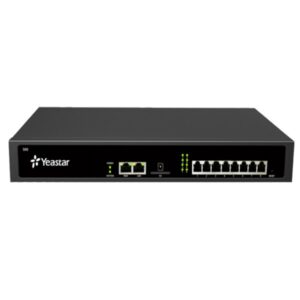
Yeastar TA800
An eight-FXS gateway can make more sense when a site has more than four analog endpoints and wants one unit rather than multiple smaller adapters. Platform compatibility and management preferences should be compared before switching brands.
Dinstar DAG2500-72S
Large analog-extension projects belong in a different gateway class. The DAG2500-72S is relevant when the requirement is high density rather than four local devices. It illustrates why port count should be mapped before procurement.
IP PBX and Telecommunication Solutions
If the gateway is only one component of a new phone system, review the PBX, SIP trunk, IP phones, switching, VLANs and cabling together. This reduces the risk of purchasing isolated components before the call architecture is defined.
Why Buyers Contact FourTeck
Business communication purchases often fail at the interfaces: the wrong analog port type, an overlooked SIP-provider requirement, a fax workflow that was never tested, or a network policy that does not match the deployment. FourTeck’s role is to help customers translate the equipment request into the technical and commercial details needed for a workable purchase.
Check whether a four-port FXS ATA is genuinely the right device class for the analog endpoints and call-flow requirement.
Review SIP platform, codecs, fax, caller ID, DTMF, network addressing, VLANs and provisioning needs before deployment.
Build the request around quantity, location, timing and support scope so the quotation reflects the real project rather than only the model number.
Confirm current supply and delivery options according to the destination and required quantity.
Clarify the warranty terms applicable to the offered supply channel and help buyers understand the support expectations before purchase.
Connect the gateway decision with the wider PBX, network, cabling and endpoint plan when the project extends beyond a simple replacement.
FourTeck supports SMB, branch and enterprise procurement conversations without requiring every customer to arrive with a finished technical design. If you know only the existing phone system and the devices that must remain, share that information. If you already have a full SIP design, send the configuration requirements and quantities. Both approaches give the team enough context to help evaluate the correct product and prepare a more relevant response. Visit FourTeck UAE for wider IT and telecom solutions or use the contact page for this specific gateway request.
Frequently Asked Questions
What is the HT814 v2 used for?
It is used to connect up to four analog endpoint devices, such as compatible telephones or fax machines, to a SIP-based IP voice environment. Its FXS ports provide the analog interface required by those devices, while the gateway communicates over Ethernet with the PBX or SIP service. It is useful for phased VoIP migrations and small sites that still need selected analog equipment.
Can it connect analog PSTN lines to an IP PBX?
The HT814 v2 provides FXS ports, which are intended for analog endpoint devices. If your requirement is to connect external analog PSTN lines into a PBX, you are usually looking for FXO interfaces instead. Explain your existing line source and what the cable currently connects to, and FourTeck can help identify the correct gateway class before you order.
Does the gateway support fax?
Yes. Grandstream specifies T.38 Group 3 fax relay up to 14.4 kbps and automatic switching to G.711 for fax pass-through. Fax-over-IP performance depends on the PBX, SIP provider, network conditions and remote fax endpoint, so a business-critical fax workflow should be tested end to end during commissioning rather than assumed from the device feature list alone.
Is four ports the right size for a small office?
It can be a good fit when the office has up to four analog devices that genuinely need FXS connectivity and little near-term expansion is expected. If all four ports will be occupied immediately and another analog endpoint is likely, compare a higher-density gateway before purchase. Capacity planning can reduce future device sprawl and simplify support.
Can FourTeck help with configuration?
FourTeck can review the intended PBX or hosted SIP service, account structure, analog endpoint types, fax requirement, network addressing, VLAN policy, caller-ID expectations and support scope. The exact configuration service should be confirmed with the quotation. Providing those details before purchase helps identify compatibility risks and avoids treating the gateway as an isolated hardware item.
Does it work with Grandstream UCM IP PBX systems?
Grandstream lists support for use with its UCM series IP PBXs for zero-configuration provisioning. That can simplify deployment inside a Grandstream voice environment. Buyers should still confirm the UCM model, firmware, extension plan and site network details, especially when replacing existing equipment or integrating with a SIP trunk that has its own requirements.
What network features should I check before installation?
Check where the device will connect, how it receives an IP address, whether voice uses an 802.1Q VLAN, which QoS markings are required, and whether the firewall permits the necessary SIP and media flows. Also decide whether remote management and automated provisioning are allowed. These choices affect maintainability and call quality more than simply having Gigabit Ethernet ports.
Is the product available in Dubai and the UAE?
FourTeck can check current supply options for Dubai and other UAE locations. Availability can change with supplier position, quantity and project timing, so it should be confirmed during quotation rather than assumed. Send the required quantity, delivery location and target date to help the sales team provide a more useful availability response.
What should I include when requesting a quote?
Include the model, quantity, PBX or SIP provider, analog endpoint count, whether fax is required, delivery location, intended deployment date and any need for configuration or installation support. If you are replacing another ATA, provide the existing model and working features. This helps FourTeck distinguish a simple replacement from a migration that needs technical review.
Can businesses request multiple units for branch deployment?
Yes, businesses can request project or multi-unit quotations. For multi-site deployments, share the quantity per location, standard PBX platform, provisioning approach and whether the same configuration will be replicated. Automated provisioning and remote management can be particularly valuable when several gateways must remain consistent across branches, but supply and commercial terms should be confirmed for the total project quantity.
Need Help Confirming the Right Analog Gateway?
FourTeck can review the endpoint count, FXS or FXO requirement, PBX or SIP service, fax needs, network design, quantity, delivery location and warranty expectations before preparing a quote. That review is especially useful when the gateway is part of a larger VoIP migration rather than a simple one-for-one replacement.
Share the required quantity, analog devices, PBX or provider, fax requirement, deployment site and target date.