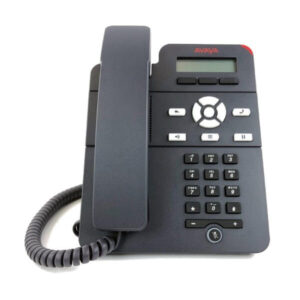

HP Poly Edge E300 IP Phone in Dubai, UAE
A wired SIP desk phone for business voice environments that need a color display, flexible line handling, Gigabit Ethernet connectivity, PoE support, and Poly audio technologies in a compact desktop design.
The E300 is well suited to office users, reception and service teams, hot-desk spaces, and home-office deployments where dependable wired network connectivity matters more than built-in Wi-Fi or Bluetooth. FourTeck can help review your call platform, PoE network, headset needs, quantity, deployment location, and support expectations before a quote is prepared.
A practical desk phone for structured business voice deployments
The HP Poly Edge E300 is an IP desk phone built for organizations that still depend on a dedicated business handset as part of their day-to-day communications. It connects to a wired Ethernet network, supports Session Initiation Protocol (SIP) calling, and provides eight programmable line keys with pagination for as many as 32 SIP line assignments. That combination makes it useful for staff who need quick access to multiple lines, contacts, features, or speed-dial functions without moving to an oversized console-style phone.
For many UAE offices, the attraction is less about adding another feature-rich endpoint and more about standardizing business calling on a manageable, wired device. The E300 includes two 10/100/1000BASE-TX Ethernet ports, allowing the phone to connect to the LAN while providing a passthrough connection for a nearby PC. Built-in auto-sensing IEEE 802.3af Power over Ethernet can reduce the need for a separate power adapter when the network switch supplies suitable PoE. An external 5 VDC, 3 A power unit can be used where PoE is not available, but the power supply is sold separately.
The phone also addresses a common concern in open offices: background noise. Poly HD Voice is supported alongside Acoustic Fence and NoiseBlockAI technologies. Acoustic Fence is designed to reduce surrounding noise when using the handset or a wired headset, while NoiseBlockAI targets background noise during speakerphone use. The result is a platform intended to make everyday voice conversations easier to follow in realistic work environments rather than only in quiet executive offices.
The E300 should be selected with the calling platform and deployment model in mind. Some software-enabled features depend on support from the service-provider platform, IP PBX, or softswitch. FourTeck can help a buyer review the intended SIP service, Ethernet and PoE environment, headset preference, device quantity, user profile, and deployment location before the order is finalized. That review is especially useful when deciding between the E300 and related Edge E300-series models that add integrated Bluetooth or Wi-Fi features.
Why the E300 fits everyday office calling
More line access without a large operator console
Eight line keys can represent up to 32 SIP lines, contacts, or supported features through pagination. This is useful for employees who monitor several call appearances or need frequent one-touch access while keeping a standard-size phone on the desk. It can also help procurement teams standardize on one endpoint for a broader range of users instead of immediately moving every multi-line employee to a larger phone.
Voice clarity for active workplaces
Poly HD Voice, Acoustic Clarity, Acoustic Fence, and NoiseBlockAI support clearer conversations across handset, wired-headset, and speakerphone use. For customer service, finance, sales, administration, and shared office teams, better control of ambient sound can reduce call repetition and make conversations easier to understand.
One network drop can serve phone and PC
Dual Gigabit Ethernet ports support a LAN connection for the phone and a passthrough connection to a desktop or laptop dock. In a structured office, this can simplify desk cabling and make the endpoint easier to integrate where a single network outlet is available.
PoE supports cleaner installations
Auto-sensing IEEE 802.3af Class 3 PoE lets a compatible switch provide network and power over Ethernet. This can reduce power adapters at individual desks and helps central IT teams manage phone power from the network layer. Where PoE is unavailable, plan for the optional external power supply.
Built for managed enterprise voice networks
The E300 supports network features including DHCP, VLAN discovery, LLDP-MED, 802.1p/Q tagging, IPv4 and IPv6, secure provisioning over HTTPS, TLS, SRTP media encryption, 802.1X authentication, configuration-file encryption, and central provisioning methods. For IT teams, these capabilities provide a stronger foundation for controlled rollout than unmanaged consumer-style VoIP handsets.
More usable for a broader workforce
Text-to-speech support, adjustable font sizing, color adjustments for color blindness, hearing-aid compatibility, and TTY-adapter compatibility help organizations plan a desk-phone environment that can serve users with different accessibility needs.
The capabilities that matter most at the desk
The most important strength of this model is balance. It offers more line and feature access than a basic entry phone while remaining a straightforward wired endpoint. The 3.5-inch IPS color display gives users a clear interface for calls, contacts, feature labels, and speed dials, while the surrounding status light provides a quick visual cue during daily use.
Connectivity is intentionally practical. Two Gigabit Ethernet interfaces support LAN and PC passthrough, one USB 2.0 Type-C port can be used for supported media, storage, and headset functions, and headset connectivity also includes RJ-9 and an Electronic Hook Switch port for a compatible optional adapter. NFC is integrated for supported applications such as device identification or hoteling workflows. The standard E300 does not include the integrated Bluetooth and Wi-Fi capabilities available on certain related models, so wireless requirements should be checked before purchase.
HP Poly Edge E300 technical details
These specifications reflect the official E300 product information for 82M92AA. Software-enabled calling features can depend on the connected IP PBX, softswitch, or service-provider platform, so platform compatibility should be confirmed for your environment.
| Specification | Details |
|---|---|
| Brand / model | HP Poly Edge E300, HP product 82M92AA; manufacturer number 2200-87815-025 |
| Product type | SIP business IP desk phone |
| Display | 3.5-inch color IPS LCD |
| Line keys | 8 line keys supporting up to 32 SIP lines with pagination |
| Ethernet | 2 × RJ-45 10/100/1000BASE-TX for LAN and PC passthrough |
| Power | 13 W maximum; built-in auto-sensing IEEE 802.3af Power over Ethernet Class 3; optional external 5 VDC, 3 A, 15 W power supply sold separately |
| USB | 1 × USB 2.0 Type-C for supported media and storage applications; USB-C headset support |
| Headset interfaces | 1 × RJ-9; 1 × Electronic Hook Switch port for optional APP-51 adapter; USB Type-C headset support |
| Wireless | NFC |
| Audio codecs | G.711 A-law and μ-law, G.722, G.729AB, iLBC, OPUS, G.722.1 |
| Audio technologies | Poly HD Voice; Acoustic Clarity; Acoustic Fence; NoiseBlockAI; acoustic echo cancellation; background-noise suppression; adaptive jitter buffers and related voice functions |
| Network protocols | SIP, DHCP, LLDP-MED, VLAN discovery, IEEE 802.1p/Q QoS, RTP/RTCP, DNS-SRV, SNTP, IPv4, IPv6 and supported central provisioning methods |
| Security | 802.1X authentication, EAPOL, TLS, HTTPS secure provisioning, encrypted configuration files, digest authentication, signed software support and SRTP media encryption using AES 256-bit |
| Mounting / stand | Adjustable two-position desk stand; wall mountable |
| Operating environment | 0 to 40°C operating temperature; 5% to 95% operating humidity |
| In the box | Setup sheet, console, CAT-5E LAN cable, desk stand, handset cord and handset |
| Warranty | Poly standard one-year limited warranty; local handling and eligibility should be confirmed for the supplied unit |
When choosing the final configuration, the most important question is not the number of published features; it is whether the phone matches the voice platform, network and user workflow. A company using PoE can deploy the E300 without a local power brick, while a non-PoE office should include the correct external power supply in planning. Headset users should identify whether they require RJ-9, USB-C, or EHS integration and confirm accessory compatibility. Organizations that need integrated Bluetooth or Wi-Fi should evaluate another E300-series variant rather than assuming those wireless functions are present in the base E300. Finally, confirm that the selected call server or hosted service supports the desired line, feature, provisioning, and security functions.
Questions to answer before ordering
The E300 is a fixed hardware model, but deployment requirements vary. A useful quote should account for the voice service, network power, user role, headset accessories, quantity, and rollout environment rather than only the handset part number.
Which call platform will register the phone?
Identify your IP PBX, hosted SIP service, softswitch, or collaboration platform. Some functions require platform support, and this is the highest-risk compatibility question in a voice rollout.
Will the network provide PoE?
Confirm that the access switch supports suitable IEEE 802.3af PoE and that the power budget covers the planned handset quantity. If not, include the compatible external power supply for each desk that needs one.
What headset connection does the user need?
The phone supports RJ-9, USB-C and EHS options, but the exact headset and any required adapter should be matched before ordering. Wireless Bluetooth headsets are not directly paired to the base E300.
How many line appearances are actually required?
Eight physical line keys can access up to 32 SIP assignments with pagination. For users who need more at-a-glance dedicated keys, a larger Edge model may provide a more comfortable workflow.
Is wireless connectivity required?
The E300 includes NFC but not the integrated Wi-Fi and Bluetooth offered by selected related models. If the desk cannot use wired Ethernet, choose the model around that requirement rather than adding workarounds later.
What should be sent with a quote request?
Provide model, quantity, call platform, PoE availability, headset needs, delivery location, target date, and any provisioning or installation support required. This gives FourTeck enough context to prepare a more useful response.
Where this phone makes practical sense
This model is most useful where staff need a permanent or semi-permanent desk endpoint on a managed business voice network. It is not positioned as a mobile-first device; its strength is structured wired calling with clear line access and enterprise network features.
General office and departmental users
Administration, finance, procurement, sales, HR, and operations teams often need a desk phone that is easy to understand without being limited to one or two call appearances. The color display and programmable line keys support daily features and contacts, while Gigabit passthrough helps the phone share an existing wired desk connection with a PC. This is a strong fit when IT wants a consistent desktop experience across many users.
Hot-desking and flexible seating
The Edge E Series is designed with hot-desking in mind, and the E300 includes NFC that can support advanced integrations such as device identification or guest-login workflows when the surrounding application supports them. It can suit shared work areas where employees use a managed IP phone at whichever desk they occupy.
Reception and shared service desks
Reception, service, and team desks may benefit from access to multiple lines and speed dials without moving to a larger attendant-console solution. Buyers should count the number of simultaneous line appearances and one-touch functions the user needs; if constant visibility of more keys is important, consider a higher-capacity Edge model.
Home-office staff on corporate voice
Employees working from a fixed home desk can use the E300 when they have suitable Ethernet access and their corporate or hosted voice platform supports the phone. Because the base model does not include Wi-Fi, home deployments should confirm a wired route to the router or network equipment and determine whether a local power supply is needed.
Noise-sensitive calling environments
Open offices and customer-facing teams can make practical use of the phone’s noise-control functions. Acoustic Fence is intended to reduce nearby environmental sound on handset or wired-headset calls, while NoiseBlockAI applies to speakerphone use. These functions do not replace good acoustic planning, but they give the endpoint tools designed for real office noise.
HP Poly Edge E300 Audio and Noise Control
Clear audio is central to the value of a desk phone, especially when the user spends much of the day speaking with customers, suppliers, colleagues, or remote teams. The E300 supports Poly HD Voice and Poly Acoustic Clarity, which includes full-duplex conversation, acoustic echo cancellation, and background-noise suppression. Wideband codecs such as G.722 and OPUS are also supported, subject to the capabilities negotiated with the connected call platform.
Two additional technologies are particularly relevant in shared spaces. Acoustic Fence is designed to reduce distracting sound when the user is on the handset or a wired headset. NoiseBlockAI is intended to suppress most background noise when using the speakerphone. For a buyer, the practical point is that audio performance depends on the complete call path: handset, headset, codec, network quality, service platform, and room environment all contribute to the experience.
HP Poly Edge E300 Network, PoE and Security
The E300 is designed to live on a managed IP network rather than operate as an isolated telephone. Its two Gigabit Ethernet ports provide a direct LAN connection and a passthrough path for a nearby PC. For offices with structured cabling, this arrangement can avoid the need for a second desk outlet. Built-in auto-sensing IEEE 802.3af Class 3 PoE allows a compatible access switch to power the phone through the same cable that carries network traffic.
From an IT perspective, the supported network and security stack is equally important. The phone supports DHCP, LLDP-MED and VLAN discovery, IEEE 802.1p/Q tagging for quality-of-service policies, IPv4 and IPv6, DNS-SRV, central provisioning through supported server methods, syslog event logging, and redundancy options for provisioning and call servers. Security functions include 802.1X authentication, TLS, HTTPS secure provisioning, encrypted configuration files, signed software support, password login, digest authentication, and SRTP media encryption using AES 256-bit.
HP Poly Edge E300 User Interface and Accessibility
A phone that is deployed broadly needs to be usable by people with different roles, levels of technical experience, and accessibility requirements. The 3.5-inch color IPS display presents lines, contacts, speed dials, and supported features in a format intended for quick desk use. The eight line keys sit alongside the display, and a pagination function allows additional assignments to be brought into view. A surrounding light bar provides visual status information without requiring the user to navigate a menu.
Accessibility functions add practical value to fleet deployment. HP lists text-to-speech support, larger font settings, screen color adjustments for color blindness, compatibility with commercially available TTY adapter equipment, and hearing-aid compatibility. These functions can help an organization select one family of desk phones for a wider group of users while still planning individual requirements where necessary.
Decision checklist
- Confirm whether eight visible line keys are enough for the user’s daily workflow.
- Check whether accessibility settings need to be standardized during provisioning.
- Match the headset interface to the user’s workstyle before purchasing accessories.
- Decide whether wall mounting or one of the two desk-stand positions suits the workspace.
- If Bluetooth or Wi-Fi is essential, move the requirement to a related E300-series model with those features.
What Buyers Should Check Before Purchase
The main purchase risk is choosing the E300 by model name alone without confirming the SIP platform, wired network, PoE, headset connection, or need for wireless features. A short pre-purchase review can prevent the most common deployment mismatches.
Configuration Fit
Ask how many line appearances and programmable functions the user needs, whether a speakerphone or headset is used frequently, and whether a wired desk phone is appropriate for the seating model. Eight line keys with pagination can serve many users, but operators who need many functions visible simultaneously may be better served by a larger Edge model. If staff need Wi-Fi or direct Bluetooth pairing, the standard E300 is not the correct variant.
Compatibility Check
Confirm the hosted voice provider or on-premises PBX before ordering. SIP support alone does not guarantee that every platform-specific feature, provisioning method, key assignment, or directory function will behave exactly as expected. Also confirm VLAN, QoS, 802.1X, DHCP, certificate, and provisioning requirements where the phone will join an enterprise network. If a PC will connect through the phone, review port and switch policy for both voice and data traffic.
Availability and Warranty
Availability can vary by supplier status, order quantity, and required delivery date, so obtain a current quote rather than assuming immediate stock. The manufacturer lists a Poly standard one-year limited warranty, but buyers should still confirm the warranty pathway for the exact supplied unit and market. Project orders should also clarify lead time, staging requirements, and whether any optional power supplies or headset adapters must be sourced with the phones.
Quote Preparation
For a useful quotation, share the exact model, quantity, deployment site, preferred date, SIP service or PBX, PoE status, headset requirements, and whether you need configuration or rollout support. If the project is replacing an older Poly or another vendor’s desk phones, include the current model and call platform. FourTeck can then help determine whether the E300 is the right replacement or whether another Edge model better matches the required connectivity and key capacity.
Support for selecting and sourcing the right phone
FourTeck supports business inquiries for the HP Poly Edge E300 IP Phone in Dubai and across the UAE with assistance that focuses on the practical details behind a successful desk-phone deployment. Availability may vary according to supplier status, order quantity, required date, and the exact accessories requested, so the best next step is to ask for a current quotation based on your project rather than rely on an assumed stock position.
Selection support
FourTeck can review the user profile, call platform, line requirements, wired network, PoE status, and whether the base E300 or another Edge variant is more appropriate.
Delivery coordination
Business buyers can discuss quantity, delivery location, target date, and project timing so the sourcing plan reflects the actual rollout requirement.
Warranty guidance
The manufacturer lists a one-year limited warranty. FourTeck can help clarify warranty expectations and the handling path associated with the supplied unit before the order is confirmed.
Dubai, Abu Dhabi, Sharjah and Ajman business coverage
Businesses in Dubai, Abu Dhabi, Sharjah, Ajman, and other UAE locations can contact FourTeck for product selection, configuration review, quote assistance, and delivery coordination. For a multi-site phone rollout, share the number of handsets per location, the voice platform used at each site, and whether the offices have a consistent PoE and VLAN design. This helps identify whether one standard handset configuration can be deployed across the organization or whether certain sites require local power supplies, different accessories, or another Edge model.
GCC and Africa supply coordination
FourTeck also receives business technology inquiries from selected GCC and Africa markets. Organizations in Saudi Arabia, Qatar, Oman, Kuwait, Bahrain, Kenya, Uganda, and the wider Africa region can use the relevant FourTeck inquiry channels to discuss desk-phone requirements, project quantities, compatible models, delivery planning, and warranty expectations. Product availability and service arrangements can differ by destination, so regional orders should be confirmed against the country, quantity, voice platform, and required timeline.
For regional projects, it is useful to provide a consolidated bill of quantities, delivery countries, site counts, required accessories, preferred warranty approach, and any standard configuration that must be repeated across offices. Visit FourTeck UAE, FourTeck Kuwait, FourTeck Kenya, FourTeck Uganda, or FourTeck Africa for the appropriate inquiry route.
Other HP Poly Edge models buyers may consider
The correct alternative depends on whether you need more wireless connectivity, a different number of visible keys, or a larger user interface. The related models below are useful starting points when the base E300 does not exactly match the desk requirement. Confirm the exact specification of each model before ordering because features differ across the Edge family.
HP Poly Edge E320
Consider the E320 when you like the E300-series size and call-handling approach but need a different connectivity mix. Confirm the exact wireless and accessory requirements for your intended deployment before choosing between the two.
HP Poly Edge E350
A related E300-series choice for buyers who want added integrated connectivity while retaining the 3.5-inch display and familiar series design.
HP Poly Edge E400 Series
Worth evaluating when users need a different key layout or a step up in desktop call handling. Match the exact E400-series model to the user workflow.
HP Poly Edge E500 Series
A useful comparison for employees who need a larger display, more visible line capacity, or a more substantial desk-phone interface.
Why business buyers contact FourTeck
Business telephony orders often look simple until the phones reach the desk. The handset must match the call platform, the network must provide the right VLAN and power environment, users may need different headset connections, and project quantities may require coordinated delivery. FourTeck’s role is to help buyers put those practical requirements into the purchase discussion before the order is placed.
HP Poly Edge E300 buyer questions
What is the HP Poly Edge E300 used for?
It is a wired business IP desk phone for SIP-based calling in offices, shared workspaces, hot-desk environments, and home offices. The phone provides a 3.5-inch color display, eight line keys with access to as many as 32 SIP lines through pagination, enterprise network functions, PoE support, and Poly audio technologies for day-to-day voice communication.
Does the E300 have Wi-Fi or Bluetooth?
The base E300 model includes NFC but does not list integrated Wi-Fi or Bluetooth. If your deployment needs wireless network connectivity or direct Bluetooth pairing, review another model in the E300 series that provides the required wireless capability. FourTeck can help compare the model choice against your network and headset requirements.
Can the phone be powered through Ethernet?
Yes. The E300 supports built-in auto-sensing IEEE 802.3af Power over Ethernet Class 3. Your access switch still needs to provide compatible PoE with sufficient power budget. If PoE is not available, the phone can use an external 5 VDC, 3 A power adapter, which HP lists as sold separately.
How many lines does the Edge E300 support?
The phone has eight line keys and can support up to 32 SIP lines through pagination. The practical user experience depends on how your calling platform maps line appearances, contacts, speed dials, and functions to those keys. For users who need many functions visible at the same time, compare a larger model before ordering.
Can I connect a headset to the E300?
Yes. Official specifications list an RJ-9 headset port, an Electronic Hook Switch port for an optional APP-51 adapter, and USB Type-C headset support. Headsets and EHS accessories are sold separately. Before purchasing headsets in quantity, match the exact headset model, connection type, call-control expectation, and user workstyle to the phone.
Will it work with any SIP service or IP PBX?
The E300 supports SIP, but specific software-enabled functions can depend on the service provider, IP PBX, or softswitch. Confirm your platform before rollout, especially if you require central provisioning, directory integration, specific line-key behavior, security policies, or advanced call features. FourTeck can review the stated environment as part of pre-sales guidance.
Is the HP Poly Edge E300 available in Dubai and the UAE?
FourTeck can assist with current UAE product inquiries, quotation requests, and delivery coordination. Availability can vary according to supplier status, quantity, requested date, and accessories, so it should be confirmed for each order. Send the required quantity and delivery location to receive guidance on the current sourcing option.
What warranty does the phone have?
HP lists the Poly standard one-year limited warranty for the E300. Warranty handling can depend on the exact supplied unit, region, seller, and applicable terms. Business buyers should confirm the warranty pathway before purchase, particularly for larger rollouts or multi-country projects where the expected support process may differ by location.
What information should I send to request a business quote?
Send the model, quantity, delivery location, desired date, call platform or hosted voice provider, PoE availability, headset requirements, and whether configuration or installation assistance is required. If you are replacing existing phones, include the current handset model and PBX details. These points help FourTeck determine whether the E300 or a related Edge model is the better fit.
Need help confirming the right Edge phone?
FourTeck can review the intended users, SIP platform, required quantity, Ethernet and PoE environment, headset choice, delivery location, rollout timing, and warranty expectations before preparing a quote. This is particularly useful when you are choosing between the E300 and a related model with different wireless or line-key capabilities.
Share the model, quantity, call platform, PoE status, headset needs, delivery location, and target date.