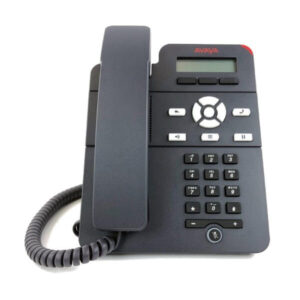
HP Poly Edge E450 IP Phone in Dubai, UAE
A dual-display SIP desk phone for business users who need clear voice, visible call controls, wireless connectivity and flexible headset choices.
The E450 is built for office desks, hybrid workers, hot-desking locations and call-heavy roles where users benefit from more contacts and line visibility without moving to a large touchscreen endpoint. FourTeck can help review the voice platform, network design, power method, accessories and quantity before quotation.
A Professional Desk Phone for Hybrid and High-Contact Work
The HP Poly Edge E450 IP Phone is a business voice endpoint designed for people who still need the speed, visibility and reliability of a physical desk phone while working in a modern SIP environment. It combines two color displays with dedicated line keys, network and wireless connectivity, Poly audio technologies and centralized management options. That mix makes it useful for users who handle frequent calls, switch between contacts throughout the day, work from shared desks or need a consistent corporate calling experience across office and home locations.
The main 3.5-inch color IPS screen sits beside eight physical line keys and can support up to 32 SIP line assignments through pagination. A second 2.4-inch color display adds six keys that can present up to 12 contacts or assignments. For a buyer, the practical value is faster access to important people and functions without forcing every action into nested menus. Reception staff, team coordinators, managers and knowledge workers can keep commonly used lines, speed dials and features within reach while still using standard handset, headset and speakerphone calling.
The phone can connect to the network through two Gigabit Ethernet ports, allowing a common desk layout in which the phone connects to the LAN and a computer uses the phone’s pass-through Ethernet connection. Integrated Wi-Fi gives another deployment path where an Ethernet drop is not practical, while Bluetooth 5.0 supports compatible wireless headsets and mobile pairing scenarios. USB-C, RJ9 and Electronic Hook Switch options broaden headset choices, but buyers should confirm the exact accessory and workflow before bulk ordering.
For UAE businesses, the key decision is not simply whether the phone has enough features. The phone must also match the hosted voice service or IP PBX, network VLAN design, power arrangement, provisioning method and user role. FourTeck can help review these dependencies before preparing a quotation so a deployment plan accounts for phones, accessories, PoE capacity, Wi-Fi use, expansion requirements and delivery quantity together.
Why the E450 Fits Modern Office Calling
More contacts without a large console
Two displays and fourteen physical line keys give users a faster way to reach lines, contacts and calling functions. The main screen supports eight line keys and pagination for up to 32 SIP lines, while the secondary screen contributes six more keys for up to 12 contacts or assignments. This helps busy users reduce menu hunting, which matters at reception desks, coordination points and office roles where the correct person or line must be reached quickly.
Clearer conversations in active offices
Poly HD Voice, Acoustic Clarity, Acoustic Fence and NoiseBlockAI address common call problems such as echo, office chatter and background interruptions. The exact technology applied depends on whether the user is on the handset, wired headset or speakerphone, but the business outcome is consistent: callers spend less time repeating themselves and users can concentrate more easily on the conversation.
Flexible wired and wireless placement
Dual Gigabit Ethernet supports conventional office cabling and PC pass-through, while integrated Wi-Fi helps when a network outlet is inconvenient. The choice matters during relocation, hot-desking and home-office use. Buyers should plan power carefully because a phone operating over Wi-Fi still needs power from an optional external supply unless PoE is being used through Ethernet.
Headset choice for different workstyles
Bluetooth, USB-C, RJ9 and EHS connectivity give organizations several ways to match the phone with headset preferences. A manager may prefer a wireless Bluetooth headset, while a service desk may standardize on a wired model for predictable operation. Compatibility should be confirmed at model level, especially where call-answer controls or Electronic Hook Switch functions are required.
Better fit for managed fleets
Poly Lens, Poly Zero Touch Provisioning and other supported device-management methods can reduce manual configuration work when an organization deploys many endpoints. The precise workflow depends on the calling platform and service provider, so IT teams should validate how configuration files, firmware, credentials and monitoring will be handled before rollout rather than treating every phone as a standalone device.
Expansion path for heavier call handling
The E450 can support one Poly Edge E Expansion Module for up to 66 additional programmable contacts or line keys. That gives buyers a path from a capable desk phone to a more attendant-style workflow without immediately selecting a much larger phone. It is particularly useful when a receptionist, dispatcher or coordinator needs more visible destinations than the built-in displays can present at once.
Capabilities That Matter at the Desk
The Edge E450 is positioned between simpler office extensions and larger high-capacity desk phones. Its strongest differentiator is not one isolated specification but the combination of contact visibility, wireless flexibility, headset choice, modern audio processing and enterprise administration. That balance is useful where a business wants a standardized desk endpoint that can serve different roles without turning every workstation into a premium executive setup.
For everyday call control, the phone supports four context-sensitive soft keys, dedicated hold and transfer keys, mute, speakerphone, headset selection, voicemail access, volume control, call waiting, call forwarding, call park, pickup, three-way local conferencing and flexible line appearances. Most software-driven functions depend on support from the service provider, IP PBX or softswitch, so buyers should verify feature availability against their actual voice platform before relying on a specific call function.
Accessibility also matters in shared fleets. Published HP specifications include text-to-speech support, adjustable display colors for color-vision needs, larger font options and hearing-aid compatibility. These features can make it easier to standardize phones for a broader range of users without creating separate endpoint categories for every accessibility requirement.
HP Poly Edge E450 Technical Specifications
The table below summarizes published HP and Poly specifications. Calling features, provisioning options and platform functions can depend on the selected service provider or IP PBX.
| Specification | Details |
|---|---|
| Brand / Model | HP Poly / Poly Edge E450 |
| Product numbers | HP 82M90AA; Poly 2200-87030-025 |
| Product type | SIP IP desk phone |
| Primary display | 3.5-inch color IPS LCD, 320 x 240 |
| Secondary display | 2.4-inch color IPS LCD, 240 x 320, six keys |
| Line assignments | Eight primary line keys supporting up to 32 SIP lines with pagination; 14 physical line keys total supporting up to 44 line/contact/feature assignments |
| Audio | Poly HD Voice, Acoustic Clarity, Acoustic Fence, NoiseBlockAI, full-duplex speakerphone support |
| Audio codecs | G.711 A-law/μ-law, G.722, G.729AB, iLBC, OPUS, G.722.1 |
| Ethernet | 2 x RJ-45 10/100/1000BASE-TX; LAN and PC pass-through scenarios supported |
| Wireless | Bluetooth 5.0; Wi-Fi on 2.4 GHz and 5 GHz bands; NFC |
| USB | 1 x USB 2.0 Type-C for supported media, storage, headset or expansion-module use |
| Headset ports | 1 x RJ9; 1 x EHS port for optional APP-51 adapter; USB-C headset support; Bluetooth headset support |
| Power | Power over Ethernet; maximum published power 13 W. Optional external universal AC/DC adapter 5 VDC, 3 A, 15 W sold separately |
| Security | 802.1X, TLS, SRTP, digest authentication, encrypted configuration files, HTTPS provisioning, WPA/WPA2 security options |
| Management | Poly Zero Touch Provisioning, Poly Lens, PDMS-SP Cloud Management, supported provisioning-server methods |
| Network protocols | SIP, IPv4/IPv6, DHCP, LLDP-MED, VLAN/QoS support, RTP/RTCP, DNS-SRV, secure central provisioning methods and related enterprise networking features |
| Expansion | Supports one Poly Edge E Expansion Module for up to 66 additional programmable contacts/keys |
| Desk placement | Two-position adjustable desk stand; optional wall mount available separately |
| Operating environment | 0 to 40°C; 5 to 95% operating humidity |
| In the box | Setup sheet, console, CAT-5E LAN cable, desk stand, handset cord, handset |
| Warranty | Poly standard one-year limited warranty; final channel and regional terms should be confirmed |
When choosing a configuration, start with the network and calling platform rather than the display size. Confirm whether every desk has a PoE-capable switch port, whether voice traffic uses a dedicated VLAN, whether users need wired or wireless network access and whether the provider supports the desired call-control features. Next, match headset type to user behavior. Bluetooth can suit mobile users, while wired USB-C or RJ9 headsets may be easier to standardize for service teams. Finally, decide whether the built-in 14 keys provide enough visibility. A receptionist or dispatcher may benefit from the optional expansion module, whereas a typical knowledge worker may not. The power adapter, expansion module, wall mount and some headset accessories are not automatically included, so they should be listed clearly in the quote.
Plan the Phone Around the Voice Environment
Which PBX or hosted service will register the phone?
This is the highest-risk question because software features depend on service-provider and platform support. Confirm SIP registration, provisioning method, call features, directory integration and any certification requirement before placing a bulk order.
How will each desk provide network and power?
PoE can simplify cabling by carrying power through Ethernet. Wi-Fi can solve placement problems, but it does not remove the need for power. If the phone is used wirelessly without PoE, plan the optional 5 VDC power supply and available electrical outlets.
How many visible lines and contacts does the user need?
A normal office user may be comfortable with the built-in displays. Reception, dispatch and coordination roles can require more monitored contacts. Identify these users early so expansion modules are included only where they add practical value.
Will the rollout use headsets?
Document whether users need Bluetooth, USB-C, RJ9 or EHS operation. For high-volume call teams, confirm wearing style, call-answer controls and accessory compatibility before standardizing a headset across dozens of seats.
How will IT provision and support the phones?
For multi-site projects, manual configuration can become expensive. Review Poly Lens, Zero Touch Provisioning, provider templates, firmware handling, secure provisioning and replacement procedures as part of the project design.
What should you send FourTeck for a useful quote?
Send the model, quantity, calling platform, number of sites, power method, headset requirement, expansion-module requirement, delivery location, target date and any installation or staging expectations. This helps separate essential items from optional accessories.
A successful phone project is less about choosing the model with the longest feature list and more about matching each user role to the right endpoint. For example, a finance user may need reliable voice, a wireless headset and a few speed dials, while a receptionist may need dozens of monitored contacts and more visible buttons. An operations desk may require a wired connection for predictability, while a home worker may value integrated Wi-Fi. Creating two or three standard user profiles before ordering usually produces a cleaner deployment than giving every employee the same configuration.
Where the Edge E450 Makes Practical Sense
Knowledge workers and hybrid offices
The strongest fit is a user who spends much of the day at a desk, handles regular external and internal calls and wants easy access to colleagues, lines and headset controls. Integrated Wi-Fi and Bluetooth add flexibility when that same user works across a corporate desk and a home-office setup. The phone gives them a physical calling point without depending entirely on a softphone window that competes for screen space with business applications.
Reception and front-desk coordination
The built-in secondary display is useful for common contacts, while the optional expansion module can add a much larger set of programmable keys. This makes the model suitable for receptionists who answer, transfer and monitor calls throughout the day, provided the PBX supports the required Busy Lamp Field, shared-line or call-management functions.
Sales and customer-service desks
Sales representatives and service agents often work in a CRM or ticketing system while speaking to customers. A physical phone paired with a compatible headset can keep call controls available even when the computer is busy with business applications. Noise reduction is particularly valuable in open-plan teams where nearby conversations can otherwise distract both the agent and the caller.
Hot-desking and shared workspaces
The Edge E Series supports deployment methods intended for managed environments, and NFC can be used by compatible partner applications for hoteling or guest-login workflows. The exact login behavior depends on the platform. Buyers planning hot-desking should confirm identity, directory and provisioning behavior before rollout rather than assuming the phone alone provides a complete desk-booking solution.
Management and executive desks
Managers who need a clear color interface, wireless headset support, mobile pairing and a larger set of contacts can use the E450 without stepping into a much larger 5-inch phone. The secondary display can keep assistants, direct reports or frequently used services visible, while Bluetooth supports movement around the office during calls.
Multi-site corporate standardization
Organizations with several offices can standardize a mid-range phone for many users and reserve expansion accessories for high-volume roles. Central provisioning options can help reduce branch-by-branch configuration work. Before standardization, test one pilot group against the actual SIP platform, network policies, headset models and user workflows so project assumptions are validated.
Poly Edge E450 Audio Clarity and Noise Control
Clear business calling depends on both the network and the acoustic environment. This phone combines several Poly technologies that address different parts of the experience. Poly HD Voice supports wideband audio, while Acoustic Clarity focuses on full-duplex conversation, echo cancellation and background-noise suppression. Acoustic Fence is designed to reduce sounds outside the user’s immediate speaking area when using the handset or a wired headset, while NoiseBlockAI is used to reduce common background distractions during speakerphone calls.
That distinction matters when choosing the endpoint for a real workplace. A private office may already be quiet, so the main value is natural voice quality and full-duplex conversation. A reception counter, open-plan sales floor or shared administration area has more variable sound. In those locations, background-noise management can reduce repeated explanations and help the remote caller focus on the intended speaker instead of keyboards, papers or nearby voices.
Network quality still matters. No phone can compensate for inadequate bandwidth, packet loss, poor QoS design or a misconfigured SIP platform. Buyers planning many endpoints should therefore treat audio quality as a combined voice-network project: choose the right handset and headset, segment and prioritize voice traffic where appropriate, confirm codecs supported by the provider and test calls from representative locations before a large rollout.
Poly Edge E450 Connectivity and Desk Flexibility
The E450 gives IT teams several deployment paths instead of assuming every user has the same desk. Two Gigabit Ethernet ports support the familiar arrangement where one cable connects the phone to the network and the second port passes connectivity to a computer. Power over Ethernet can reduce power-brick clutter when the switch infrastructure is ready. Integrated Wi-Fi gives another network option for locations where installing a dedicated cable is impractical, while Bluetooth 5.0 supports compatible headsets and mobile-device pairing.
The important purchasing detail is that wireless networking and wireless power are different questions. When a phone uses Wi-Fi instead of Ethernet, an external power source is still required. HP lists an optional 5 VDC, 3 A, 15 W adapter for deployments not powered through PoE. This is easy to miss in home-office or temporary-desk projects, and forgetting it can create a deployment delay even when the phone itself is correct.
Headset connectivity is similarly flexible but should be planned by user role. Bluetooth can suit people who move around a room, USB-C can simplify digital wired headsets, RJ9 supports traditional desk-phone headsets and the EHS port can support compatible remote-call-control arrangements using the optional APP-51 adapter. The port is not the same as guaranteed compatibility, so the exact headset model and control functions should be checked before procurement.
Poly Edge E450 Management, Security and Scale
A single desk phone is easy to configure manually; a fleet distributed across several departments or offices is not. The E450 supports Poly Zero Touch Provisioning, Poly Lens and service-provider-oriented management options. It can also use common server-based provisioning methods such as HTTPS, HTTP, FTP or TFTP depending on policy and platform design. These capabilities matter because standardized firmware, settings, line assignments and replacement procedures can save more operational time than any one end-user feature.
Security features include 802.1X authentication, TLS, SRTP media encryption, encrypted configuration files, digest authentication and HTTPS provisioning. Wi-Fi security options include WPA and WPA2 modes, including enterprise authentication methods. Security effectiveness depends on how the phone is configured and how the surrounding network and calling platform are managed. Procurement should therefore include an IT review of authentication, certificate handling, VLAN policy, administrative passwords and firmware practice rather than assuming factory defaults match corporate policy.
Scale also applies to the user interface. The built-in keys can cover many typical office roles, while one optional Edge E expansion module can add up to 66 more programmable contacts or keys for higher-volume users. This lets IT standardize the base phone and add capacity only where a receptionist, dispatcher or executive assistant needs it.
Decide whether the provider, Poly Lens or an internal provisioning server controls configuration and firmware.
Review 802.1X, certificates, TLS/SRTP, Wi-Fi credentials, admin access and VLAN settings before rollout.
Add expansion modules only to users who genuinely need a larger visible contact field.
What Buyers Should Check Before Purchase
The biggest purchase risk is ordering the right phone model with the wrong deployment assumptions. Confirm the SIP platform, power method, headset plan and line-visibility requirement before treating the hardware list as complete.
Configuration Fit
Decide whether the user needs basic calling, frequent speed dials, many monitored lines or an attendant-style layout. The E450 can handle a substantial number of line and contact assignments, but the optional expansion module should be planned only for users who need more visible keys. Also confirm whether the user requires wall mounting, a headset or an external power adapter.
Compatibility Check
Confirm the IP PBX or hosted provider supports the desired SIP functions, provisioning workflow, directories and call-control features. Test the selected headset model, particularly when EHS remote answer is required. Network teams should review PoE budget, voice VLAN, QoS, 802.1X and Wi-Fi policy before a multi-site order.
Availability and Warranty
Availability can vary by regional channel, quantity and exact part number. HP publishes a standard one-year limited warranty for the product, but buyers should confirm the warranty route, supplier terms, replacement process and any additional support options on the quotation. Avoid basing a project schedule on an old online stock indicator.
Quote Preparation
Provide quantity, site locations, calling platform, expected user roles, headset preference, power method, expansion-module quantity, target delivery date and any staging or installation requirement. If you are replacing older phones, include the current model and PBX details so FourTeck can help identify likely compatibility or migration questions.
Buyers comparing similar models should focus on the decision difference rather than only model hierarchy. A simpler Edge B-series phone can be enough for a basic extension with a small number of visible lines. The E450 is better suited to users who value dual displays, wireless connectivity and broader contact access. A larger Edge E550 or newer Edge V-series model may make sense where larger displays, more line visibility or a newer platform generation are required. FourTeck can help review the role profile before a final model is selected.
Product Selection and Supply Support in Dubai and the UAE
FourTeck supports product inquiries for the E450 across Dubai and the wider UAE with assistance for model review, quote preparation, accessory matching, delivery coordination and warranty guidance. Availability can change according to the exact SKU, supplier status, quantity and regional channel conditions, so a current quotation is the appropriate way to confirm supply rather than relying on an old product listing or a stock message from another market.
For small orders, buyers should provide the quantity, calling platform and delivery location. For larger office deployments, it is useful to include site count, number of users by role, PoE availability, headset requirements, expansion-module needs and the desired rollout date. FourTeck can then help structure the requirement around the base phones and the accessories that are actually needed instead of producing a quote that leaves important deployment items unspecified.
Warranty guidance should also be confirmed before purchase. HP publishes a one-year limited warranty for the phone, while handling details can depend on the regional channel and supplier terms. Buyers with business-critical voice operations may want to discuss spare-unit planning, replacement procedures or additional support expectations as part of the project.
Role-based model, line-count, headset and accessory review.
Planning based on quantity, location and current supplier status.
Review of published coverage and applicable channel terms.
Dubai, Abu Dhabi, Sharjah and Ajman Coverage
Businesses in Dubai, Abu Dhabi, Sharjah, Ajman and other UAE locations can contact FourTeck for product availability checks, compatibility guidance and quotation support. The purchasing process can be adjusted for a single office, several branches or a project rollout that needs phones delivered in planned batches. Sharing the site list, quantity per location and target schedule helps the team prepare a more useful commercial response.
For multi-location voice projects, buyers should also identify whether every office uses the same PBX or hosted service, whether network policies are standardized and whether headsets or expansion modules differ by user group. This makes it easier to avoid a situation where the same hardware is ordered for every site but the local network, power arrangement or user role is different.
GCC and Africa Availability Support
FourTeck also supports business technology inquiries through regional channels serving selected GCC and Africa markets. Organizations with requirements in Saudi Arabia, Qatar, Oman, Kuwait, Bahrain, Kenya, Uganda or other locations can share the product model, quantity, destination and project details for review. Availability, import route, warranty handling, delivery options and support expectations can differ by country, so regional quotations should be treated independently rather than assuming the same terms apply everywhere.
This is especially important for multi-country voice deployments. The calling platform may be globally standardized, but local power accessories, regulatory requirements, supplier stock and delivery lead times can vary. Procurement teams should therefore provide a country-by-country quantity plan and identify whether phones will be provisioned centrally before shipment or configured after arrival.
Regional inquiry channels include FourTeck UAE, FourTeck Kenya, FourTeck Uganda, FourTeck Africa and FourTeck Kuwait. Contact the relevant regional channel for current supply and commercial guidance.
Other Options Buyers May Consider
The right alternative depends on user role. A basic extension may not need dual displays or wireless connectivity, while a receptionist or executive may need more line visibility than a standard user. The options below help buyers frame those differences before requesting a quote.
Poly Edge B20 IP Phone
Consider the Edge B20 for routine SIP calling where users need a practical business phone but do not need the E450’s dual displays, large contact field or integrated wireless feature set.
Poly Edge B10 IP Phone
A compact choice for basic extensions, shared desks and simpler office calling where an entry-level physical endpoint is sufficient.
Poly Edge B30 IP Phone
Useful when buyers want a capable desk phone with straightforward operation but do not require the E450’s dual-screen contact layout.
HP Poly Edge V Series
For projects planning a newer Open SIP desk-phone generation, review the Edge V Series model range and match display, wireless and expansion capability to each user class.
Business IP Phones
Compare Poly with other SIP desk-phone families when platform compatibility, user preference or project budget requires a wider shortlist.
Business Headsets
Call-heavy users may need Bluetooth, USB-C, RJ9 or EHS-compatible headsets. Confirm the exact headset and call-control requirement before bulk purchase.
Practical Help Before the Purchase Order
Business communication hardware is rarely successful as a hardware-only purchase. The phone must register to the correct service, receive power, fit network security policies, work with the selected headset and present enough call controls for the user role. FourTeck helps buyers organize those questions before quotation so procurement teams have a clearer picture of what belongs in the project.
Coordinate phones with related network, headset and communication requirements instead of treating each item in isolation.
Review user roles, SIP platform, PoE, Wi-Fi, expansion and accessory needs before finalizing a model mix.
Build a request around quantities, required accessories, destination and project timing so commercial terms are easier to compare.
Plan delivery based on current supplier status, order quantity and the required site or rollout schedule.
Confirm the published product warranty and applicable channel process before purchase, especially for business-critical deployments.
Compare simpler, larger or newer desk-phone options when the user’s role does not align with the E450’s feature balance.
This approach is useful for SMB buyers who may not have a dedicated voice specialist and for enterprise procurement teams that need cleaner technical requirements before seeking approvals. It can also reduce avoidable accessory gaps, such as ordering Wi-Fi phones without external power where PoE is unavailable, or selecting headsets that connect physically but do not provide the remote call control expected by users.
HP Poly Edge E450 Buying Questions
What is the Edge E450 used for?
It is a SIP business desk phone for knowledge workers, hybrid users, shared desks, managers, reception teams and other roles that benefit from clear voice, multiple visible contacts and flexible headset connectivity. The two displays and fourteen physical line keys make it more suitable for contact-heavy work than a basic office extension phone.
Does the phone support Wi-Fi and Bluetooth?
Yes. HP lists integrated Wi-Fi on both 2.4 GHz and 5 GHz bands, Bluetooth 5.0 and NFC. Wi-Fi provides a network alternative where Ethernet is inconvenient, while Bluetooth supports compatible headsets and mobile pairing. A Wi-Fi deployment still needs power, so an optional external adapter may be required when PoE is not being used.
How many lines or contacts can it show?
The primary display has eight line keys and supports up to 32 SIP line assignments with pagination. The secondary display adds six physical keys and can support up to 12 contacts or assignments. HP documentation describes a total of fourteen physical line keys and up to 44 line, contact or feature assignments across the two displays.
Can the E450 use an expansion module?
Yes. Poly documentation shows support for one Edge E Expansion Module on the E450. The module can provide up to 66 additional programmable keys or contacts. It is most relevant for receptionists, dispatchers, assistants or other users who must monitor and reach a larger set of people than the built-in displays can present conveniently.
What headsets can connect to the phone?
The phone supports several connection methods, including Bluetooth, USB-C, RJ9 and an EHS port for the optional APP-51 adapter. The physical interface does not guarantee every headset feature, so buyers should confirm the exact headset model, wearing style and whether remote answer or other call-control functions are required before placing a bulk order.
Will it work with any hosted VoIP provider?
The phone supports SIP, but the exact call features, provisioning flow, directories and platform integrations depend on the service provider or IP PBX. Buyers should confirm compatibility with their provider rather than assuming every software feature will work on every service. FourTeck can help identify the questions to review before ordering.
Is Power over Ethernet supported?
Yes. The E450 supports Power over Ethernet, which can carry network data and power through the Ethernet connection when the switch infrastructure is suitable. HP also lists an optional external 5 VDC, 3 A, 15 W power adapter for situations where PoE is not available, including common Wi-Fi deployment scenarios.
Can FourTeck help with a multi-office rollout?
FourTeck can assist with requirement review, quotation, accessory planning and delivery coordination. For a multi-office request, provide quantity by site, calling platform, PoE and network details, headset needs, expansion-module requirements and target dates. This helps identify where a common standard can be used and where a site or user role may need a different configuration.
Is the HP Poly Edge E450 IP Phone available in Dubai?
FourTeck can check current Dubai and UAE supply based on the required quantity, exact part number and supplier status. Availability changes over time, so buyers should request a current quote rather than treating an older online listing as a guaranteed stock position. Include any required accessories so the availability check covers the complete desk setup.
What information should I provide before requesting a quote?
Provide the model, quantity, delivery location, hosted voice service or PBX, user roles, expected number of visible lines, network and PoE situation, preferred headset connection, expansion-module requirement and target delivery date. If installation, staging or special warranty expectations are part of the project, include those details as well so the quote reflects the actual requirement.
Need Help Planning the Right Desk-Phone Setup?
FourTeck can review your voice platform, required quantity, user roles, power method, headset choice, expansion needs, delivery location and warranty expectations before preparing a quote. This is useful when you are standardizing phones across several teams or replacing an older SIP fleet.
Share the model, quantity, PBX or hosted provider, network/power setup, headset requirement, delivery location and target date.