Samsung OH24B 24-Inch Outdoor Display in Dubai, UAE
Samsung OH24B is a compact 24-inch professional outdoor signage display engineered for high-visibility communication where conventional indoor panels are not suitable. It combines a Full HD IPS panel, 1,500-nit typical brightness, IP66 environmental protection, IK10-rated protective glass, 24/7 operation support, and Samsung’s embedded signage platform in a space-efficient chassis.
For UAE projects, the OH24B is especially relevant to EV charging stations, transport interfaces, drive-through lanes, outdoor wayfinding, storefront messaging, kiosks, smart-city touchpoints, service counters, and other installations that need continuous content delivery in bright, dusty, and temperature-variable surroundings.
Procurement Snapshot
Brand: Samsung
Model: OH24B
Type: Outdoor digital signage
Resolution: 1920 x 1080
Brightness: 1,500 nit typical
Protection: IP66 / IK10 glass
Operation: 24/7 supported
Platform: Tizen 6.5, SSSP 10
UAE supply: Contact FourTeck for current options
Final commercial terms, regional part number, warranty handling, stock position, mounting accessories, and delivery lead time are quotation dependent.
Quick Procurement & Configuration Matrix
Samsung OH24B commercial outdoor signage.
Outdoor information, advertising, EV charging, transport and wayfinding displays.
Scale by adding network-managed endpoints; fleet design depends on CMS and network architecture.
AC 100–240 V, 50/60 Hz; 90 W on-mode specification.
Dubai, UAE and coordinated GCC/export destinations.
Regional warranty terms can vary. Confirm applicable coverage on the FourTeck quotation.
Executive Product Architectural Overview
The Samsung OH24B occupies a specific place in professional display architecture: it is not simply a small television placed outdoors, and it is not intended to compete with large-format outdoor billboards. Instead, it addresses the operational gap between those categories. Many customer-facing environments require a screen close to eye level, mounted beside equipment, embedded into a kiosk structure, fixed to a wall, or installed at a service point. At these distances, a compact 24-inch display is practical, but an ordinary indoor monitor may struggle with direct sunlight, airborne dust, moisture, prolonged operation, elevated ambient temperature, vandalism risk, or the need for central content control. OH24B combines the display panel, protective construction, embedded processing, connectivity and environmental operating characteristics required for that more demanding role.
At the visual layer, the panel uses 1920 x 1080 Full HD resolution in a 16:9 format with IPS technology, wide 178-degree horizontal and vertical viewing angles, a 1,000:1 typical contrast ratio and 1,500-nit typical brightness. These characteristics matter because outdoor signage is evaluated differently from desktop productivity monitors. Users may approach from an angle, stand at variable distances and encounter rapidly changing light conditions. High luminance helps the content maintain useful visibility, while the wide viewing envelope gives integrators greater flexibility when a display cannot be mounted perfectly perpendicular to every viewer. Samsung also specifies 25% glass haze, and the product’s outdoor design incorporates protective glass intended to improve resilience in exposed applications.
The mechanical and environmental architecture is equally important. The OH24B is specified with IP66 protection, indicating a design built to resist dust ingress and powerful water jets under standardized test conditions. This does not eliminate the need for correct installation practice: cable routes, mounting structures, electrical connections, drainage, enclosure interfaces and local site conditions still need engineering review. However, it substantially changes the risk profile compared with an indoor-only display. Samsung also identifies IK10-rated protection for the display glass, supporting locations where accidental knocks, deliberate impact, cleaning activities or proximity to the public would make ordinary front glass a concern.
For UAE environments, the specified operating range of -30°C to 50°C provides useful headroom for professionally planned deployments, but integrators should never interpret that figure as permission to ignore thermal design. Surface temperature, radiant heat, solar load, enclosed kiosk cavities, nearby equipment exhaust and restricted rear airflow can create local conditions that differ significantly from the reported ambient temperature. For this reason, FourTeck recommends treating temperature rating as one input to deployment planning rather than as a complete thermal solution. Shade geometry, mounting clearance, airflow, direct sun angle, structural materials and equipment enclosure design should be considered at project stage.
At the processing layer, OH24B includes Samsung’s embedded signage platform based on Tizen 6.5 with SSSP 10 and support for MagicINFO functionality. This is strategically valuable for enterprises because it can reduce reliance on a separate media-player PC at each endpoint. Fewer external boxes can mean fewer power supplies, fewer cables, fewer failure points and a cleaner service model. The embedded platform supports content playback, scheduling and monitoring workflows when deployed within a compatible Samsung signage management architecture. For single-site projects this can simplify day-to-day operations; for distributed estates such as charging networks, retail chains or transport facilities, centralized content workflows become even more important because field visits are expensive and slow.
Connectivity includes HDMI 2.0a input with HDCP 2.2 support, two USB ports, RS232, RJ45 Ethernet, audio output and wireless capability as specified by Samsung. That combination allows the display to function in several architectural patterns. It may operate primarily as a network-managed signage endpoint using the embedded player; it may display content from a local HDMI source; it may be integrated into an AV control system through serial communications; or it may join a managed IP environment for remote administration. The correct design depends on content complexity, cybersecurity policy, device management standards and the number of screens in scope.
Physical dimensions of approximately 573.0 x 342.4 x 59.8 mm and a set weight of about 8.4 kg make the OH24B compact enough for kiosk and equipment-side installations while remaining substantially more robust than a typical consumer-class screen. A 100 x 100 mm VESA pattern supports common professional mounting approaches, although the selected bracket, fasteners and supporting structure must be rated for the installation environment, load and wind exposure. Portrait and landscape deployment options further increase layout flexibility. The result is a focused outdoor display platform suitable for organizations that want a small-format endpoint with enterprise signage capabilities, environmental resilience and professional fleet manageability.
Enterprise Business Value & ROI Benefits
The value of a professional outdoor screen should be measured across its operating life rather than only by initial acquisition cost. A project may look economical when specified with an inexpensive indoor monitor, but the total cost can rise quickly if displays become unreadable in daylight, require protective third-party enclosures, suffer premature failure, need external playback devices or create repeated field-service calls. OH24B addresses those risk categories through an integrated commercial design. The following value areas explain how its technical characteristics translate into business outcomes.
High-Visibility Communication
The 1,500-nit panel is designed for bright outdoor environments where conventional office displays can appear washed out. Better visibility improves the practical value of every message shown on screen, whether the content is an EV charging instruction, queue status, directional prompt, menu item, safety notice or commercial promotion. The business benefit is not simply a brighter picture; it is a higher probability that people can read and act on information without assistance.
Environmental Reliability
IP66 protection and the defined operating-temperature range allow system designers to start from a platform intended for outdoor exposure. This can reduce dependence on elaborate secondary weatherproof housings, although project-specific enclosures may still be required. For operators, fewer improvised environmental protections can mean cleaner installations, simpler maintenance and a clearer accountability model for the display endpoint.
Physical Resilience
IK10-rated protective glass is valuable in public-access environments, where screens may encounter accidental contact, cleaning equipment, objects carried by users or deliberate impact. Physical resilience does not make a system indestructible, but it can reduce the likelihood that ordinary public interaction becomes an immediate service event. That matters when the display supports revenue, navigation or customer service.
Reduced Endpoint Complexity
The embedded Samsung signage platform can eliminate the need for a dedicated external PC in many content workflows. Removing a separate player can simplify cabling, power, device inventory and support responsibilities. In multi-site deployments, reducing one hardware component per endpoint can create meaningful savings in deployment labor and maintenance overhead.
Central Content Operations
Support for Samsung signage management workflows allows enterprises to build standardized processes for scheduling, publishing and monitoring content. Centralization is especially valuable for branch networks because it reduces manual updates and helps maintain consistency across locations. A campaign, operational notice or pricing message can be governed as a fleet activity rather than a collection of isolated screens.
24/7 Service Alignment
Samsung specifies 24/7 operation support, making the display appropriate for environments that do not follow office hours. Charging stations, airports, logistics gates, hospitals, hotels and transport facilities may need signage continuously. Selecting an endpoint designed for continuous operation aligns the hardware with the actual service window and reduces the operational compromise associated with consumer products intended for intermittent use.
Return on investment therefore depends on more than a single feature. Buyers should model the cost of installation, content management, network connectivity, mounting hardware, preventive maintenance, replacement access, downtime and field labor. The OH24B can be attractive when those lifecycle factors favor a purpose-built outdoor endpoint. FourTeck can support procurement teams by clarifying the exact model, accessory requirements, quantity, logistics plan and deployment environment before commercial commitment.
Hardware & Technical Architecture Highlights
The OH24B architecture combines several subsystems that would otherwise have to be assembled from separate components. The first is the IPS LCD panel. Its 1920 x 1080 native resolution provides sufficient pixel density for close-range informational content on a 24-inch screen, while the 178-degree viewing specification supports users approaching from lateral angles. A 14 ms response-time specification is appropriate for conventional signage, motion graphics and video playback. The 72% NTSC color-gamut specification indicates the product is designed for commercial signage consistency rather than specialist color-grading workflows.
The second subsystem is the high-brightness optical stack. At 1,500 nits typical brightness, the OH24B is designed to compete more effectively with high ambient light than a standard business monitor. Protective glass incorporates anti-glare and anti-reflection considerations and is specified at 3T thickness in Samsung regional technical data. The glass system also contributes to the product’s IK10 protection. For outdoor integration, this layered approach is important because the display surface must perform two jobs simultaneously: remain optically useful and protect the underlying panel from real-world contact.
The third subsystem is the environmental enclosure. IP66 protection addresses ingress from dust and water under specified test conditions, while the chassis supports a broad operating temperature range. Environmental engineering also includes temperature sensing and automatic brightness behavior according to Samsung product information. Automatic brightness adjustment can help the screen respond more appropriately to changing surroundings instead of operating at maximum output continuously when conditions do not demand it. This can improve viewing comfort and contribute to more deliberate energy management.
The fourth subsystem is the embedded System-on-Chip signage engine. Samsung lists Tizen 6.5, 8 GB flash memory and SSSP 10 for the OH24B family. This internal compute platform is responsible for signage playback and management functions that would otherwise require an attached media player. In an enterprise architecture, that makes the display an intelligent network endpoint rather than only a passive panel. Content may be delivered through supported management workflows, while administrators can integrate the device into IP networks and operational processes.
The fifth subsystem is connectivity and control. HDMI 2.0a supports local video input, while two USB ports provide removable-media and peripheral options within supported use cases. RS232 is useful in professional AV environments because it enables deterministic control integration. RJ45 Ethernet provides wired network connectivity, and Samsung also specifies Wi-Fi and Bluetooth capabilities. Choosing between wired and wireless networking should be based on site security, reliability, RF conditions, network segmentation and operational policy rather than convenience alone.
Finally, the power and mechanical architecture supports practical field installation. The internal power design accepts AC 100–240 V at 50/60 Hz, with Samsung listing 90 W on-mode consumption and 0.5 W sleep-mode consumption. The chassis measures 573.0 x 342.4 x 59.8 mm and weighs approximately 8.4 kg. A VESA 100 x 100 mm mount pattern makes it compatible with a broad ecosystem of professional brackets, provided the mount is environmentally suitable and correctly rated. These characteristics let integrators design compact structures without the additional depth that external weatherproof housings and playback computers can introduce.
Definitive Technical Specifications & Sizing Notes
| Specification | Samsung OH24B | Procurement Note |
|---|---|---|
| Screen size | 24 inch | Compact outdoor endpoint for close- to medium-range viewing. |
| Panel | IPS | Wide 178°/178° viewing specification. |
| Resolution | 1920 x 1080 | Full HD 16:9 content canvas. |
| Brightness | 1,500 nit typical | Designed for high-ambient-light outdoor applications. |
| Contrast ratio | 1,000:1 | Native panel contrast specification. |
| Response time | 14 ms | Suitable for standard signage motion and video. |
| Operation | 24/7 supported | Appropriate for continuously operating facilities. |
| Ingress protection | IP66 | Installation must still preserve cable and mounting integrity. |
| Impact protection | IK10-rated protective glass | Useful for public-access environments. |
| OS / signage platform | Tizen 6.5 / SSSP 10 | Supports embedded signage workflows and MagicINFO capabilities. |
| Flash memory | 8 GB | Usable content capacity depends on system allocation and application design. |
| Video input | 1 x HDMI 2.0a, HDCP 2.2 | Validate source format and cable distance. |
| USB | 2 ports | For supported media and peripheral workflows. |
| Network / control | RJ45, RS232, Wi-Fi, Bluetooth | Select connectivity according to security and manageability requirements. |
| Power supply | AC 100–240 V, 50/60 Hz | Coordinate local electrical protection and isolation. |
| On-mode power | 90 W | Use for preliminary circuit and energy planning. |
| Operating temperature | -30°C to 50°C | Assess solar load and enclosure thermal conditions separately. |
| Operating humidity | 10–80%, non-condensing | Avoid installation conditions that promote condensation. |
| Dimensions | 573.0 x 342.4 x 59.8 mm | Confirm structural clearance, cable bend radius and service access. |
| Weight | 8.4 kg | Mounting solution must include environmental and safety margin. |
| VESA | 100 x 100 mm | Use an outdoor-suitable bracket and corrosion-resistant hardware. |
Specifications are a starting point for system sizing, not a complete deployment design. Procurement teams should validate the regional part number, orientation, mounting bracket, content source, network path, electrical feed, environmental exposure, service access and content-management licensing before ordering. For kiosk projects, also verify bezel clearance, ventilation around the rear chassis, cable gland design and whether a secondary structural enclosure will trap heat. For fleet deployments, document the IP addressing model, VLAN strategy, remote-management ownership, content approval workflow and escalation path for failed endpoints. Warranty applicability can vary by region and channel, so the final FourTeck quotation should be used as the commercial reference for supplied warranty terms and current options.
Configuration, Sizing & Deployment Workbench
01 — Define the Viewing Mission
Start with what the user must read and from what distance. A 24-inch screen is well suited to equipment-side instructions, charger status, directional prompts, service information, digital menus at short distance and targeted promotional content. It is not a substitute for a large-format roadside billboard. Define minimum text size, expected viewing distance, portrait or landscape orientation, and whether the audience is stationary or moving. Build test content before finalizing the screen size.
02 — Model Sunlight and Thermal Exposure
Map the installation’s sun path, shading, reflective surfaces and surrounding materials. A display mounted inside a metal kiosk may experience significantly different temperatures from the outdoor air. The OH24B’s -30°C to 50°C operating specification provides a design boundary, but direct solar loading and trapped exhaust can create local hotspots. Maintain service clearance and avoid placing other heat-producing equipment directly against the display unless the enclosure has been thermally engineered.
03 — Select Content and Playback Architecture
Decide whether the embedded Samsung platform is sufficient or whether an external HDMI source is required. Static schedules, standard video, promotional sequences and centrally managed signage can often be delivered through embedded signage workflows. Complex interactive applications, specialist peripherals or proprietary software may require an external compute platform. Confirm supported codecs, browser behavior, management licensing and application requirements before treating the display as a complete software solution.
04 — Engineer the Network
For managed fleets, wired Ethernet generally provides predictable throughput and easier troubleshooting, while Wi-Fi can be useful where structured cabling is impractical. The right option depends on site conditions and organizational standards. Define DHCP or static addressing, DNS, outbound service requirements, VLAN segmentation, firewall policy, device naming, monitoring responsibility and remote-support access. Avoid connecting signage devices to uncontrolled networks simply because the content appears non-sensitive.
05 — Plan Power and Protection
Use the 90 W on-mode figure as an early planning input, then size circuits and protection according to the full installation. Include the display, any network switch, external media player, cellular router, cooling fan, heater, lighting and ancillary equipment. Outdoor electrical work should use appropriate isolation, grounding, surge protection and weather-resistant connection practices. For business-critical sites, determine whether UPS support is needed and whether the network path also remains operational during a local outage.
06 — Design Mounting, Access and Replacement
The 100 x 100 mm VESA interface simplifies bracket selection, but the bracket must be suitable for the environment and installation geometry. Check load rating, corrosion resistance, anti-theft requirements, maintenance access and cable bend space. If the display is recessed into a fabricated structure, allow technicians to remove it without dismantling unrelated equipment. A screen that takes ten minutes to replace is operationally very different from one trapped behind a complex fascia.
07 — Size the Fleet and Operating Model
For multi-site projects, the scale challenge is usually operational rather than graphical. Establish who creates content, who approves it, who publishes it, who receives device alerts and who owns physical repair. Define naming conventions and group structures before adding hundreds of endpoints. Consider spare-unit policy, swap procedures, configuration templates and commissioning checklists. FourTeck can assist with procurement planning and quotation structure so the hardware bill aligns with the operating model.
Industry Use Cases & Workload Scenarios
EV Charging Networks
OH24B is particularly well aligned with EV charging stations, where users need charging instructions, tariff information, safety messages, session status, branding and promotions directly beside the charger. Compact size helps it integrate into charging structures, while outdoor brightness, IP66 protection and impact-resistant glass address exposed environments. Fleet management capabilities become valuable when operators have screens distributed across many sites.
Retail & Quick-Service Restaurants
Outdoor counters, pickup windows, queue points and drive-through lanes can use the display for promotions, order guidance, menu highlights and service updates. The screen is most appropriate when the audience is relatively close. Retailers should coordinate content with customer dwell time and use high-contrast typography so the brightness advantage is not undermined by poor creative design.
Transport & Logistics
Loading bays, gatehouses, parking facilities, staff entrances and passenger interfaces often need small-format displays that remain visible in exposed locations. OH24B can present dock allocation, queue numbers, check-in instructions, safety information or wayfinding. For logistics operations, the value increases when content can be updated remotely rather than requiring staff to change printed notices.
Government & Smart-City Services
Public information points can use the display for directional guidance, municipal notices, queue information or equipment status. Government buyers should evaluate cyber-hardening, network segmentation, content approval, physical mounting, accessibility and long-term support. A signage endpoint may appear simple, but in a public network it should be governed with the same discipline applied to other connected devices.
Healthcare & Campus Environments
External entrances, parking zones and campus paths can benefit from clear directional information that changes by time, event or emergency condition. Healthcare facilities should ensure messaging workflows are controlled and avoid using the display for clinical information unless the complete system has been designed for that purpose. For general navigation and visitor communication, centralized digital signage can reduce dependence on temporary printed signs.
Banking & Financial Services
ATM zones, branch exteriors and self-service areas may use compact outdoor screens to show queue instructions, service availability, security reminders and campaign content. Financial institutions should give particular attention to network isolation and device-management policy. The display should not be assumed to belong on the same network segment as sensitive transactional infrastructure simply because it is physically installed beside it.
Technical Feature Deep Dive 1: Processing, Throughput & Workload Performance Architecture
Outdoor signage performance is often misunderstood as a simple brightness specification, but an endpoint must process, decode, render and display content continuously without creating an operational burden. The OH24B uses Samsung’s embedded System-on-Chip signage architecture with Tizen 6.5 and SSSP 10. This design allows the display to operate as a self-contained digital signage endpoint for supported workloads. In practical terms, a content administrator can design a deployment that does not require a separate Windows PC or third-party media box behind every screen. That removes one computing device from the bill of materials and reduces the number of operating systems that must be patched, powered and physically serviced.
The advantage becomes more apparent at scale. A single external player is inexpensive in isolation, but a fleet of 100 sites can create 100 additional power adapters, 100 extra HDMI cables, 100 mounting points and another device class for inventory management. Embedded playback consolidates these functions. It also allows system designers to keep the installation profile slim, which is important when a screen is integrated into an EV charger, bollard, kiosk or shallow wall-mounted enclosure. Fewer components also reduce heat generation inside compact structures.
The embedded platform should nevertheless be matched to the intended content workload. Standard commercial signage—images, video, scheduled playlists, templates and supported web content—is fundamentally different from a complex interactive application that depends on specialist drivers, large local databases, computational rendering or proprietary desktop software. When requirements exceed the native player’s application model, HDMI input provides a path to an external source. This is why workload definition belongs early in procurement: choosing an outdoor display based only on diagonal size can lead to an architecture mismatch later.
Network throughput is generally modest for cached signage playback because content can be distributed ahead of time, but the operational network must still be dependable. Publishing large media files to many sites at once may create bandwidth peaks, especially over constrained WAN or cellular links. Enterprises should define distribution windows, caching strategy and content file sizes. Remote monitoring traffic is normally light, but its business value is high because it lets operators identify unavailable screens without waiting for a customer complaint.
The visual output path is built around the 24-inch FHD IPS panel. Full HD resolution is appropriate for this diagonal size and expected viewing distance, while the 1,500-nit backlight system supports high ambient light. The 178-degree viewing specification increases tolerance to off-axis audiences. This combination helps designers create information-dense layouts without moving to a physically larger display. However, effective outdoor creative still requires large type, strong contrast and simplified layouts. Hardware brightness cannot compensate for text that is too small or low-contrast.
Technical Feature Deep Dive 2: Security, Redundancy & System Resilience
Resilience for outdoor signage has three dimensions: environmental resilience, physical resilience and operational resilience. Environmentally, IP66 is central to the OH24B proposition. It indicates that the product enclosure is designed for strong protection against dust and water exposure under standardized conditions. In a real deployment, however, the system boundary extends beyond the factory enclosure. Cable entry points, power connections, network adapters, mounting interfaces and any secondary cabinet can become the weak link. Project quality therefore depends on preserving the display’s protection strategy throughout installation.
Physical resilience is supported by IK10-rated protective glass. Public equipment lives a different life from a meeting-room display. It can be touched, struck by bags or tools, cleaned frequently, exposed to wind-blown debris or deliberately damaged. An impact-resistant front surface reduces risk, but integrators should still choose secure mounts and protect cables. In unsupervised installations, anti-tamper fasteners and concealed cable routes may be appropriate. Site-level CCTV and physical security can complement the display’s own construction where vandalism risk is elevated.
Operational resilience begins with the 24/7 support specification. If an information point is expected to serve users continuously, the display architecture should align with that duty cycle. System designers should also decide how failures will be detected. A connected signage management platform can provide endpoint monitoring, but organizations need a response workflow behind the monitoring. An alert that no one owns has little value. Define who triages connectivity loss, who determines whether the fault is network or hardware related, and who can dispatch a local technician.
Cybersecurity is another important aspect because the OH24B can be a network-connected device. Signage endpoints should be inventoried, placed on appropriate network segments and managed according to organizational policy. Avoid default assumptions that a display is harmless. A compromised endpoint could become a foothold into a broader network or a channel for unauthorized public content. Use controlled administrative access, network filtering, documented firmware processes and principle-of-least-privilege routing. Where internet access is required for a content platform, limit exposure to necessary destinations where practical.
Redundancy planning depends on business consequence. A single promotional screen in a low-traffic location may tolerate extended downtime, while a display providing charger instructions at a revenue-producing site may justify a spare-unit strategy. For fleet projects, holding a small number of configured spares can shorten restoration time compared with waiting for a new unit to arrive. Standardized mounts and cabling make swaps easier. FourTeck can help buyers structure quantity and spare requirements during quotation, while the customer’s service team determines the final operational continuity model.
Technical Feature Deep Dive 3: Remote Management, Telemetry & Infrastructure Integration
The most significant difference between an isolated screen and enterprise signage is manageability. The OH24B supports Samsung’s professional signage ecosystem, including MagicINFO-related workflows, allowing compatible deployments to create, schedule, distribute and monitor content centrally. Central management changes the economics of a distributed estate because the organization can update messages without sending personnel to every physical site. This capability is particularly valuable in the UAE where a fleet may span Dubai, Abu Dhabi, Sharjah, industrial areas, highways and remote facilities.
A managed signage system should begin with device identity. Each screen should have a consistent hostname or asset name, physical-location record, serial-number inventory and owner. Groups can then be created for branches, regions, campaigns or operational functions. Content administrators can target an appropriate set of displays without manually selecting individual endpoints. This structure becomes increasingly important as the fleet grows because naming mistakes can result in the wrong content appearing at the wrong location.
Telemetry is useful when converted into action. Device status, connectivity, playback state and operational alerts can help service teams distinguish a content problem from a network problem or a hardware problem. For example, if an entire site goes offline simultaneously, the likely cause may be upstream connectivity or power rather than several displays failing at once. If one screen stops reporting while neighboring devices remain healthy, the troubleshooting path changes. Fleet observability therefore reduces diagnostic uncertainty and can shorten mean time to restore service.
Integration with infrastructure should also cover local AV and control systems. RS232 connectivity can be useful when a building-management or AV-control environment needs deterministic commands. HDMI provides compatibility with external source devices, while RJ45 enables network access. USB ports provide local media or peripheral options within supported scenarios. Enterprises should document which interface is authoritative for each function to avoid conflicting control paths. For example, a screen managed centrally should not also depend on ad-hoc USB updates unless the operating procedure specifically allows it.
For cloud-connected or centrally hosted management, cybersecurity and WAN design become inseparable from signage. The network team should identify required outbound communication, proxy behavior, DNS dependencies and firewall policy. Remote administration should be governed with named accounts and change control rather than shared credentials where the management platform supports it. Content publishing should include approval steps for sensitive public messaging. These controls are especially important for brands, government entities and critical-infrastructure operators because incorrect public content can create reputational or operational consequences even when the display hardware itself is functioning perfectly.
What Buyers Should Check Before Purchase
Most project risk comes from an incomplete specification rather than from the screen itself. Before issuing a purchase order, confirm the environmental, mechanical, electrical, network and content-management assumptions. FourTeck can structure a quotation around the following four decision gates.
01 / FIT — Configuration Fit & Model Sizing
Confirm that 24 inches is appropriate for the expected viewing distance and information density. Identify orientation, required brightness, daily operating hours and whether the display is close to the viewer or intended for distance viewing. Define the content source and whether embedded playback is sufficient. If the project requires touch input, specialist sensors, large-format visibility or ultra-high-resolution content, a different product family may be more appropriate.
02 / MATCH — Compatibility & Environmental Requirements
Check the mounting structure, VESA pattern, available rear clearance, sun exposure, water path, cable entry, expected temperature and humidity. Verify the bracket’s outdoor rating and corrosion resistance. Ensure any fabricated surround does not compromise ventilation or service access. Confirm network availability and whether Ethernet or Wi-Fi meets policy. For HDMI sources, validate cable distance, content format and HDCP requirements.
03 / TERMS — Availability, Delivery & Warranty Terms
Request the current regional part number and confirm stock or sourcing status at quotation stage. Do not assume warranty terms from another country automatically apply in the UAE. Clarify delivery location, access restrictions, free-zone requirements, installation responsibility, packaging disposal and acceptance process. If the units are part of a phased rollout, provide the deployment schedule so supply can be coordinated against project milestones.
04 / REQUEST — Quote Preparation Data Needed
A useful request should include the Samsung OH24B model, required quantity, delivery Emirate, site name, target delivery date, intended orientation, mounting requirement, networking method, content-management requirement and whether accessories or professional services are needed. For export projects, include destination country, consignee requirements and shipment preferences. Better input data produces a more precise quotation and reduces revision cycles.
UAE Regional Availability & Service Ecosystem
FourTeck supports UAE organizations that need commercial display procurement, pre-sales validation, quotation coordination and delivery planning. Availability is configuration and stock dependent, so project teams should provide quantity and required timeline early. For larger deployments, FourTeck can help align model selection, accessories and logistics information with the customer’s rollout plan. The objective is to reduce procurement ambiguity before the hardware reaches site.
K1. Dubai Supply & Logistics Support
Dubai projects can involve corporate headquarters, retail destinations, hospitality venues, malls, logistics parks, EV charging estates, transport facilities and free-zone operations. FourTeck can coordinate quotation, commercial documentation and delivery planning across these environments. Where staging or phased delivery is required, buyers should provide site schedules and access conditions in advance. Free-zone shipments may require additional documentation or consignee coordination, which should be identified during quotation rather than after dispatch.
K2. Abu Dhabi & Al Ain Logistics Reach
For Abu Dhabi and Al Ain, FourTeck can support sourcing and quotation for government, industrial, corporate, hospitality, education and energy-sector requirements. Large organizations often need structured commercial responses with clear part identification and delivery terms. Providing the project location, installation environment, quantity and required date helps align sourcing with the actual deployment schedule. For remote industrial sites, access rules and final-mile conditions should be documented before shipment.
K3. Sharjah & Northern Emirates Logistics Infrastructure
Sharjah and the Northern Emirates include a diverse range of industrial, education, retail and public-sector environments where compact outdoor signage can support customer information and operational communication. FourTeck can coordinate model validation, quotations and delivery planning. Projects in industrial zones should identify environmental exposure, working-hour restrictions, loading access and responsible receiving teams so the supply process does not become a bottleneck.
K4. Ajman & Surrounding Emirates Logistics Coverage
Ajman-based businesses can engage FourTeck for availability verification, technical pre-sales guidance and delivery coordination. For multi-branch customers, it is useful to consolidate quantities and separate them by destination before quotation. This allows commercial teams to structure a clearer project response and helps technical teams identify whether all sites share the same mounting, networking and content-management requirements.
GCC & Pan-African Supply Chain Reach
FourTeck can coordinate export-oriented technology procurement for customers and partners outside the UAE, subject to destination requirements, product availability and commercial terms. Cross-border projects should include destination country, consignee information, quantity, Incoterm preference where applicable, required documentation and expected delivery window. Customs procedures, import compliance and local taxes remain destination specific, so buyers should align these topics with their appointed logistics and compliance teams.
L1. Saudi Arabia (KSA) Export & Supply Support
Saudi enterprise projects can request regional sourcing assistance, configuration validation and project quotation support for Samsung outdoor displays. For multi-site rollouts, provide a site schedule and identify whether deliveries will be consolidated to a central warehouse or distributed to multiple locations. This distinction materially affects logistics planning and should be included at inquiry stage.
L2. Qatar Market Supply Reach
Qatar-based enterprises and project contractors can engage FourTeck for cross-border quotation and sourcing coordination. Outdoor signage projects should state whether the equipment will be used in transport, retail, hospitality, charging or public-service environments so accessories and delivery planning can be evaluated appropriately.
L3. Oman Regional Distribution Support
Oman customers can request procurement guidance for single-site or distributed commercial display deployments. Quotation quality improves when buyers provide the target city, quantity, deployment deadline, intended mounting and content architecture. Export availability remains subject to current sourcing and destination requirements.
L4. Kuwait Supply Chain Coverage
For Kuwait project inquiries, FourTeck can support commercial coordination and export supply planning. Buyers can also use the dedicated regional portal at kuwait.fourteck.com for local inquiry routing. Provide the final delivery location and project timeframe so shipping assumptions are clear in the commercial response.
L5. Kenya & East Africa Supply Infrastructure
Kenyan system integrators and enterprise buyers can request regional distribution support, technical inquiry routing and delivery coordination through kenya.fourteck.com. For projects serving multiple East African destinations, separate quantities by country and identify whether the requirement is for central consolidation or direct shipment.
L6. Uganda Regional Procurement Support
Uganda-based organizations can use uganda.fourteck.com for localized project inquiry routing, supply management and technology sourcing. Include the deployment environment and commercial timeline so the response can address both technical fit and logistics assumptions.
L7. Pan-African Regional Logistics & Trade Reach
For broader African technology projects, FourTeck can coordinate multi-country inquiries and export-oriented procurement through africa.fourteck.com and fourteck.com. Country-specific import rules, certifications, duties and local service arrangements should be reviewed as part of the final project plan rather than assumed from UAE terms.
Visual Deployment Context
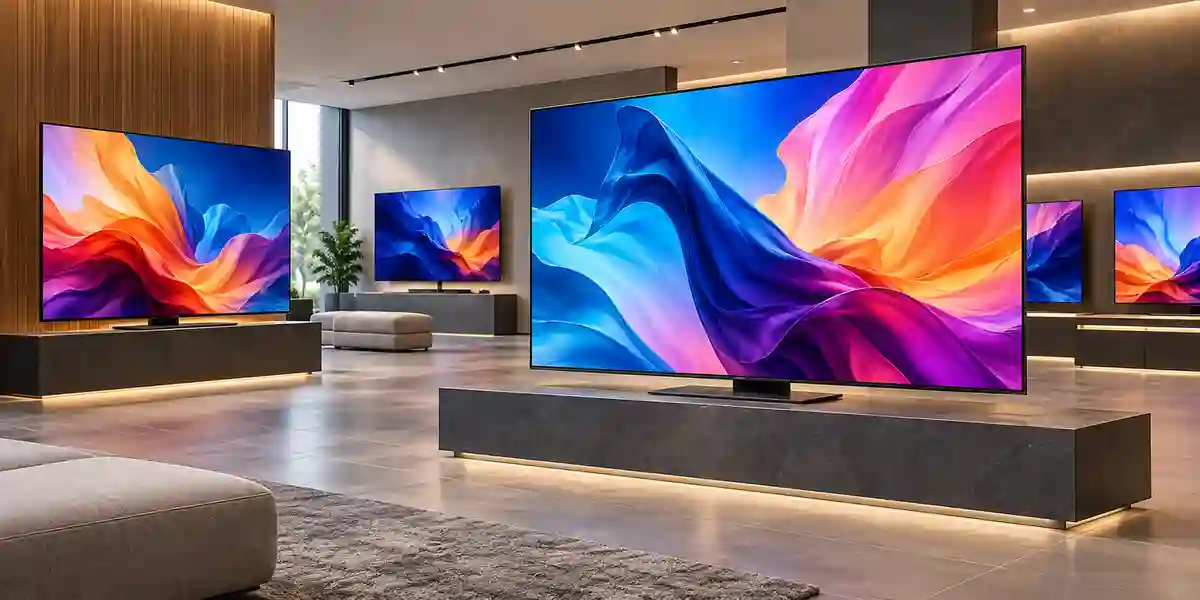
The following Samsung signage imagery from FourTeck’s media library illustrates representative commercial display environments and can help stakeholders visualize how professional signage fits into public-facing projects. Images are illustrative of Samsung signage applications and should not be interpreted as photographs of the OH24B chassis unless specifically identified as such.

Related FourTeck Products & Compatible Alternatives
Samsung Outdoor Signage Family
Choose another Samsung outdoor size when viewing distance, audience scale or content layout requires more screen area than 24 inches. Confirm brightness, protection rating and orientation for the exact model.
Samsung QMC Series
Consider QMC for indoor commercial signage where a slim professional display is needed but full outdoor IP-rated construction is unnecessary. It can be a more appropriate choice for malls, offices and controlled retail interiors.
Samsung QHC Series
Use QHC-family models for indoor high-brightness or premium signage scenarios where screen size and visual impact are more important than outdoor weather protection. Exact features vary by model and generation.
Samsung QBC Series
QBC can fit budget-conscious indoor business signage projects that need reliable commercial operation, portrait/landscape flexibility and centralized content workflows without outdoor hardening.
Samsung Interactive Display
For classrooms, meeting rooms and collaborative spaces, choose an interactive display rather than OH24B. Touch, whiteboarding and collaboration requirements represent a different workload than passive outdoor signage.
Alternative selection should be based on location, brightness requirement, ingress protection, impact risk, screen size, content platform, interface needs and service model. FourTeck can help compare current Samsung commercial display options when the OH24B is technically unsuitable or when a larger deployment requires several display classes.
Why Enterprises Choose FourTeck
Enterprise technology procurement works best when technical validation and commercial coordination happen together. FourTeck supports buyers by translating a model request into a more complete procurement conversation: exact product identification, quantity, deployment environment, accessories, delivery destination and project timeframe. This reduces the chance that a purchasing team receives hardware that is technically correct in name but incomplete for the actual installation.
For commercial displays, pre-sales discussion can cover orientation, mounting, content source, network connectivity, outdoor exposure and whether the project expects embedded signage management. Logistics coordination can then align the delivery plan with the customer’s site schedule. Where warranty or regional part-number questions exist, they should be clarified in the quotation so the buying team has a documented commercial reference rather than relying on assumptions from another market.
FourTeck does not need to position every project around a single model. When the OH24B is not the right fit because of screen size, environmental requirement, interaction need or application architecture, the procurement process can shift toward a more suitable Samsung commercial display family or another appropriate technology category. This engineering-led approach supports cleaner project decisions and fewer avoidable changes during deployment.
Frequently Asked Questions
1. Is the Samsung OH24B designed for outdoor installation?
Yes. The OH24B is a professional outdoor signage display with IP66-rated environmental protection and an operating-temperature specification of -30°C to 50°C. Correct installation remains essential because cable entries, power connections, brackets and surrounding enclosures can affect the overall system’s environmental performance. Site-specific solar load, airflow and mounting conditions should be reviewed before deployment.
2. How bright is the Samsung OH24B?
Samsung specifies 1,500-nit typical brightness for the OH24B. This output is intended to improve content visibility in bright outdoor environments compared with conventional indoor monitors. Actual perceived readability also depends on sun angle, reflections, content contrast, font size, viewing distance and mounting orientation, so project teams should test representative content during design.
3. Can the OH24B operate continuously?
Samsung lists 24/7 operation support for the OH24B, making it appropriate for applications such as charging stations, transport facilities, hospitality entrances and logistics sites that may need continuous information display. Continuous-operation capability does not eliminate the need for proper ventilation, power quality, monitoring and planned maintenance, especially in demanding outdoor environments.
4. Does the OH24B require an external media player?
Not for every project. The OH24B includes Samsung’s embedded signage platform based on Tizen 6.5 and SSSP 10, with support for MagicINFO workflows. Standard signage playback and scheduling can therefore be handled without a separate PC in compatible deployments. Applications requiring specialist software, peripherals or unsupported content may still need an external HDMI source.
5. What connectivity does the Samsung OH24B provide?
The display includes one HDMI 2.0a input with HDCP 2.2 support, two USB ports, RS232, RJ45 Ethernet, audio output and wireless connectivity capability. The best connection method depends on whether the project uses centralized content management, a local HDMI source, AV control integration or wireless networking. Enterprise deployments should align the choice with cybersecurity and manageability requirements.
6. What are the dimensions and mounting pattern?
The Samsung OH24B measures approximately 573.0 mm wide, 342.4 mm high and 59.8 mm deep, with a set weight of about 8.4 kg. Samsung specifies a 100 x 100 mm VESA mounting pattern. Buyers should choose an outdoor-suitable bracket with appropriate load rating, corrosion resistance and access for cabling and service.
7. Is the front glass impact resistant?
Samsung specifies IK10-rated protective glass for the OH24B. This is valuable in public-access environments where the display may be exposed to accidental impacts or vandalism risk. The rating does not mean the entire installation is immune to damage; secure mounting, protected cabling and appropriate physical site design remain important parts of a resilient deployment.
8. Is the OH24B suitable for EV charging stations?
Yes, EV charging is one of the strongest use cases for this model because the 24-inch format can integrate beside charging hardware while the high brightness, outdoor protection and embedded signage platform support public-facing operation. The final charging-station design should still validate thermal conditions, electrical segregation, communications, enclosure geometry and the user’s viewing distance.
9. Can FourTeck supply the Samsung OH24B in Dubai and the UAE?
FourTeck can handle UAE procurement inquiries for the Samsung OH24B, subject to current regional availability and commercial terms. Buyers should submit quantity, delivery Emirate, required date, mounting requirement and deployment context. FourTeck can then coordinate model validation, quotation, logistics planning and applicable warranty information for the proposed supply.
10. What information should I provide for a quotation?
Provide the model name Samsung OH24B, quantity, delivery location, target delivery date, portrait or landscape orientation, expected outdoor exposure, mounting requirement, preferred network method and content-management approach. If the project spans multiple sites or countries, include the quantity per destination. This information helps FourTeck prepare a more precise commercial and technical response.
Request a Samsung OH24B Project Quote
For a project-specific quotation, send FourTeck the required model, quantity, delivery location, target deployment date and any mounting, networking or content-management requirements. For multi-site rollouts, include the site list and expected delivery sequence. FourTeck can then confirm current sourcing options, commercial terms and logistics assumptions for Dubai, the wider UAE or supported export destinations.