Samsung QA85Q7F 85-Inch QLED 4K TV in Dubai, UAE
The Samsung QA85Q7F is an 85-inch QLED 4K smart television for organizations that need expansive viewing, modern smart connectivity, vivid color reproduction, and straightforward integration into boardrooms, hospitality spaces, executive environments, education areas, reception zones, and customer-facing venues. Its combination of a Q4 AI Processor, Quantum HDR, 4K upscaling, Motion Xcelerator, Tizen smart services, SmartThings connectivity, OTS Lite audio, and Q-Symphony support gives buyers a flexible large-screen platform without moving into specialist direct-view LED or commercial video-wall infrastructure.
For UAE projects, the buying decision should consider much more than diagonal size. Wall structure, VESA compatibility, route-to-room dimensions, seating distance, ambient light, HDMI source count, network availability, sound reinforcement, warranty route, and planned daily usage should all be checked before purchase. FourTeck can coordinate the commercial and pre-sales side of that assessment for deployments in Dubai and across the Emirates.
Procurement Snapshot
Model: QA85Q7F family, Gulf suffix subject to stock batch.
Primary fit: large meeting rooms, executive spaces, hospitality, retail, education and reception environments.
Mounting: VESA 600 × 400 mm per Gulf specification; verify bracket rating and wall structure.
Commercial note: availability, warranty route and regional services can vary; confirm on quotation.
Samsung
QA85Q7F 85-inch Q7F series
QLED 4K Smart TV
Large-format business viewing, presentations, hospitality and customer-facing display use.
50 Hz Gulf specification.
AC 220–240 V, 50/60 Hz; final consumption profile depends on settings and usage.
Dubai, UAE and regional project supply subject to quotation.
Confirm UAE warranty, service route and exact model suffix on the commercial offer.
Executive Product Architectural Overview
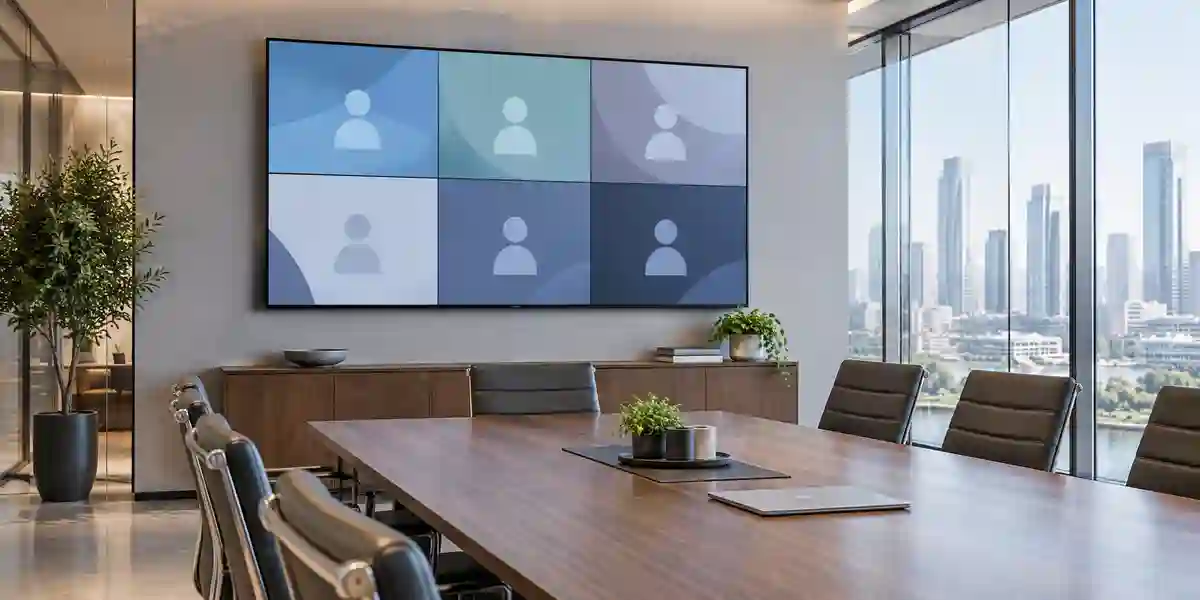
For enterprise buyers, an 85-inch television occupies an interesting position between a conventional meeting-room screen and a purpose-built commercial display system. The Samsung QA85Q7F is best understood as a large-format smart QLED platform designed around high-resolution content consumption, presentation visibility and broad device interoperability. It is not a modular LED wall, nor is it a specialist 24/7 signage panel with the management stack and duty-cycle profile that some retail chains, transport hubs or control rooms require. Its value lies instead in providing a very large, visually engaging 4K canvas through familiar television architecture, modern Samsung processing and a broad smart ecosystem. That makes it relevant to executive boardrooms, customer briefing centres, hotel suites, private hospitality areas, restaurants, education spaces, premium reception zones and other environments where content quality and ease of use matter alongside screen size.
At the heart of the platform is Samsung’s Q4 AI Processor, which handles picture processing and supports 4K upscaling. For business users, this matters because real-world source material is rarely uniform. A boardroom may move between native 4K presentation material, 1080p conferencing output, embedded streaming content and lower-resolution source feeds. Upscaling cannot create information that is absent from the source, but competent processing can reduce the visual penalties of showing sub-4K content on an 85-inch panel. At this size, imperfections that are unobtrusive on a 55-inch screen become much easier to see. The processing pipeline therefore supports practical mixed-source use rather than merely serving as a specification headline.
The display uses QLED technology with Quantum HDR, Color Booster Pro, Mega Contrast, Supreme UHD Dimming and a contrast enhancer. Procurement teams should interpret these technologies through operational outcomes. In a customer-facing lounge, large color fields and brand imagery benefit from consistent, saturated presentation. In a meeting room, fine text, dashboards and diagrams need enough contrast to remain legible from the rear of the seating area. In hospitality, cinematic content benefits from better tonal separation and strong color reproduction. However, ambient lighting remains a deployment variable. Very bright glass-walled rooms or direct sunlight can overwhelm any conventional television if placement is poor, so screen orientation and shading should be part of the room design process.
Motion Xcelerator is relevant for sports, fast video, scrolling content and dynamic material. The Gulf specification lists a 50 Hz refresh rate, so this model should not be positioned as a high-refresh specialist gaming display or as a substitute for premium 100/120 Hz commercial visualization hardware. For the majority of presentation, streaming, hospitality and general enterprise viewing scenarios, 50 Hz is entirely serviceable. Buyers who need high-frame-rate esports, simulation or advanced interactive visualization should explicitly state that requirement so a different display class can be considered.
The software layer is equally important. Tizen Smart TV provides access to Samsung’s smart environment, while SmartThings Hub, Matter Hub functionality and Quick Remote support extend the TV into broader connected-device workflows. In a corporate setting, that can simplify wireless interaction or smart-room integration, although enterprise architects should still decide which smart functions are appropriate for the organization’s security policy. Consumer-oriented smart services are convenient, but not every enterprise wants unrestricted app installation, voice services or personal account sign-in on shared displays. A managed deployment should define who can change settings, which network segment the TV joins and whether wireless casting is open, restricted or disabled.
The QA85Q7F offers three HDMI inputs, one USB-A port, Ethernet, Wi-Fi 5, Bluetooth 5.3 and eARC in the Gulf family specification. Three HDMI ports are sufficient for many installations, but integrators should map the full source list before deployment. A typical boardroom might require a room PC, wireless presentation gateway, conferencing codec, digital signage player and guest HDMI input; that exceeds the native HDMI count without switching. The answer is not necessarily a different television—an AV switcher, matrix or receiver may be the correct architecture—but the requirement should be identified early to avoid an improvised installation.
Physical planning is also significant. The panel measures roughly 1.90 metres wide, and its mass without the stand is above 30 kg. The wall, bracket, fasteners and mounting method therefore need to be engineered for the actual substrate. Blockwork, reinforced concrete, gypsum partitions and decorative wall systems each demand different mounting strategies. Access routes should also be measured before delivery. Lifts, doorways, stair turns, loading bays and packaging clearance can become project constraints long before the television reaches the wall. FourTeck’s procurement role is to help buyers convert those architectural and operational details into a clean bill of requirements before the commercial order is finalized.
Enterprise Business Value & ROI Benefits
The return from a large display is rarely measured by processor speed or pixel count alone. The real value comes from how effectively a screen improves communication, removes friction, supports customer experience and reduces the need for repeated equipment changes. The Samsung QA85Q7F can create that value in several ways when deployed into the correct environment.
1. Large-format visibility
An 85-inch diagonal provides meaningful visual scale for rooms where 55- or 65-inch displays become difficult to read from the rear. Larger dashboards, architectural drawings, financial charts, product visualizations and shared documents can be presented without excessive zooming. That improves the practical usefulness of collaborative sessions and can reduce interruptions caused by participants struggling to see content.
2. High-resolution presentation fidelity
4K resolution provides the pixel density needed to make a very large panel useful for detailed material. When a source is properly configured, small interface elements, spreadsheet cells and text can remain sharper than on lower-resolution large displays. The Q4 AI Processor and 4K upscaling also help mixed-resolution sources appear more coherent across everyday workflows.
3. Integrated smart platform
Tizen, SmartThings and built-in wireless capabilities reduce dependence on an external box for every use case. Some organizations may still choose dedicated meeting-room PCs or managed signage players, but the TV retains flexibility for streaming, wireless mirroring and general-purpose viewing. This can reduce the number of devices required in executive or hospitality environments where simplicity is valuable.
4. Audio integration flexibility
Built-in 20 W 2-channel audio is useful for basic playback, while OTS Lite and Adaptive Sound improve the integrated experience. For larger rooms, eARC and Q-Symphony support make it easier to move toward an external soundbar or compatible audio solution. This staged approach allows buyers to match audio investment to room requirements rather than overbuilding every installation.
5. Familiar user experience
Samsung’s smart television interface is familiar to many users, which can reduce training friction in hospitality suites, executive offices and mixed-use collaboration spaces. A familiar remote-driven interface may be preferable to specialized control systems when the room’s purpose is straightforward and dedicated AV support is limited.
6. Deployment flexibility
The TV can operate on its supplied stand or be wall mounted using a suitable VESA-compatible bracket. That flexibility matters for leased offices, hospitality renovations and mixed environments where room layouts change. The procurement team can standardize around one screen family while adapting the physical installation method to each room.
A disciplined buyer should also account for total lifecycle cost. That means not only the panel price, but mounting hardware, installation labor, cabling, power outlets, network ports, external audio, AV switching, delivery access, commissioning and eventual service coordination. An inexpensive panel that requires unexpected infrastructure work can be more costly than a slightly higher-priced option selected with the full room architecture in mind. Conversely, buying a specialist commercial display for a low-duty executive lounge may create unnecessary capital cost. The QA85Q7F is strongest where a large, high-quality smart television is the correct category rather than where an always-on signage or control-room product is required.
Reliability planning should focus on environment and duty cycle. Adequate ventilation around the panel, stable mains power, clean cable routing and sensible brightness settings support long-term operation. In UAE installations, heat exposure can become relevant where screens are located near sunlit glazing or poorly conditioned spaces. The television should be treated as indoor electronics and installed where environmental conditions remain within normal manufacturer expectations. For public-facing commercial spaces with long daily operating hours, buyers should disclose the expected duty cycle so FourTeck can determine whether this television or a Samsung commercial signage model is more suitable.
Hardware & Technical Architecture Highlights
The technical architecture of the QA85Q7F is designed around an integrated television workflow rather than modular compute. The Q4 AI Processor performs image processing, scaling, scene handling and enhancement functions before content is rendered on the QLED panel. This architecture means the quality of source handling is important: HDMI devices should be configured to output supported 4K formats, wireless streaming sources should use a stable network, and room PCs should have appropriate graphics settings. A poor source path can undermine the benefit of an 85-inch 4K panel more than the panel itself.
Quantum Dot technology is the basis of Samsung’s QLED color approach. In practical deployment terms, the buyer should expect a strong emphasis on color volume and bright, attractive imagery. Quantum HDR, HDR10+ support, Mega Contrast, Supreme UHD Dimming and Contrast Enhancer work together to improve tonal presentation. HDR performance still depends on the content and the room. A showroom demo using native HDR material may look different from an office PowerPoint deck, CCTV feed or browser dashboard. Procurement evaluation should therefore use representative source material rather than relying entirely on retail demonstration loops.
Motion Xcelerator applies motion processing intended to keep moving content clear and controlled. For sports bars, hotel lounges, customer waiting areas and training videos, this can improve the perceived smoothness of fast scenes. The Gulf specification’s 50 Hz native rate sets a realistic ceiling: users seeking high-refresh PC gaming or simulation should choose accordingly. For mainstream corporate video, collaboration and hospitality playback, this refresh class is generally appropriate.
Audio architecture is built around a 20 W, two-channel system with OTS Lite, Adaptive Sound and Q-Symphony. OTS Lite uses processing to create a sense that sound follows on-screen action, while Adaptive Sound adjusts presentation based on content characteristics. Q-Symphony is particularly useful where the deployment includes compatible Samsung sound hardware, allowing television speakers and an external soundbar to operate together in supported configurations. In boardrooms with acoustic challenges or more than roughly a dozen participants, a dedicated conferencing audio system should be evaluated independently rather than assuming television speakers can replace room microphones and distributed loudspeakers.
Connectivity is deliberately broad but not unlimited. Three HDMI inputs cover common sources such as a set-top box, room PC and conferencing endpoint. eARC supports audio return to compatible sound systems. USB-A is available for supported media and accessory use. Ethernet offers predictable wired network connectivity where corporate policy permits, while Wi-Fi 5 gives flexibility in rooms without nearby network outlets. Bluetooth 5.3 supports compatible peripherals and audio devices. For enterprise design, wired Ethernet should generally be preferred when stable managed connectivity is required, while Wi-Fi can be reserved for convenience or locations where cabling is impractical.
The physical architecture uses Samsung’s slim-look design and three-bezel-less aesthetic. A narrow visual frame is valuable where the TV becomes part of an executive wall treatment or hospitality interior. However, physical elegance should not lead to under-engineered mounting. The Gulf family lists a 600 × 400 mm VESA pattern, and the set weight is roughly 32.5 kg without the stand. Bracket selection should include a meaningful safety margin, while the wall structure and fastener system must be suitable for the substrate. Cable bends, recessed boxes and service access should be planned before the screen is mounted flush to the wall.
Definitive Technical Specifications & Sizing Notes
| Category | Specification | Procurement Note |
|---|---|---|
| Display | 85-inch QLED | Confirm route-to-room clearance and final wall dimensions before dispatch. |
| Resolution | 3840 × 2160 (4K) | Best results require correctly configured 4K source devices and suitable HDMI cabling. |
| Refresh Rate | 50 Hz, Gulf model family | Suitable for standard corporate, hospitality and viewing workloads; not a high-refresh specialist panel. |
| Processor | Q4 AI Processor | Supports picture processing and 4K upscaling across mixed-resolution sources. |
| HDR | Quantum HDR, HDR10+ | HDR presentation depends on source content, room lighting and picture settings. |
| Picture Features | Mega Contrast, Supreme UHD Dimming, Contrast Enhancer, Color Booster Pro, Motion Xcelerator | Useful for mixed business, hospitality, streaming and presentation content. |
| Audio | 20 W, 2CH, OTS Lite, Adaptive Sound, Q-Symphony | Large rooms may still benefit from a soundbar or dedicated conferencing audio. |
| Smart Platform | Tizen Smart TV | App and service availability varies by region and may change over time. |
| IoT / Smart | SmartThings Hub, Matter Hub, Quick Remote | Enterprise IT teams should define network and account policy before enabling smart services. |
| HDMI | 3 ports | Use an AV switcher where room source count exceeds native inputs. |
| USB | 1 × USB-A | Confirm device compatibility for planned peripherals and playback media. |
| Network | Ethernet, Wi-Fi 5 | Wired connectivity is often preferable for managed corporate installations. |
| Bluetooth | Bluetooth 5.3 | Supports compatible accessories and audio devices; exact behavior depends on device type. |
| eARC | Supported | Useful for compatible soundbar and AV receiver integration. |
| VESA | 600 × 400 mm | Confirm bracket load rating, standoff depth and wall substrate. |
| Set Size without Stand | Approx. 190.1 × 108.7 × 6.1 cm | Use manufacturer dimensions for final joinery and recess planning. |
| Weight without Stand | Approx. 32.5 kg | Mounting hardware should include a substantial safety margin. |
| Power | AC 220–240 V, 50/60 Hz | Provide a correctly positioned outlet and avoid unsafe extension arrangements behind the display. |
Sizing should start with the room rather than the product catalogue. An 85-inch screen is about 1.9 metres wide, so furniture placement, camera sightlines, wall finishes and door swing can all affect where it fits. A screen can be visually impressive yet operationally poor if viewers sit too close, if sunlight strikes the panel, or if cables emerge in a location that prevents a flush installation. For boardrooms, buyers should map the farthest viewer, typical content type and camera location. For hospitality, evaluate the bed or seating orientation and expected sound path. For retail, establish whether the duty cycle and content-management needs justify a true commercial signage panel instead. The model suffix supplied into the UAE can also affect regional services, remote type and tuner configuration. FourTeck should therefore be asked to confirm the exact offered suffix and warranty path at quotation stage.
Configuration, Sizing & Deployment Workbench
01 / DEFINE THE VIEWING JOB
Start by describing what the screen will actually display during a normal week. Presentation decks, spreadsheets, video conferencing, dashboards, training material, streaming entertainment, digital menus and public information all create different priorities. A boardroom with detailed financial models places more emphasis on text legibility and source resolution than a hotel lounge showing sports. A retail environment may prioritize long duty cycles and centralized content control, which can shift the recommendation toward Samsung commercial signage. Defining the job prevents screen size from becoming the only purchase criterion.
02 / CHECK ROOM GEOMETRY AND VIEWING DISTANCE
Measure the wall, floor-to-screen relationship, seating positions and farthest viewer. Confirm that the panel does not block switches, thermostats, windows or architectural features. Consider camera placement if the room supports video conferencing. The screen’s approximate 1.9-metre width should be tested against the full wall treatment, not just the empty mounting zone. In executive spaces, align the screen with furniture and eye line. In hospitality, ensure comfortable viewing without forcing guests to tilt their heads upward.
03 / MAP SOURCES AND HDMI PORT DENSITY
List every wired source: room PC, conferencing appliance, wireless presentation gateway, media player, set-top box, gaming console, signage player and guest connection. The QA85Q7F provides three HDMI inputs, so a room with four or five permanent sources needs an AV switcher or receiver. Confirm whether eARC will be allocated to a sound system because that can influence the preferred port layout. Specify cable lengths before construction closes walls; long 4K HDMI runs may require active or optical HDMI solutions rather than passive copper cables.
04 / PLAN NETWORK AND SMART SERVICES
Decide whether the television will use Ethernet or Wi-Fi and which network segment it will join. Corporate networks may require NAC, VLANs or firewall policy changes. SmartThings, streaming apps and wireless mirroring can be highly useful, but shared displays also raise governance questions around personal logins, saved credentials and unmanaged casting. Establish who owns the device configuration, whether guests can cast, and how settings will be recovered after misuse. Where strict control is required, an external managed media or conferencing endpoint may be the better user interface even though the TV itself remains smart-enabled.
05 / ENGINEER MOUNTING AND ACCESS
Confirm the VESA pattern, bracket rating, wall substrate and stud or anchor strategy. Measure the packaged product against delivery lifts, service elevators, doorways and staircases. For recessed wall applications, preserve ventilation and service access. If the television is installed above joinery, ensure technicians can still reach ports without removing built-in furniture. Cable loops should be long enough for safe service movement but controlled so they do not interfere with the bracket. In high-profile spaces, consider a professional installation survey before ordering multiple units.
06 / SIZE AUDIO TO THE ROOM
The 20 W integrated audio is adequate for casual viewing and smaller spaces, but an 85-inch screen often ends up in a room large enough to justify separate audio. For hospitality and executive lounges, a compatible soundbar can be sufficient. For conferencing, microphones and echo-cancellation requirements should be evaluated independently. Large meeting rooms may need ceiling speakers, DSP and integrated conferencing audio. Treat Q-Symphony and eARC as useful integration options rather than evidence that external audio is unnecessary.
07 / VERIFY POWER, HEAT AND OPERATING HOURS
Provide stable AC power near the installation point and avoid exposed extension cords. Check that the screen is not mounted in direct solar heat, near high-temperature equipment or where HVAC is ineffective. If the display is expected to run for very long daily periods in a public venue, disclose that operating profile. A consumer smart television and a commercial signage screen are engineered for different market expectations, and duty cycle can materially influence the appropriate category.
08 / LOCK COMMERCIAL AND WARRANTY TERMS
Before purchase, obtain the exact offered model suffix, quantity, UAE warranty route, delivery lead time, included accessories, bracket inclusion status and installation scope. Do not assume a wall bracket or on-site installation is included unless listed in the quotation. For projects, ask that serial-number handling, delivery sequencing, floor distribution and site contact details are agreed before dispatch. This prevents a successful purchase order from turning into a difficult site delivery.
Industry Use Cases & Workload Scenarios
Banking & Finance
An 85-inch QLED can serve executive meeting rooms, investment briefing spaces and customer presentation suites where charts, market dashboards and video calls need strong visibility. The 4K canvas helps when several data panels must appear simultaneously. Finance teams should still use managed source devices and secure network segmentation rather than relying on unrestricted smart-TV access in rooms that may display sensitive information.
Healthcare
Suitable use cases include training rooms, executive conference rooms, reception lounges and non-diagnostic education areas. The TV should not be positioned as a medical diagnostic display. Clinical imaging and diagnostic interpretation require specialized, calibrated displays designed for regulated workflows. For general communication, staff education and patient-facing media, the large format can improve visibility and engagement.
Government & Public Sector
The QA85Q7F can support briefing rooms, reception areas, training spaces and executive offices. Public-sector IT teams should define network access, casting policy, smart-service permissions and account management before deployment. Where centrally managed messaging, high duty cycle or security hardening is required, Samsung commercial signage should be compared alongside the television family.
Logistics & Operations
In logistics offices, the screen can present KPI dashboards, route maps, warehouse metrics and training content. If the display will run continuously in a 24/7 operations centre, however, a commercial display with a duty-cycle specification aligned to that workload may be a better fit. The Q7F is strongest in meeting and supervisory environments rather than mission-critical control-wall service.
Retail & Hospitality
Large QLED imagery can create impact in premium hospitality suites, lounges, restaurants and low-to-moderate-duty customer areas. For scheduled signage networks, storefront windows or environments requiring remote fleet management, brightness guarantees and extended operation, compare dedicated Samsung signage models. The correct choice depends on operational duty cycle and content-management requirements rather than visual size alone.
Education
The 85-inch format can work in seminar rooms, training spaces and lecture environments where content must remain visible to a larger audience. It is a non-touch television, so institutions requiring annotation and interactive classroom workflows should compare Samsung interactive displays or smart boards. For straightforward presentation and video playback, the large 4K screen offers strong visual reach.
Technical Feature Deep Dive 1: Processing, Throughput & Workload Performance Architecture
The QA85Q7F’s performance architecture begins with the Q4 AI Processor. Unlike a PC CPU that buyers evaluate through core counts and benchmark scores, a television processor is optimized around a bounded set of image, audio and smart-platform tasks. Its value is therefore better judged by how it manages mixed input quality, tone mapping, scaling, motion handling and the television interface. On an 85-inch display, these processing decisions are unusually visible because the image is physically large. Compression artifacts, poor scaling and weak text rendering are easier to notice than on a smaller panel.
4K upscaling is particularly relevant to enterprise environments because not every source is native 4K. Conferencing appliances may output 1080p depending on call conditions. Legacy media players may be limited to Full HD. Broadcast television and some streaming feeds use lower effective resolution or aggressive compression. Upscaling allows the television to map these sources to its 3840 × 2160 panel. Buyers should maintain realistic expectations: processing can improve edge handling and presentation consistency, but it cannot restore detail that was never captured. Source quality remains the first determinant of the final image.
Color Booster Pro and the QLED panel architecture are useful for branded content, presentations, photography and hospitality material where rich color is part of the experience. Quantum HDR and HDR10+ support add dynamic-range capability for compatible content. Business presentations generally do not exploit HDR in the same way as cinema material, but mixed-use environments benefit because the same panel can move from a daytime presentation to premium video playback without hardware changes. That flexibility is valuable in boardrooms that double as event or briefing spaces.
Motion Xcelerator contributes to moving-image clarity, but the 50 Hz Gulf specification should guide expectations. Most office content, standard video playback and streaming services operate comfortably within this range. Fast sports and gaming can still look good, but organizations seeking very high frame-rate visualization should move to a panel designed for that requirement. This distinction matters in simulation, esports, broadcast monitoring and certain design review workflows where refresh rate is a core performance parameter rather than a secondary feature.
From a throughput perspective, the HDMI subsystem supports common 4K sources across three inputs. The room architecture determines whether those inputs are enough. A single executive office may need only a laptop dock and streaming device. A boardroom can easily require five sources. An AV matrix or switcher then becomes part of the design, and the television behaves as the final rendering endpoint. This is a sound architecture because switching, control and source routing are often better handled by dedicated AV hardware than by repeatedly changing cables at the panel.
Technical Feature Deep Dive 2: Security, Redundancy & System Resilience
Samsung includes Knox security technologies in its contemporary smart television ecosystem, but enterprise resilience requires a broader systems view. A shared display can connect to networks, receive wireless casts, store app credentials and communicate with external devices. The appropriate security posture therefore depends on where the TV is deployed. A private hotel suite, a public reception area and a boardroom handling confidential strategy meetings should not share identical configuration policies.
For corporate deployments, the network team should determine whether the TV belongs on a dedicated IoT VLAN, guest network, AV network or another controlled segment. Ethernet is often easier to monitor and stabilize than Wi-Fi, though Wi-Fi remains useful for flexible rooms and retrofits. Wireless casting should be tested from the actual user networks and locked down if uncontrolled discovery is undesirable. Personal account logins should be avoided on shared enterprise displays unless there is a documented ownership and sign-out process.
Resilience also means designing around single points of failure. The television itself is one endpoint, but the meeting experience may depend on a room PC, network connection, video-conferencing appliance, soundbar, HDMI switcher and USB peripherals. If the screen is critical to executive operations, spare cables, documented input configurations and a simple fallback method—such as a direct guest HDMI lead—can restore functionality when an upstream device fails. These modest operational choices often deliver more practical resilience than complex features that users do not understand.
Power continuity should be evaluated based on the business impact of an outage. Most television installations do not require a UPS, but an executive command room or important event space might. If backup power is used, it must be correctly sized for the television plus connected AV equipment and selected for the required runtime. Surge protection and stable building power are also relevant, particularly in projects where audiovisual devices share circuits with lighting or other high-load equipment.
Thermal resilience is especially important in Gulf environments. Indoor electronics are intended for conditioned spaces. Mounting a very large television against a wall exposed to intense solar heating, placing it in a poorly ventilated enclosure or installing it near a heat source can undermine reliability. Recessed installations should provide ventilation pathways and service clearances. A clean visual installation should not come at the cost of trapping heat or making the panel impossible to service.
Technical Feature Deep Dive 3: Remote Management, Telemetry & Infrastructure Integration
The QA85Q7F sits within Samsung’s smart ecosystem and therefore supports a level of connected operation through Tizen, SmartThings and Matter-related functionality. For a home or hospitality user, this can create a convenient environment for remote control, device discovery and content access. Enterprise buyers should separate convenience features from formal fleet management. A consumer smart television is not the same management proposition as Samsung’s commercial signage platforms, which are designed around centralized content distribution, device monitoring and business operation policies.
In a small deployment—perhaps three executive offices and two meeting rooms—the smart features may be entirely sufficient. A facilities or IT team can document settings, standardize source names, connect each unit to the correct network and maintain a simple configuration record. At larger scale, however, organizations often need centralized monitoring, lockable configurations and remote content scheduling. That is the point at which a commercial display family may deliver better operational economics even if its acquisition price is higher.
SmartThings Hub and Matter support can be useful in spaces with compatible connected devices, but integration should follow the organization’s architecture. A meeting room may already use a building-management platform, professional AV control system or Microsoft Teams Rooms / Zoom Rooms stack. In such cases, the TV should be integrated as a display endpoint rather than becoming an independent control centre. The best user experience is usually the one that minimizes competing control surfaces.
Quick Remote and mobile interaction can be helpful when physical remotes are frequently misplaced. Yet mobile control depends on network design and user permissions. Before rollout, test the workflow with managed corporate phones, guest devices and any mobile-device-management restrictions. If mobile control is not appropriate, keep the physical remote secured or provide a room-control interface through the AV system.
Telemetry in the broad sense includes understanding device health, firmware status, network state and usage. For a small number of televisions, periodic manual checks may be adequate. For dozens or hundreds of displays across branches, manual maintenance becomes expensive. Procurement teams should therefore forecast fleet size before standardizing. The QA85Q7F is a compelling large smart TV, but enterprise scale can change the management requirement enough to justify a commercial signage alternative with more mature centralized administration.
What Buyers Should Check Before Purchase
Large displays are unforgiving of procurement assumptions. The most common project risks are not obscure technical faults; they are practical mismatches such as the wrong bracket, inadequate wall strength, insufficient HDMI inputs, poor delivery access, unmanaged network connectivity, unclear warranty terms or choosing a consumer TV for a duty cycle that really belongs to commercial signage. Use the checklist below before releasing the purchase order.
01 / FIT — Configuration Fit & Model Sizing
Confirm the exact QA85Q7F regional model suffix, 85-inch size, room dimensions, viewing distance and planned content. Verify whether a 50 Hz panel is suitable for the workload and whether the installation needs interactive touch, signage scheduling or 24/7 operation. If any of those are core requirements, compare adjacent Samsung product families before ordering.
02 / MATCH — Compatibility & Environmental Requirements
Check VESA 600 × 400 mm bracket compatibility, wall construction, load rating, power outlet placement, HDMI cable length, network availability and external audio. Measure elevators, doors and access corridors against the packaged unit. Review room temperature, sunlight and ventilation. Confirm that the source devices can output the desired 4K format and that any conferencing equipment is compatible with the display workflow.
03 / TERMS — Availability, Delivery & Warranty Terms
Ask for current stock status, lead time, UAE warranty route, included remote and stand components, delivery scope and whether installation or wall mounting is part of the quote. For multi-unit projects, define delivery sequencing, staging locations and site contacts. For exports, confirm documentation, destination warranty implications and customs responsibility before shipment.
04 / REQUEST — Quote Preparation Data Needed
Provide FourTeck with the quantity, delivery Emirate or export destination, desired deployment date, mounting method, external audio requirement, source-device list and any preferred model suffix. If the screen is part of a meeting-room project, include room dimensions and the conferencing platform. Better input data produces a more accurate commercial proposal and reduces post-order change requests.
UAE Regional Availability & Service Ecosystem
FourTeck supports UAE procurement by coordinating product sourcing, configuration validation, quotation preparation and delivery planning. For a large 85-inch television, regional availability is only part of the requirement; buyers also need confidence that the exact model suffix, warranty path, delivery access and mounting assumptions are aligned before dispatch. Commercial response is faster and more accurate when the request includes quantity, delivery zone, building type, deployment date and whether installation hardware is required.
K1. Dubai Supply & Logistics Support
Dubai projects can range from single executive-office installations to multi-unit hospitality, retail and corporate rollouts. FourTeck can coordinate localized enterprise supply, Free Zone delivery requirements, project staging discussions and quote preparation across business districts, hospitality clusters, commercial towers and industrial areas. For buildings with restricted delivery windows, service-elevator booking or loading-bay controls, buyers should provide site logistics details before dispatch. This is especially important for an 85-inch product because packaging dimensions and handling requirements can exceed those of standard office displays.
K2. Abu Dhabi & Al Ain Logistics Reach
For Abu Dhabi and Al Ain, FourTeck can support sourcing, quotation coordination and delivery planning for corporate, government, education, industrial and hospitality requirements. Projects should identify whether deliveries are to controlled government sites, campuses, hotels, industrial facilities or standard offices, as each environment can have distinct gate-pass and delivery procedures. If the TV forms part of a larger meeting-room or executive-display deployment, provide the full room equipment list so compatibility can be reviewed before the order is placed.
K3. Sharjah & Northern Emirates Logistics Infrastructure
Sharjah and the Northern Emirates include a broad mix of education, manufacturing, logistics, retail and corporate environments. FourTeck can assist with quotation handling, product availability verification and commercial logistics coordination. Buyers should confirm whether access is through passenger lifts, service lifts or ground-floor loading areas, particularly in older buildings where large-panel movement can be constrained. For multi-site deployments, consolidated procurement can simplify model consistency and commercial administration.
K4. Ajman & Surrounding Emirates Logistics Coverage
Ajman buyers can request current hardware availability, delivery coordination and technical pre-sales guidance for offices, hospitality venues, education facilities and retail projects. For wall-mounted installations, the site should confirm mounting substrate and electrical readiness before delivery. If the television will be integrated with a soundbar, conferencing endpoint or wireless presentation system, include those requirements in the quote request so the final solution can be reviewed as a complete room rather than as an isolated screen.
GCC & Pan-African Supply Chain Reach
FourTeck can support cross-border technology procurement through project quotation, export coordination and logistics documentation assistance. Export buyers should verify destination-country warranty implications, customs duties, tax treatment, power requirements, regional model suffixes and local installation arrangements before confirming an order. Large-format televisions require particularly careful freight planning because the carton is bulky and vulnerable to mishandling; appropriate transport, insurance and receiving procedures should therefore be discussed for international shipments.
L1. Saudi Arabia (KSA) Export & Supply Support
Saudi project buyers can request regional inquiry routing, configuration validation and commercial support for enterprise, hospitality, education and executive display deployments. Provide the destination city, quantity, required model suffix if specified by the project, and whether the shipment is part of a broader AV bill of materials. Cross-border buyers should also establish who will provide final-mile installation and warranty service in the Kingdom.
L2. Qatar Market Supply Reach
For Qatar, FourTeck can coordinate hardware sourcing and project quotation for organizations seeking large-format Samsung displays. The commercial request should include the receiving company, delivery location, expected timeline and any export documentation requirements. Where televisions are intended for hotels, offices or customer experience spaces, the deployment duty cycle should be stated so the correct television-versus-signage category can be confirmed.
L3. Oman Regional Distribution Support
Oman buyers can seek procurement guidance and quotation coordination for the QA85Q7F and related Samsung display options. Muscat corporate projects, hospitality environments and education deployments should identify access constraints and whether installation is locally arranged. Regional app availability and warranty support may differ by model suffix, so the offered unit should be checked against the intended destination before shipment.
L4. Kuwait Supply Chain Coverage
FourTeck supports project quotation and export supply coordination for Kuwait. Buyers planning multi-unit deployments can use FourTeck Kuwait as a regional enquiry route. Requests should include quantity, destination, deployment type and any requirements for related AV hardware, mounting or project documentation.
L5. Kenya & East Africa Supply Infrastructure
Kenyan system integrators and enterprise buyers can use FourTeck Kenya for regional distribution discussions, technical inquiry routing and delivery coordination. Large panels benefit from careful freight packaging and receiving plans, particularly for projects outside major urban centres. Confirm local voltage compatibility, warranty arrangements and installation responsibility before export.
L6. Uganda Regional Procurement Support
Uganda procurement teams can use FourTeck Uganda for localized project inquiries, technology sourcing and supply coordination. Provide the required number of displays, delivery location, deployment timeline and whether the project includes mounting or audio accessories. Cross-border commercial terms should clearly identify freight, taxes and final-mile responsibilities.
L7. Pan-African Regional Logistics & Trade Reach
For broader African projects, FourTeck Africa and FourTeck Global provide enquiry routes for multi-country technology procurement. Regional buyers should plan around freight, customs, local standards, service availability and model-suffix differences. When several countries are involved, a consolidated bill of materials can improve product consistency while destination-specific documentation remains separated.
Related FourTeck Products & Compatible Alternatives
A well-designed procurement process compares the QA85Q7F with adjacent Samsung categories rather than assuming every large-screen requirement belongs to the same product class. The alternatives below address different operational priorities.
| Alternative | Choose it when | Key difference |
|---|---|---|
| Samsung QMC Series Commercial Display | You need centralized signage use, commercial operating patterns or business fleet management. | Purpose-built commercial signage rather than a smart TV. |
| Samsung QHC Series Commercial Display | A slim professional signage profile and commercial deployment ecosystem are priorities. | Better aligned to managed business signage workloads. |
| Samsung Interactive Display / Smart Board | Teaching, annotation, whiteboarding or direct touch interaction is required. | Adds interactive workflows that a standard television does not provide. |
| Samsung Neo QLED 85-inch Class | Premium picture processing, higher-tier backlighting or advanced motion performance is required. | Moves into a higher Samsung television tier with different picture architecture. |
| Samsung The Wall / Direct-View LED | The project requires very large modular canvases, prestige installations or architectural-scale visuals. | Completely different modular LED system with substantially higher project complexity and budget. |
The correct alternative depends on duty cycle, management requirements, interactivity, brightness expectations, content source and budget. A television is often the most efficient solution for meeting and hospitality use, while a commercial signage panel can be more economical over time when centralized management and extended operating hours are required. FourTeck can compare the requirement against the available Samsung families before a final model is selected.
Why Enterprises Choose FourTeck
Enterprise technology purchasing is rarely improved by treating a product as an isolated SKU. FourTeck’s role is to help translate the operational requirement into a practical commercial order. For the Samsung QA85Q7F, that means validating the model family and region, checking availability, confirming deployment assumptions and ensuring the buyer understands what is and is not included in the quotation. This is particularly useful with large televisions because mounting, transport and room integration can add hidden work after the screen itself has been selected.
Pre-sales discussions can cover screen size, room geometry, viewing use, source count, network connectivity, bracket requirements, external audio, delivery access and warranty expectations. The goal is not to overcomplicate the purchase, but to identify problems while they are still inexpensive to fix. A missing HDMI switch, incompatible wall bracket or inaccessible service lift is straightforward to address before delivery and disruptive afterward.
For multi-site projects, consistent product naming, suffix validation and staged delivery are equally important. FourTeck can coordinate commercial responses around the buyer’s required quantities and locations, while warranty and availability remain subject to the offered stock and manufacturer channel. Buyers should request that all critical assumptions appear in the quotation rather than relying on informal expectations.
Frequently Asked Questions
1. Is the Samsung QA85Q7F suitable for a corporate boardroom?
Yes, provided the room is designed around an 85-inch non-touch television and does not require specialist commercial signage management. Its 4K resolution, large panel, HDMI connectivity, smart features and wireless capabilities suit presentations, video playback and general executive-room use. For conferencing, treat cameras, microphones and speakers as a separate room-system design. If the screen will operate for extended daily hours or needs centralized management, compare Samsung commercial displays as well.
2. What is the native refresh rate of the UAE/Gulf QA85Q7F?
Samsung’s Gulf specification for the 85-inch Q7F family lists a 50 Hz refresh rate. This is suitable for normal business presentations, streaming, hospitality viewing and general video. It should not be confused with refresh-rate figures shown for some North American variants, which use different regional specifications and naming conventions. Buyers requiring high-refresh gaming, simulation or specialist visualization should state that requirement before purchase so another panel can be evaluated.
3. Does the QA85Q7F support 4K content?
Yes. The panel resolution is 3840 × 2160 pixels, commonly described as 4K UHD. The Q4 AI Processor also supports 4K upscaling for lower-resolution sources. Final image quality still depends on the source device, cable quality, content resolution and picture settings. For PCs and conferencing systems, configure the graphics output correctly and test the actual application at the intended seating distance.
4. Can this TV be wall mounted?
Yes. The Gulf family specification lists a 600 × 400 mm VESA mounting pattern. Because the 85-inch screen is physically large and weighs more than 30 kg without the stand, the bracket, fasteners and wall substrate must be properly rated. Gypsum partitions may require structural reinforcement. Buyers should confirm wall construction, bracket specification, service clearance and cable routing before installation rather than selecting a bracket solely by screen size.
5. How many HDMI ports are available?
The Gulf QA85Q7F specification lists three HDMI inputs. That is adequate for many installations, but corporate rooms can exceed three sources quickly when they include a room PC, conferencing appliance, wireless presentation gateway, media player and guest input. In those situations, use a suitable AV switcher, matrix or receiver. eARC support is also available for compatible external audio systems, so port allocation should be planned before installation.
6. Does it have built-in smart and wireless features?
Yes. The television runs Samsung’s Tizen Smart TV platform and supports Wi-Fi, Ethernet, Bluetooth, SmartThings Hub and Matter Hub functionality. Regional app availability can change, and some services vary by country. Enterprise IT teams should decide which smart services are permitted, which network the television joins, and whether wireless casting or personal account sign-in is allowed in shared rooms.
7. Is the built-in audio enough for a large meeting room?
The TV includes a 20 W two-channel audio system with OTS Lite, Adaptive Sound and Q-Symphony support. That may be adequate for casual playback in smaller or acoustically controlled spaces. Large meeting rooms often benefit from a soundbar or dedicated conferencing audio system, particularly when microphones, echo cancellation and even sound coverage are required. eARC provides a practical integration path for compatible external audio equipment.
8. Can the QA85Q7F be used for digital signage?
It can display promotional and informational content, but buyers should distinguish occasional signage-style use from a managed commercial signage deployment. If the screen will run for long daily hours, require centralized scheduling, remote fleet management, higher-brightness commercial operation or controlled public deployment, a Samsung QMC, QHC or related commercial signage model may be a better fit. The correct choice depends on duty cycle, management requirements and environment.
9. What information should I send FourTeck for a quote?
Send the required quantity, delivery location, target deployment date, preferred model or suffix if known, wall-mounting requirement, external audio requirement and a short description of the room or business use. For meeting rooms, include source devices and conferencing platform. For exports, include destination country and any required documentation. These details help FourTeck prepare a commercially accurate quotation and identify compatibility issues before order confirmation.
10. Is warranty coverage the same for every regional model?
No assumption should be made that all Samsung regional suffixes carry identical service terms in the UAE. Warranty eligibility, service route, included accessories and regional smart services can depend on the exact model offered and its intended market. FourTeck should confirm the offered suffix and applicable warranty details on the quotation. Export buyers should also establish whether manufacturer service is valid at the final destination before shipment.
Prepare a Clean Samsung QA85Q7F Procurement Request
For the fastest and most accurate commercial response, send FourTeck the required model, quantity, delivery location, deployment timeframe, mounting preference and any external audio or conferencing requirements. If this is part of a multi-room project, include the room count and intended use of each screen. For export projects, add the destination country and any documentation requirements. FourTeck can then verify the current model suffix, availability, warranty route and delivery approach before preparing the quotation.