Yealink W76P DECT IP Phone System in Dubai, UAE
A single-cell SIP cordless platform for small and medium-sized teams that need reliable business calling while staff move away from a fixed desk.
The system pairs the W70B base with the W56H handset and can scale to multiple Yealink DECT handsets. Buyers should confirm handset count, SIP service compatibility, building coverage, regional frequency version and power method before ordering.
Up to 20 Simultaneous Calls
PoE or AC Power
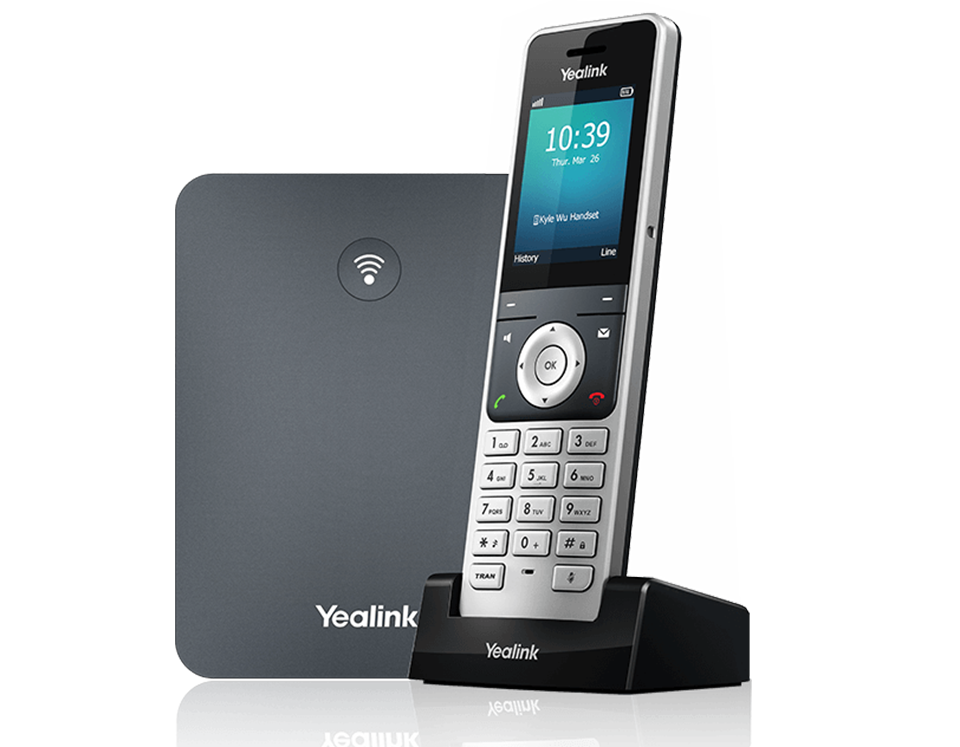
Cordless SIP calling for teams that move through the workplace
The W76P is designed for businesses that want the control and features of an IP phone system without tying every user to a desk. Its W70B base connects to the business IP network, while the W56H handset gives staff cordless freedom within the supported DECT coverage area. Yealink specifies up to 10 registered handsets, up to 10 VoIP accounts and up to 20 simultaneous calls, making the platform particularly relevant to smaller offices and operational spaces where several people may need separate extensions but also move between rooms, counters or work zones during the day.
A practical advantage of DECT is that the voice link between handset and base is purpose-built for cordless telephony rather than sharing ordinary Wi-Fi traffic. This can simplify the user experience in reception areas, clinics, retail locations, service departments, workshops and offices where mobility is important. Yealink states a radio range of up to 50 metres indoors and 300 metres outdoors under ideal conditions. Real buildings can reduce that distance because walls, reinforced concrete, metal shelving, equipment rooms and floor layout affect radio propagation, so a coverage review is more useful than choosing a system only from the headline range number.
The included W56H handset has a 2.4-inch 240 × 320 colour display, a 3.5 mm headset jack, full-duplex speakerphone support and Yealink audio features including noise reduction. Battery specifications reach up to 30 hours of talk time and up to 400 hours of standby time in ideal conditions, while a ten-minute quick charge is rated for up to two hours of talk time. These figures are useful for shift planning, but actual endurance depends on call patterns, signal conditions, battery age and device configuration.
For UAE buyers, the main purchasing questions are usually not only handset count and price. The regional DECT frequency version, SIP service or PBX compatibility, PoE availability, coverage layout, additional handset requirements and optional RT30 repeater needs can all affect a successful deployment. FourTeck can help review these details, prepare a suitable bill of materials and coordinate a quote based on the required quantity and delivery location.
Key business benefits
The strongest value comes from matching cordless mobility with a manageable SIP platform, then scaling only where the site genuinely needs more users or coverage.
Keep business calls with the user, not the desk
Cordless handsets let staff answer, transfer and manage calls while moving inside the coverage area. That is useful for people who split time between desks, meeting rooms, stock areas, counters or service zones. Instead of adding a fixed phone at every temporary work point, the same handset can travel with the user.
Support a growing cordless team
A base can register up to ten handsets and ten VoIP accounts. This gives smaller businesses room to begin with a modest number of users and add compatible Yealink DECT endpoints later, provided the single-cell platform still matches coverage and call-capacity needs.
More conversations without a larger PBX footprint
The platform supports up to twenty simultaneous calls and up to two simultaneous calls per handset. This capacity helps busy small teams manage multiple active conversations while keeping cordless extensions available for everyday business workflows.
Clearer voice in practical workspaces
Wideband codec support, full-duplex speakerphone capability and Yealink noise reduction are valuable where background activity can distract from calls. Good voice quality also depends on the SIP service, network performance, headset choice and the acoustic environment around the user.
Reduce repetitive device setup
Yealink supports auto-provisioning through methods including TFTP, FTP, HTTP, HTTPS and its Redirection and Provisioning Service, together with over-the-air handset upgrades. For deployments with several users, these tools can reduce per-device configuration effort when they are supported by the chosen service provider and deployment workflow.
Flexible base-station placement
The W70B base supports IEEE 802.3af Power over Ethernet and can also use the supplied AC power option. PoE can simplify installation when a suitable network switch is already available, especially when the best radio position is not beside a wall socket.
What stands out in the platform
The system is more than a cordless handset and charging cradle. The W70B base carries the SIP registrations and DECT radio function, while the W56H provides the user interface and mobile endpoint. This separation gives buyers a path to add handsets without buying a new base for every user, as long as the deployment remains within the base capacity and coverage envelope.
Call handling includes hold, transfer, call waiting, forward rules, three-way conferencing, voicemail access, caller identification, do-not-disturb and intercom functions. A local phonebook of up to 1,000 entries is stored in the base, and remote LDAP/XML phonebook options are also listed in Yealink’s specifications. For companies integrating the phone with a hosted or on-premises SIP environment, these capabilities make the handset practical as a real business extension rather than a simple consumer cordless phone.
Security support includes TLS transport, SRTP media encryption, HTTPS, digest authentication, AES-encrypted configuration files and multiple hash algorithms. The exact protection achieved in practice depends on how the SIP server, provisioning platform and network are configured. Buyers should therefore confirm service-side support rather than assuming that every listed protocol is active by default.
Technical specifications
These values are based on Yealink’s official W76P datasheet. Regional versions and service-side features should be confirmed before purchase.
| Specification | Confirmed detail |
|---|---|
| Brand / Model | Yealink W76P |
| System composition | W70B base station and W56H handset |
| Maximum handsets | Up to 10 DECT handsets |
| VoIP accounts | Up to 10 |
| Simultaneous calls | Up to 20; up to 2 per handset |
| Repeaters | Up to 6 RT30 repeaters per base |
| DECT radio range | Up to 50 m indoors / 300 m outdoors in ideal conditions |
| Handset display | 2.4-inch 240 × 320 colour display |
| Battery performance | Up to 30 hours talk / 400 hours standby in ideal conditions |
| Quick charging | 10-minute charge for up to 2 hours talk time |
| Audio codecs | G.722; optional AMR-WB; PCMU, PCMA, G.726, G.729/G.729A, iLBC and optional AMR-NB |
| Network | SIP v1/v2, VLAN 802.1Q/802.1P, 802.1x, LLDP, DHCP/static IP, UDP/TCP/TLS |
| Security | TLS, SRTP, HTTPS, digest authentication, AES-encrypted configuration file, OpenVPN |
| Ethernet / Power | 1 × RJ45 10/100M; IEEE 802.3af PoE Class 1; AC adapter option |
| Management | Browser/phone/auto-provision configuration; TFTP/FTP/HTTP/HTTPS/RPS; PnP; OTA handset upgrades |
| Operating environment | 0 to 40°C; 10% to 95% humidity |
| Regional DECT frequency | Region dependent; confirm the correct UAE-market version before ordering |
The headline capacity figures should not be treated as a recommendation to place every installation at the maximum. A site with ten users may still need a different DECT architecture if those users are spread across several floors, separated buildings or radio-obstructed areas. Likewise, a site with only three handsets can still justify repeaters if physical coverage is challenging. The network side matters too: the base uses 10/100M Ethernet, so the focus should be on reliable IP connectivity, correct VLAN or QoS policies where used, supported SIP credentials and stable power rather than raw Ethernet throughput. If PoE is preferred, confirm that the connected switch supplies IEEE 802.3af. If AC power is used, position the base where both Ethernet and suitable power are available without compromising coverage. For a useful quotation, provide the number of users, approximate floor plan, SIP platform or telecom provider, required handset quantity and any headset or repeater requirements.
Configuration and buyer guidance
The right purchase is determined by coverage, handset count and platform fit before accessories are added. Use these questions to turn a model request into a deployment-ready requirement.
Where will users actually walk while on a call?
Indoor range is quoted under ideal conditions, but walls, lift cores, metal racks and equipment rooms can reduce it. Mark the expected user zones and identify whether an RT30 repeater or a multi-cell Yealink architecture would be more appropriate than stretching a single cell beyond its practical limit.
How many people need a cordless extension?
Count active users rather than rooms. Decide whether every user needs a dedicated handset and SIP account or whether some devices will be shared by shifts or functional teams.
Which PBX or hosted voice service will register the phones?
The system uses SIP, but features and provisioning behaviour depend on the voice platform. Confirm account credentials, required firmware, supported codecs, directory integration and any provider-specific provisioning method.
Can the best radio location receive PoE?
A central base location can improve coverage. If a PoE switch is available, one Ethernet cable can carry network and power. Otherwise plan the supplied AC option and safe cable routing.
Do users need headsets, spare batteries or additional handsets?
The W56H includes a 3.5 mm headset connection. Additional endpoints and repeaters should be planned as part of the deployment rather than discovered after the first units arrive.
Is the supplied DECT version correct for the UAE?
DECT frequency bands vary by region. Confirm the regional SKU and local suitability with the supplier before purchase, especially when equipment may be sourced internationally.
When contacting FourTeck, share the required quantity, user count, delivery location, SIP platform, approximate coverage area, PoE availability, accessory requirements and target date. Those details help the team review whether the requested configuration is suitable before a quote is prepared.
Ideal business use cases
This system is most compelling where users need voice mobility inside a defined workplace and a single-cell DECT design can cover the required area.
Small offices with mobile staff
In an office where account managers, administrators or support staff move between desks, meeting rooms and shared spaces, a cordless extension can reduce missed calls without placing a fixed phone at every location. A single base can support multiple handsets, so the phone system can grow with additional users as long as the building remains within practical radio coverage and capacity limits.
Clinics and front-desk teams
Reception and administrative staff may need to leave the counter while remaining reachable. Cordless SIP calling can support appointment coordination, internal transfer and routine business calls without depending on personal mobile phones. Coverage should be checked carefully around treatment rooms and solid partition walls.
Retail and showroom operations
Sales or service staff can carry a handset between display areas, counters and back-office spaces. The value is not simply cordless convenience; it is keeping a business extension available while a staff member is helping a customer away from the fixed telephone point.
Workshops and service areas
A cordless handset can be useful where supervisors or service coordinators move between a desk and nearby operational areas. Buyers should evaluate noise, physical risk and coverage. If users need rugged handsets or very large coverage, a different Yealink DECT endpoint or multi-cell design may be the better match.
Hospitality back-office functions
Small guesthouses, serviced offices or hospitality support teams may use cordless extensions for reception, administration and back-office coordination. Large hotels with extensive corridors, multiple floors or many roaming users should generally be assessed for a multi-cell DECT system rather than assuming one base will cover the full property.
Yealink W76P DECT IP Phone System: Mobility and Call Capacity
The most important capability is the combination of user mobility and multi-call capacity. A cordless business phone only helps if employees can move through their normal work area without losing access to the extension features they rely on. Yealink’s design allows up to ten handsets to register to one W70B base and up to twenty simultaneous calls across the system. That means a small team can give several users separate cordless endpoints while still maintaining enough call capacity for busy periods.
Capacity planning should still reflect actual work patterns. A ten-person company may not need ten handsets if only three roles require mobility. Conversely, a six-person service team may need all six handsets and a repeater because users are spread across a wider physical area. The practical design question is therefore not simply “How many phones can the base handle?” but “How many people need to be reachable at the same time, and where will they be standing when the call arrives?”
Yealink W76P DECT IP Phone System: Voice Quality and Daily Usability
A business handset spends most of its life in ordinary tasks: answering calls, checking caller details, transferring conversations, using a headset, looking up contacts and returning missed calls. The W56H is designed around those routines with a colour display, backlit keys, full-duplex speakerphone, local and remote directory support, call history and standard SIP call controls. Wideband G.722 support and Yealink’s noise reduction features help provide clearer voice when the network and remote endpoint also support suitable audio conditions.
Buyers should think about user behaviour as much as technical specifications. Staff who are constantly moving may value a belt clip and headset more than speakerphone performance. Reception staff may care more about directory access and fast transfer. If the environment is physically demanding, a rugged Yealink DECT handset may be a more appropriate endpoint even when the base architecture remains similar. FourTeck can help match the endpoint choice to the working environment rather than treating every cordless user as identical.
Yealink W76P DECT IP Phone System: Provisioning and Security Controls
For an IT administrator, the deployment experience matters because cordless phones still need accounts, firmware, network settings and policy controls. Yealink lists browser, phone and automated configuration methods, together with PnP and several auto-provisioning protocols. The handset firmware can be upgraded over the air, reducing the need to cable each individual handset for maintenance. Yealink’s Redirection and Provisioning Service can also support centralized deployment workflows where the service provider or administrator uses it.
Security capabilities include TLS for signaling, SRTP for media, HTTPS, digest authentication, AES-encrypted configuration files, OpenVPN and administrator/user configuration levels. These are useful building blocks, but secure telephony is an end-to-end design. The SIP provider or PBX must support the chosen encryption methods, certificates need to be handled correctly, device credentials should be protected and the voice network should follow appropriate access and segmentation policies. A feature on the datasheet does not automatically mean it is enabled in every deployment.
Deployment checklist
- Confirm the required firmware with the SIP platform or provider.
- Decide whether phones will use a dedicated voice VLAN.
- Confirm DHCP, DNS, time synchronization and provisioning reachability.
- Choose the supported signaling and media encryption method.
- Protect administrator credentials and provisioning URLs.
- Plan an update method for both base and handsets.
What Buyers Should Check Before Purchase
The biggest purchase risk is treating “single-cell DECT” as if it guarantees coverage for every office of the same size. A suitable order must combine the correct regional hardware, realistic radio coverage, the right number of handsets and verified SIP platform compatibility.
Configuration Fit
Confirm how many active handsets are needed today and whether more will be added. Consider peak simultaneous calls, whether users share handsets and whether any role needs a rugged endpoint. The W70B platform scales to ten handsets, but that does not automatically make it the right architecture for ten users spread across a large or complex site.
Compatibility Check
Ask the SIP provider or PBX administrator whether the device is supported on the intended service and which firmware or provisioning profile should be used. Also confirm the DECT regional version, PoE switch capability, VLAN requirements, directory method and any headset or repeater compatibility needed for the project.
Availability and Warranty
Availability, delivery timing and warranty handling can vary by supplier status, quantity and regional SKU. Ask for these items to be stated in the quotation rather than assuming that online listings apply to a specific UAE order. If the project depends on a fixed installation date, include that date when requesting supply information.
Quote Preparation
Provide the model, required quantity, number of users, SIP platform, delivery location, preferred target date, approximate coverage area and any accessories. If the site has multiple floors or heavy walls, mention that as well. A more complete requirement helps FourTeck identify missing handsets, repeaters or a more suitable alternative before the order is finalized.
Buying support for Dubai and UAE deployments
FourTeck supports business inquiries in Dubai and across the UAE with product selection, configuration review, quotation assistance, delivery coordination and warranty guidance. Availability can change according to regional model, supplier status, quantity and accessory requirements, so the current quotation should be used as the commercial reference rather than assuming a fixed online stock position.
UAE city coverage for business orders
Businesses in Dubai, Abu Dhabi, Sharjah and Ajman can contact FourTeck for availability checks, configuration guidance and quotation support. The most useful request includes the number of handsets, deployment location, SIP service, required delivery date and any installation constraints. For larger sites, sharing a simple floor plan or describing the areas where users need cordless coverage can help identify whether a single W70B base, optional repeaters or a multi-cell alternative should be considered. Delivery and support arrangements depend on the quoted order and project requirements.
GCC and Africa availability guidance
FourTeck also supports business technology inquiries across selected GCC and Africa markets through regional platforms and inquiry channels. Customers in Saudi Arabia, Qatar, Oman, Kuwait and Bahrain can ask about sourcing options, while buyers in Kenya, Uganda and other African markets can use the relevant FourTeck regional sites. Availability, delivery routes, regional DECT versions, warranty handling and commercial terms can differ by country, so these points should be confirmed for the destination rather than copied from a UAE quotation.
For cross-border projects, include the destination country, quantity, required accessories, intended SIP platform and target delivery date. DECT radio versions can differ by region, making country-specific hardware confirmation especially important. Large multi-location orders should also state whether every site uses the same voice platform and whether provisioning should be standardized across locations.
Other options buyers may consider
A related model can be a better fit when the main requirement changes from ordinary office mobility to rugged use, newer handset ergonomics or larger multi-cell coverage. These options are worth discussing when the requested model is not the closest match to the site.
Yealink W79P rugged DECT system
Consider this family when the working environment requires a ruggedized handset rather than the standard office-oriented W56H endpoint.
Yealink W73P
A DECT system in Yealink’s current range that can suit buyers comparing handset style and deployment requirements within smaller business environments.
Yealink W78P
Useful to review when the buyer wants another Yealink single-cell DECT bundle with a different handset experience.
Yealink W80 or W90 multi-cell DECT
Large sites, multiple floors or roaming users across a wider facility may be better served by a multi-cell architecture rather than extending a single base beyond its practical design.
Why business buyers contact FourTeck
Telephony purchases often fail for reasons that are not visible in a model name. A handset may be compatible with the base but unsuitable for the work environment. A base may support the required user count but not cover the full site. A device may support SIP, yet a service provider may require a specific firmware or provisioning profile. FourTeck’s role in the buying process is to help surface those questions early and turn a product request into a more complete business requirement.
For the fastest review, prepare a short requirement that states user count, number of handsets, coverage area, SIP platform, quantity, delivery destination and any specific headset or repeater needs. That information gives the sales team a better basis for selection and quotation.
Questions business buyers often ask
What is the W76P used for?
It is a business SIP cordless phone system intended for users who need to make and receive company calls while moving inside a workplace. The base connects to the IP network and registers SIP accounts, while cordless handsets provide mobility. It suits small and medium environments where a single DECT cell can cover the required user areas.
How many handsets can one W70B base support?
Yealink specifies support for up to ten DECT handsets and up to ten VoIP accounts on the base. The system can handle up to twenty simultaneous calls, with up to two simultaneous calls per handset. Actual deployment sizing should also consider radio coverage, user movement and the capabilities of the SIP platform.
Will one base cover my whole office?
It depends on the building. Yealink quotes up to 50 metres indoors and 300 metres outdoors in ideal conditions, but walls, metal structures, lift shafts and other obstructions can reduce practical range. For larger or more complex sites, optional RT30 repeaters or a Yealink multi-cell DECT platform may be more appropriate.
Can the base be powered from a PoE switch?
Yes. The W70B includes a 10/100M Ethernet port and supports IEEE 802.3af Power over Ethernet, Class 1. It can also use an AC power adapter. If PoE is planned, confirm that the network switch provides the required standard and that the Ethernet location also gives suitable DECT coverage.
Does the handset support a headset?
The W56H handset includes a 3.5 mm headset jack. Buyers who expect long call sessions should choose a compatible headset based on comfort, connector type and the user’s working style. If a different headset interface or rugged use is required, it may be worth reviewing other Yealink DECT handset options before purchase.
Is it compatible with my SIP provider or PBX?
The system supports SIP v1 and v2, but provider compatibility should still be verified. Hosted voice platforms and PBXs can require specific firmware, provisioning profiles, codecs or authentication methods. Give FourTeck the service or PBX name when requesting a quote so the compatibility question can be included in the pre-purchase review.
Is the W76P available in Dubai?
FourTeck can check current UAE supply options for the requested quantity and regional version. Availability can change with supplier status, order size and accessories, so a quotation is the right place to confirm commercial details. Include your delivery location and required date when asking for availability assistance.
What should I send FourTeck before requesting a quote?
Send the model, quantity, number of users, number of required handsets, SIP platform or provider, delivery location and target date. If coverage may be difficult, describe the floor layout and building type. Also mention PoE availability, headset requirements and whether extra repeaters or rugged handsets may be needed.
When should I choose a multi-cell DECT system instead?
A multi-cell system is worth considering when users need seamless coverage across a larger building, multiple floors or extended operational areas that are difficult to serve from one base. It can also be a better fit when the business expects significant growth beyond the single-cell design. FourTeck can review the coverage requirement before recommending the architecture.
Need help choosing the right DECT configuration?
FourTeck can review intended use, handset quantity, SIP platform, coverage area, accessory needs, regional version, delivery location and warranty expectations before preparing a business quotation.
Share the model, quantity, user count, SIP provider, approximate site layout, delivery location and target date.