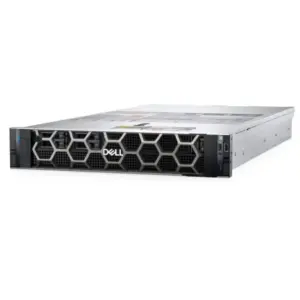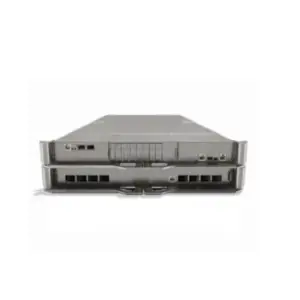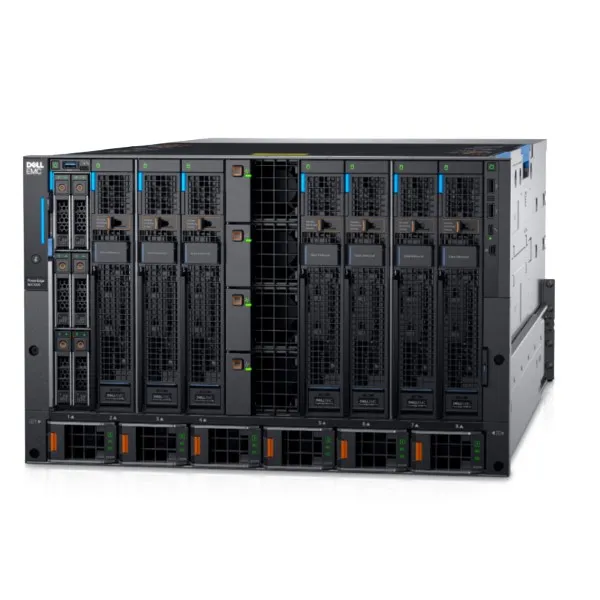
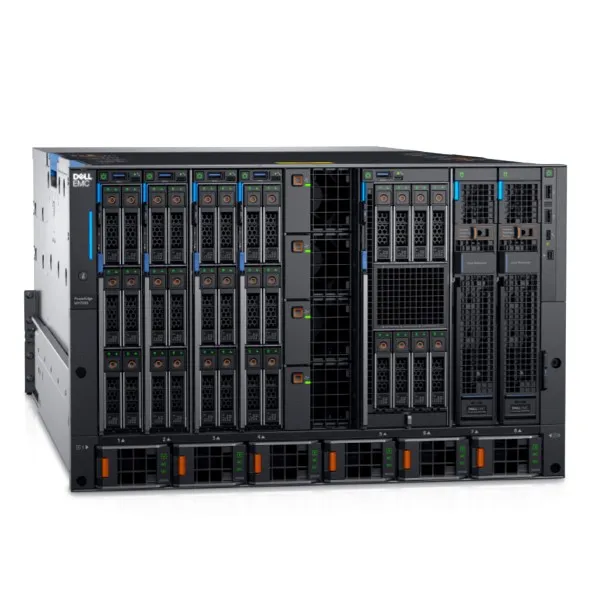
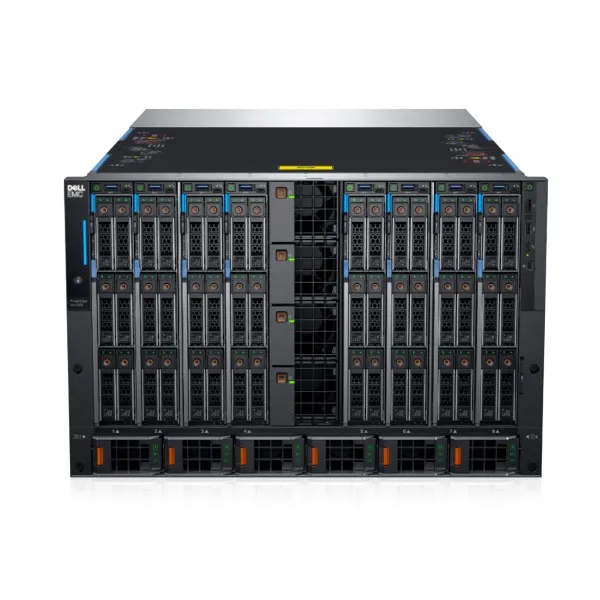
Dell PowerEdge MX7000 Modular Server Chassis in Dubai, UAE
The Dell PowerEdge MX7000 is built for organizations that want a modular infrastructure foundation instead of deploying isolated rack servers one by one. It gives IT teams a chassis platform for compute, storage, networking, power, cooling, and management modules, helping businesses design scalable data center environments for virtualization, business applications, private cloud, database workloads, and modern hybrid infrastructure projects. FourTeck helps UAE buyers review the correct chassis components, compatible sleds, fabric modules, rack requirements, support expectations, and quotation details before purchase.
Modular Server Planning
UAE Delivery Coordination
Warranty Guidance
Quote Assistance
Quick Product Information
Product Overview
The PowerEdge MX7000 platform is a modular server chassis created for businesses that want to organize multiple server, storage, and network elements inside a shared enclosure. Instead of treating every server as a separate rack unit with its own individual power, cable, management, and growth limitations, the chassis gives IT teams a common foundation for expansion. This approach is useful when a company expects workloads to grow, wants to standardize infrastructure, or needs to refresh a data center with a platform that can support different compute and storage combinations over time.
For many UAE businesses, the challenge is not only buying a server. The bigger challenge is choosing an infrastructure design that can handle new workloads without creating unnecessary complexity. A company may start with a few application servers, then add virtualization hosts, backup targets, storage connectivity, GPU or acceleration requirements, and more network bandwidth. A modular chassis makes planning easier because related components can be reviewed together: compute sleds, storage sleds, fabric modules, management modules, power supplies, cooling, rack depth, and support coverage.
The MX7000 is especially relevant for organizations running demanding business platforms, including ERP, CRM, database workloads, virtual desktop infrastructure, private cloud, software-defined infrastructure, file services, and high-density application hosting. It can also help IT departments reduce cable sprawl and manage multiple resources through a more centralized architecture. The actual performance of the final solution depends on the selected server sleds, processors, memory, storage, adapters, and network modules, which is why a configuration review is important before purchase.
FourTeck supports buyers who need more than a part number. The team can help review the intended workload, growth plan, cabinet environment, power requirement, redundancy expectations, compatibility with existing infrastructure, and accessory needs. This makes the purchase process more practical for IT managers, procurement teams, system integrators, and business owners who want to request a clear quotation for a modular server project in Dubai or across the UAE.
Key Business Benefits
A modular chassis should not be judged only by physical size or the number of slots. The real value comes from how it helps an organization simplify growth, improve control, and prepare infrastructure for changing workload requirements. The following benefits explain why the MX7000 platform is considered by businesses planning a serious data center or private cloud environment.
Scalable Infrastructure Base
The chassis helps businesses scale through modular compute, storage, and networking choices. This supports growth without replacing the full environment too early, provided the design is planned correctly from the beginning.
Data Center Efficiency
Shared enclosure resources can reduce separate cabling, simplify rack planning, and make the environment easier to manage compared with many independent servers deployed without a common architecture.
Flexible Workload Placement
Different sled options allow businesses to align hardware with virtualization, database, storage, or application workloads. Final suitability depends on the selected sled model and component configuration.
Centralized Management
The chassis platform is designed around unified management of compute, storage, and networking resources, helping IT teams monitor and operate multiple hardware elements more efficiently.
Redundancy Planning
Power, fabric, management, and cooling choices can be planned with redundancy in mind. FourTeck can help buyers review what redundancy level is suitable for their business requirement.
Cleaner Procurement
A properly scoped modular server request can combine chassis, sleds, switches, power, rails, cables, and support expectations into one clearer project inquiry instead of scattered component purchases.
Product Highlights
The Dell PowerEdge MX7000 Modular Server Chassis is a 7U enclosure with eight full-width slots that can be used for combinations of compute and storage sleds. It is designed to support modular assignment of resources, helping businesses create an infrastructure platform that can evolve as applications, users, and data requirements increase. Its modular nature is important for organizations that want a long-term server architecture rather than a single-purpose box.
Rack-based chassis design for dense modular server deployments.
Supports selected compute and storage sled combinations based on project requirements.
Supports up to six 3000W power supplies, with redundancy options depending on configuration.
Security capabilities include options such as TPM, Secure Boot, signed firmware, and silicon root of trust.
Because the MX7000 is a chassis platform, buyers should not treat the enclosure as the full server solution by itself. The final business value comes from matching it with the correct compute sleds, storage sleds, I/O modules, power configuration, rack kit, cabling, operating system, hypervisor, and support plan. FourTeck can help turn a model inquiry into a more complete project scope.
Technical Specifications
| Specification | Details |
|---|---|
| Brand | Dell Technologies |
| Model | PowerEdge MX7000 |
| Product Type | Modular server chassis enclosure |
| Form Factor | 7U rack modular enclosure |
| Sled Capacity | 8 full-width slots for supported combinations of compute and storage sleds; final layout is configuration dependent |
| Compute Support | Depends on selected compatible PowerEdge MX compute sleds and their processor, memory, and storage options |
| Storage Support | Depends on selected compute or storage sleds, drive type, RAID, SAS/NVMe options, and selected architecture |
| I/O and Fabric Options | Configuration dependent; Dell documentation references Ethernet, SAS, and Fibre Channel fabric options for the MX platform |
| Power Supplies | Up to 6 x 3000W power supplies with PSU and grid redundancy support depending on configuration |
| Security | Optional TPM 1.2/2.0, cryptographically signed firmware, silicon root of trust, Secure Boot, System Lockdown, and System Erase |
| Management | Chassis-level management with details depending on selected management modules and firmware environment |
| Dimensions | Approx. 307.4 mm x 482 mm x 811.6 mm based on Dell published chassis details |
| Weight | Approx. 105 lb empty chassis weight; up to 400 lb maximum weight depending on installed components |
| Warranty | Warranty terms depend on supply source, product condition, service selection, and region; contact FourTeck for guidance |
| Availability | Contact FourTeck for current UAE availability, compatible modules, quotation, and delivery coordination |
Choosing the correct configuration is more important than simply selecting the chassis name. Buyers should identify how many compute sleds are required now, how many may be added later, whether the workload needs high memory capacity, whether storage will be local, shared, or external, and what network or Fibre Channel connectivity is required. Power redundancy, rack depth, cooling, cable routing, operating system compatibility, hypervisor support, backup design, and warranty expectations should also be reviewed before finalizing the request. FourTeck can help customers translate business workload requirements into a practical configuration discussion.
Configuration and Buyer Guidance
A modular chassis purchase is usually part of a larger infrastructure project. Before requesting a quote, buyers should prepare a clear picture of the workload. Is the platform intended for virtualization, databases, VDI, application hosting, backup, software-defined storage, or mixed workloads? Each use case can influence the type of compute sled, CPU level, memory capacity, storage layout, and network fabric required.
Workload Scope
List the applications, users, virtual machines, databases, and expected growth for the next three to five years.
Rack and Power
Confirm cabinet depth, available rack units, electrical capacity, redundancy target, cooling, and cable path.
Network Fabric
Review Ethernet, storage, switching, SAN, uplink, VLAN, and data center connectivity needs before selecting modules.
Support Plan
Check warranty expectations, service level needs, deployment support, and long-term maintenance requirements.
The most accurate quote requests include the chassis model, required sled count, preferred compute sled models, processor and memory targets, drive type, RAID expectations, network fabric, power redundancy, rails, cables, operating system or hypervisor, delivery location, and support requirements. FourTeck can guide the review so buyers avoid missing critical components.
Ideal Business Use Cases
The MX7000 chassis is suitable for organizations that need a dense, scalable, and centrally managed infrastructure platform. It is not usually purchased for a single small workload. It makes more sense when a business wants to standardize multiple compute nodes, storage options, and fabric modules in one enclosure-based architecture.
Virtualization Clusters
Businesses running multiple virtual machines can use compatible compute sleds to build a platform for consolidated workloads, with room for future expansion as users and applications increase.
Private Cloud Projects
The modular architecture supports organizations planning internal cloud-style infrastructure where compute, storage, network, and management resources need to be aligned under a scalable design.
Database and Application Hosting
With the correct compute sleds and storage design, the platform can support important line-of-business applications, database environments, and high-demand enterprise services.
VDI and Remote Workloads
Organizations considering virtual desktop infrastructure can review the chassis as part of a larger VDI hardware plan, especially where compute density and management are important.
Software-Defined Infrastructure
The modular approach can support modern architecture planning where compute, storage, and networking are combined through software-defined platforms and centralized control.
Data Center Refresh
Businesses replacing older blade or rack-server environments can evaluate the MX7000 when the goal is to improve density, cabling, management, and expansion planning.
Dell PowerEdge MX7000 Scalability and Modular Growth
Scalability is the main reason many IT teams evaluate this chassis. A traditional server purchase may solve a specific requirement, but it can become difficult to manage when the organization keeps adding separate systems for every new workload. The modular chassis approach allows a business to plan around an enclosure that can hold multiple supported compute and storage sleds. This does not mean every environment should be filled from day one. In many cases, the smarter approach is to begin with a right-sized configuration and leave capacity for expansion after workload monitoring confirms the next requirement.
For example, a company might start with a virtualization cluster and later add more compute capacity for application growth. Another business may need a mix of compute and storage sleds for a private cloud or software-defined infrastructure project. The value of the chassis becomes stronger when the growth path is clear. Buyers should discuss future workload assumptions, budget cycles, and expected platform lifespan before deciding how many sled slots to populate initially.
FourTeck can help customers look beyond the first quote and review how the system may need to grow. This includes expansion slots, power headroom, network fabric planning, cabling, rack space, cooling, and compatibility with existing data center equipment. A well-planned configuration helps reduce the risk of buying a platform that is either oversized for the business or limited too early by missing components.
Dell PowerEdge MX7000 Management and Operational Control
Enterprise server environments require more than raw hardware. IT teams need visibility, alerts, hardware health monitoring, firmware planning, module control, power reporting, and practical service information. A modular chassis can help because many enclosure resources are organized under a shared management approach. This is especially helpful when several compute sleds and fabric modules are installed inside the same platform.
Centralized management can reduce the time required to understand chassis health, installed components, power state, alerts, and maintenance requirements. In an environment where business applications depend on continuous service, faster visibility can make the difference between reactive troubleshooting and planned maintenance. Management design also matters during deployment because firmware versions, module compatibility, and fabric consistency can influence system stability.
When requesting a quote, buyers should ask how the chassis will be managed, which management modules or features are included, and how the platform will integrate with existing monitoring and data center operations. FourTeck can help customers prepare the right questions so the solution is not evaluated only by hardware count. A chassis that is easier to monitor and maintain can support better long-term operational discipline.
Dell PowerEdge MX7000 Power, Cooling, and Data Center Readiness
A dense modular chassis must be evaluated carefully before delivery because power, cooling, weight, and rack depth are practical deployment factors. The MX7000 chassis can become heavy when populated with sleds, power supplies, modules, and related components. This means the rack, data center floor, lifting process, and installation team must be prepared before the hardware arrives. Buyers should confirm rack compatibility, available rack units, rail requirements, airflow direction, power circuits, and redundancy expectations.
Power planning is especially important because the chassis can support high-capacity power supplies and multiple workloads in one enclosure. The correct design depends on the number of populated sleds, expected load, redundant power target, and data center electrical environment. Cooling should also be reviewed because dense compute and storage hardware can create heat concentration if the rack environment is not suitable.
FourTeck recommends that buyers share rack photos, cabinet depth, power availability, existing server load, and deployment location when requesting assistance. This helps the team guide the quotation discussion around real installation conditions, not only the chassis model name. A modular server purchase should arrive with the accessories and planning details needed for a smoother deployment.
What Buyers Should Check Before Purchase
Before requesting a quote, buyers should confirm the complete environment requirement rather than selecting only by model name. The chassis is the foundation, but the final solution depends on the compute sleds, storage design, fabric modules, power supplies, management modules, rails, transceivers, cables, operating system, virtualization platform, and support expectations. A missing component can delay deployment or create extra project cost after the purchase.
For server projects, the first step is workload definition. Buyers should share the number of virtual machines, applications, databases, users, storage growth estimate, backup plan, and performance expectations. The second step is infrastructure compatibility. Existing switches, SAN devices, firewalls, racks, monitoring tools, and backup systems may influence the module selection. The third step is service planning. Warranty coverage, installation support, firmware management, and future expansion should be discussed before the purchase order is finalized.
Configuration Fit
Confirm sled count, CPU class, memory target, drive type, RAID approach, boot options, and expected expansion timeline.
Compatibility Check
Review rack depth, fabric modules, SAN or NAS connection, switch uplinks, operating system, hypervisor, and backup integration.
Availability and Warranty
Check current availability, supply source, service terms, warranty expectations, and delivery requirements before confirming the order.
Quote Preparation
Share workload notes, required modules, quantity, rack details, support expectations, billing details, and delivery location for a clearer quote.
UAE Availability and Service Support
FourTeck supports modular server chassis inquiries across Dubai and the UAE with assistance for model selection, compatible components, configuration review, quote requests, delivery coordination, and warranty guidance. Availability may vary based on selected chassis options, supplier status, project quantity, module requirements, and whether the buyer needs a new, refurbished, or specific configuration path. FourTeck does not recommend assuming that all sleds, fabric modules, or power components are included unless they are clearly listed in the quotation.
Business buyers can contact FourTeck to review the intended deployment environment and request a quotation that reflects the actual requirement. For a faster response, share the preferred chassis model, number of compute sleds, storage needs, networking fabric, power requirements, rack details, warranty expectation, and delivery location. This helps the sales and technical support process focus on the correct configuration instead of a generic chassis inquiry.
Dubai, Abu Dhabi, Sharjah, and Ajman Coverage
Businesses in Dubai, Abu Dhabi, Sharjah, Ajman, and other UAE locations can contact FourTeck for product availability, configuration guidance, and quote assistance. The team can help buyers review suitable modular chassis options, related Dell server components, compatible storage or networking products, delivery requirements, and warranty expectations based on the business environment. For large projects, procurement teams should share quantity, delivery schedule, rack environment, and any preferred service terms so the quotation can be prepared more accurately.
GCC and Africa Availability
FourTeck also supports business technology inquiries across selected GCC and Africa markets through its regional platforms and inquiry channels. Companies in Saudi Arabia, Qatar, Oman, Kuwait, Bahrain, Kenya, Uganda, and other Africa region locations may contact FourTeck to discuss product sourcing, configuration support, delivery possibilities, and warranty guidance. Availability, delivery options, service handling, and configuration support can vary by country, product type, supplier status, and project size.
Regional customers may visit FourTeck UAE, FourTeck Kenya, FourTeck Uganda, FourTeck Africa, or FourTeck Kuwait for regional inquiry support where relevant.
Other Options Buyers May Consider
A modular chassis may be the right choice for dense data center growth, but some businesses may need a different server form factor or related infrastructure product. FourTeck can help compare requirements and guide buyers toward suitable alternatives without forcing every workload into the same platform.
Dell PowerEdge Rack Servers
Suitable for businesses needing standalone rack servers for virtualization, applications, database, or branch workloads.
Enterprise Storage Solutions
Useful when the project requires shared storage, backup capacity, file services, or virtualization storage support.
Data Center Networking
Important for fabric planning, switch uplinks, VLAN design, storage networking, and server connectivity.
UPS and Power Protection
Recommended for protecting server rooms, racks, networking equipment, and important business systems.
Server Accessories
Rails, cables, transceivers, drives, memory, network adapters, and rack accessories may be required for deployment.
Infrastructure Consultation
Useful when buyers need help defining workload, capacity, power, networking, and warranty requirements.
Why Buyers Choose FourTeck
FourTeck supports business IT buyers who need practical product guidance before making an infrastructure purchase. Enterprise server projects often involve more than a simple model number, especially when the product is a modular chassis. The buyer may need compatible modules, the right sled configuration, rack accessories, power planning, network fabric guidance, storage planning, and warranty information. FourTeck helps customers bring these details together so the quote request is clearer and more useful.
Assistance for companies buying servers, storage, networking, security, UPS, and related infrastructure products.
Support for reviewing components, compatibility, workloads, and project requirements before quotation.
Help for procurement teams that need a structured inquiry and clear component expectations.
Support for business delivery planning based on selected product, location, and availability status.
Assistance in understanding warranty expectations, service options, and support considerations.
Support for UAE and selected regional business technology inquiries through FourTeck channels.
FourTeck avoids unclear product assumptions and helps buyers prepare better project details. This approach is especially useful for high-value infrastructure equipment where the wrong configuration can affect performance, deployment time, budget, and long-term usability.
Frequently Asked Questions
It is used as a modular server chassis for data center environments that require scalable compute, storage, networking, power, cooling, and management inside a shared enclosure. Businesses commonly evaluate it for virtualization, private cloud, software-defined infrastructure, VDI, database environments, and consolidated enterprise workloads.
FourTeck supports inquiries across Dubai and the UAE. Availability may vary depending on chassis configuration, compatible sleds, modules, quantity, supplier status, and warranty requirements. Buyers should contact FourTeck with their required configuration details to receive current availability and quote assistance.
In many quotations, the chassis and compute sleds may be listed separately. Buyers should confirm exactly what is included, such as chassis, power supplies, management modules, compute sleds, storage sleds, fabric modules, rails, cables, and support coverage before approving a purchase.
Yes. FourTeck can help review workload needs, sled options, memory and storage requirements, network fabric, power redundancy, rack conditions, operating system or hypervisor requirements, and warranty expectations. This helps buyers request a more accurate quotation and avoid missing important components.
Dell published details describe the chassis as a 7U modular enclosure with eight full-width slots for supported combinations of compute and storage sleds. The final sled count and mix depend on the selected sled type, width, workload requirement, and compatible MX platform modules.
Share the workload type, number of virtual machines or applications, required sled count, processor and memory expectations, storage design, network fabric needs, rack details, power requirements, delivery location, warranty expectations, and any preferred deployment timeline. These details help FourTeck prepare a more useful response.
A modular chassis is usually more suitable for data center and enterprise infrastructure projects than a small single-server requirement. If the business needs only one or two standard servers, FourTeck can also suggest suitable rack or tower server options that may be simpler and more cost-effective.
The MX platform is designed for modular combinations of compute, storage, and networking resources. Specific support depends on compatible sleds and fabric modules selected for the project. FourTeck can help buyers review Ethernet, SAS, Fibre Channel, and storage architecture requirements before quotation.
FourTeck can assist with delivery coordination based on product availability, configuration, location, and order requirements. For heavy modular infrastructure, buyers should also prepare rack space, access route, power environment, installation plan, and receiving team before delivery.
Yes. Businesses, system integrators, and procurement teams can contact FourTeck for project inquiries involving chassis, sleds, storage, networking, UPS, racks, and related accessories. Bulk or project supply depends on requirement details, supplier availability, and confirmed quotation terms.
Need Help Choosing the Right Modular Server Platform?
FourTeck can help you review availability, chassis configuration, compute sled options, storage design, network fabric, power planning, warranty guidance, and delivery requirements for your business location. Share your workload and infrastructure goals to receive focused buying assistance.