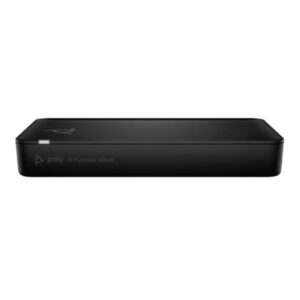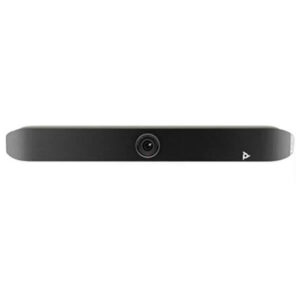
HP Poly G7500 in Dubai, UAE
A modular room collaboration system for mid-size to large spaces where camera choice, microphone coverage, display layout, platform mode, and AV integration need to be tailored to the room.
The G7500 is designed for buyers who want more control than a fixed video bar can provide. It supports flexible Poly camera and microphone options, dual displays, wired and wireless content sharing, standards-based calling, native support for leading cloud video services, and integration with third-party audio processors over USB. FourTeck can help translate room requirements into a practical bill of materials before a quotation is prepared.
SIP and H.323 support
Configuration review
A conferencing core built for rooms that need design freedom
The G7500 is a room video platform for organizations that want to build a conferencing space around the room rather than force the room around a fixed appliance. HP positions the system for custom-designed mid-size to large rooms, and that distinction matters. The codec can be paired with suitable Poly cameras, IP microphones, touch control options, displays, and compatible third-party audio components so the final deployment can address table shape, seating distance, acoustic conditions, presentation needs, and the collaboration service used by the business.
For a buyer, the practical advantage is choice. A boardroom may require a smart camera positioned for a long table, two front displays, and controlled microphone pickup. A training room may prioritize content visibility and room integration. An executive meeting space may require a clean installation with external digital signal processing for audio. The platform supports USB connection to selected conferencing processors from vendors such as QSC, Shure, and Biamp, while REST and command-line integration options help AV teams connect room controls and other components into a broader automation design.
The system also supports native experiences for leading cloud video services without requiring a room PC for those supported modes. HP lists Microsoft Teams and Zoom certification on the current product information, and the platform also supports standards-based H.323 and SIP video. This gives IT teams a useful path when a meeting room must participate in a mix of scheduled cloud meetings and standards-based calls, although the exact operating mode and feature set should always be confirmed for the organization’s platform, software version, and room design before purchase.
For UAE buyers, the buying decision is therefore less about choosing a single box and more about specifying a complete room. FourTeck can help review the room size, display count, camera requirement, microphone coverage, network access, control method, quantity, target platform, and installation expectations. That review is useful for reducing accessory gaps and for ensuring the quotation reflects the actual deployment rather than only the codec model name.
Why modular room design can be valuable
The strongest reason to consider this platform is not one isolated specification. It is the ability to match the conferencing system to the room, then manage audio, video, content, control, and network decisions as one coordinated deployment.
Build around the space instead of accepting fixed coverage
A modular platform lets the buyer select camera and microphone arrangements that make sense for the seating plan. This is especially useful when a room is long, wide, acoustically challenging, or expected to host different meeting formats. It can also reduce the risk of buying an all-in-one device whose built-in camera angle or microphone pickup does not suit the actual room.
Separate people and content across two displays
Dual-display support can help larger rooms keep remote participants visible while presentation material remains readable. That can be useful in board reviews, training sessions, project meetings, and hybrid discussions where users need to follow both conversation and detailed shared content.
Extend audio design beyond basic tabletop pickup
Support for Poly IP microphone arrays and compatible USB audio-conferencing processors gives integrators more ways to manage voice pickup in rooms that need careful acoustic planning. The value is not simply more microphones; it is the ability to design coverage around where people sit and how the room is used.
Support integrated room control workflows
REST and CLI integration support can be important when the conferencing system must participate in a broader AV control design. Integrators can plan how room controls, displays, audio components, and meeting functions fit together rather than treating the video platform as an isolated endpoint.
Use enterprise networking features for managed deployments
The platform supports IPv4 and IPv6, Gigabit Ethernet, standards-based video protocols, security controls, and remote management considerations that enterprise IT teams expect to review. The correct VLAN, proxy, firewall, certificate, and quality-of-service design still depends on the customer’s environment.
Give IT a clearer path for device administration
Poly Lens can provide administrators with visibility and control over supported Poly devices, including deployment, configuration, software updates, and operational insights. For multi-room projects, centralized administration can reduce the need to treat every room as a separate manual support case. Buyers should still confirm current licensing, supported device functions, network access, and management policy before standardizing on a deployment approach.
Key strengths buyers should understand
The system is most compelling where room design is too important to leave to a fixed camera, microphone, and speaker package. HP’s current product information emphasizes flexible camera selection, dual-display support, wired and wireless content sharing, standard Ethernet cabling for microphones, noise-reduction technologies, and integration APIs. Those capabilities give designers room to shape the solution around the meeting environment.
The G7500 is also relevant for organizations that maintain standards-based conferencing alongside cloud collaboration. HP lists H.323 and SIP operation, with bandwidth support up to 6 Mbps in Poly App video mode, as well as built-in experiences for supported cloud video services. The correct operating mode should be chosen according to the business platform, interoperability requirements, and meeting workflow.
Buyers should note that the core codec does not define the full room experience by itself. Camera selection, microphone quantity, control interface, display arrangement, cabling, power, mounting, speakers or audio processing, and software mode can all influence the final result. A quotation should therefore be based on the complete room requirement rather than a bare model reference.
Reference specifications for the 83Z50AA system
The table below uses current HP product information for the 83Z50AA reference. Kits, regional part numbers, cameras, controllers, microphones, and power-cord bundles can differ, so final quote details should be confirmed against the exact part number supplied.
| Specification | Details |
|---|---|
| Brand / model | HP Poly G7500, reference product number 83Z50AA |
| Product type | Modular video conferencing system |
| Video frame rate | 5–60 fps; HP lists up to 4K resolution at 15 fps in call |
| Display support | Up to two displays |
| Ports | 1 USB Type-C 5Gbps, 3 USB Type-A 5Gbps, audio in, audio out, RS-232, HDMI input 1.4 for video/audio, 2 HDMI outputs 1.4 for video, HDCI, and HDMI output 1.4 for audio |
| Network | IPv4 / IPv6; 1 x 10/100/1G Ethernet; 3 x 10/100/1G LLN ports supporting PoE+/PSE; Auto-MDIX; web proxy support; dynamic bandwidth allocation |
| Standards-based calling | H.323 and/or SIP up to 6 Mbps in Poly App video mode |
| Microphone support | Up to three 1x IP microphone arrays; final microphone design is configuration dependent |
| Audio integration | Supports compatible USB audio-conferencing processors; HP highlights QSC, Shure, and Biamp examples |
| Security | AES 128/256 encryption options, authenticated admin access, password policy controls, security profiles, media encryption for H.323/SIP, certificate management, remote logging with TLS, and additional enterprise security controls listed by HP |
| Management / integration | Poly Lens support plus RS-232, REST and CLI integration capabilities |
| Power | External, auto-sensing power supply; HP lists 65 BTU h |
| Operating environment | 0 to 40°C; operating humidity 15 to 80% |
| Dimensions | 349.2 x 38.1 x 139.7 mm |
| Weight | 952.5 g |
| Box contents for 83Z50AA | G7500, AC power adapter, Ethernet cable, Bluetooth remote control |
| Manufacturer warranty | HP lists a Poly standard one-year limited warranty for 83Z50AA; confirm local terms, service level, and selected bundle on the quotation |
A specification list is only the first step with a modular room system. Buyers should decide which functions will be delivered by the codec and which will be provided by external room components. For example, the selected camera determines framing behavior and physical coverage, while microphone quantity and placement affect how consistently people are heard. A two-display layout also needs suitable mounting, power, cabling, and content workflow planning.
Before ordering, confirm the exact product number, camera, microphone or audio processor, touch controller, display count, mounting method, room network, and collaboration platform. If the system will be integrated into an existing control environment, also provide the integrator with information about RS-232 or API requirements. FourTeck can use these details to help prepare a quotation that reflects the complete deployment rather than a partial component list.
How to specify the right room configuration
The safest buying approach is to describe the room and meeting workflow first, then choose the peripherals and platform mode that fit those requirements. A model-only request can leave important items outside the quotation.
Which collaboration platform will the room use?
Platform mode affects the room workflow, controller behavior, meeting join experience, interoperability, and administration. State whether the room is intended for Microsoft Teams, Zoom, standards-based SIP/H.323 calling, or a mixed requirement so compatibility can be checked before equipment is selected.
How large is the room and how are people seated?
Provide room dimensions, table shape, maximum seating, camera position, and the furthest participant distance. These details help determine whether a particular Poly camera, microphone arrangement, or external audio design is appropriate.
Will one or two displays be installed?
Dual displays can improve viewing in larger rooms, but the room needs the correct mounts, cable paths, power, and screen sizes. Decide whether people and content should be separated and whether the existing displays have the required inputs.
What is already installed?
List existing displays, AV processors, microphones, speakers, switchers, touch panels, control systems, LAN infrastructure, and cabling. Reusing equipment may be possible, but compatibility should be verified instead of assumed.
How will the room be supported?
Clarify whether the internal IT team will administer the room, whether centralized device management is required, and what warranty or support expectations apply. For multi-room deployments, consistency of software, accessories, and network policy can simplify operations.
What should be included in a quote request?
Share the number of rooms, room sizes, required quantity, preferred collaboration platform, existing AV equipment, desired camera behavior, microphone expectations, delivery location, target date, installation requirement, and warranty expectations. This produces a more useful commercial response.
Where the G7500 makes practical sense
This platform is a better fit when room-specific audio, video, display, and integration decisions matter. It is not automatically the right choice for every meeting space; smaller rooms may be simpler to operate with an all-in-one video bar.
Boardrooms and executive conference rooms
Boardrooms often have long tables, multiple seating positions, large displays, room control systems, and a higher expectation for consistent audio. A modular codec allows the integrator to position the camera and microphones according to the room rather than accepting the fixed geometry of an all-in-one appliance. Dual-display support can keep remote participants visible while documents, financial models, project plans, or presentations are shared on a second screen.
The design should still start with real dimensions and acoustic conditions. A long room may require a camera with suitable zoom and framing behavior, while a difficult acoustic space may benefit from a professional audio processor. The system gives designers the interfaces to build that solution, but the peripherals determine much of the final experience.
Training and learning rooms
Training environments can benefit from flexible camera positioning, two displays, and content sharing because attendees need to see both the instructor and detailed material. Buyers should define whether the camera must follow a presenter, frame the entire room, or focus on a teaching position, then match the camera choice to that requirement.
Large project and collaboration rooms
Engineering, consulting, construction, and project teams often need long hybrid sessions with shared drawings, schedules, dashboards, and documents. A modular room can be designed with the display area, camera field of view, microphone placement, and content workflow required for those sessions instead of relying on a single standard room layout.
Integrated AV environments
Rooms that already use professional audio processors, control systems, HDMI routing, or custom user interfaces may need a codec that can participate in the existing AV architecture. USB audio support and REST, CLI, and RS-232 interfaces can help system integrators plan that connection, subject to the exact devices and software versions used.
Enterprise multi-room standardization
An organization with several medium and large rooms may use the same room platform while changing camera, microphone, and display choices by room size. That can simplify support compared with a collection of unrelated endpoints, provided the IT team standardizes software, network settings, control methods, and approved accessories.
Standards-based conferencing requirements
Organizations that still use SIP or H.323 for video calling can consider the G7500 where standards-based interoperability is part of the requirement. The customer should document the far-end systems, dialing method, network policies, and any gateway or interoperability service involved so the complete call path can be checked.
HP Poly G7500 Flexible Camera and Display Design
The ability to select the room camera is one of the defining differences between a modular system and a fixed video bar. Camera requirements vary dramatically between a six-metre boardroom, a training room with a presenter, and a wide collaboration space. The G7500 gives the designer freedom to choose a compatible camera and position it according to the room instead of accepting a built-in lens position.
HP’s current room-system comparison describes the model as a customizable video solution with flexible camera and microphone options for mid-size to large rooms. Depending on the selected camera, features such as group framing, speaker framing, or people framing may be available. Those are camera-dependent capabilities, so buyers should not assume that every G7500 package delivers the same framing behavior.
Buyer outcomes
- Choose camera coverage around actual seating distance and room width.
- Use two displays when the meeting workflow benefits from separating people and content.
- Plan camera mounting height and position before finalizing cabling and furniture.
- Specify the desired framing behavior so the correct camera can be quoted.
- Confirm display inputs, mounts, cable length, and content-sharing path as part of the room design.
HP Poly G7500 Audio Clarity and Room Integration
Audio is often the first place a large meeting room exposes poor design. People can tolerate a camera that is not perfectly framed for a short period, but they quickly lose confidence when voices are distant, background sound dominates, or side conversations enter the call. The platform addresses this at two levels: Poly’s own noise-control technologies and the ability to connect suitable room audio components.
NoiseBlockAI is designed to reduce distracting non-speech sounds, while Acoustic Fence helps limit unwanted voices and noise outside the defined meeting area. These technologies can improve the experience, but they do not replace acoustic planning. Hard surfaces, high ceilings, open partitions, air-conditioning noise, and long tables can still influence microphone choice and placement. For demanding rooms, HP specifically highlights support for USB-connected audio-conferencing processors such as QSC, Shure, and Biamp.
The system also supports up to three IP microphone arrays on the referenced specification. Whether that is sufficient depends on room geometry and the chosen audio design. A procurement request should therefore describe seating capacity, table length, ceiling height, speaker placement, existing DSP equipment, and whether the room must support local reinforcement as well as far-end conferencing.
HP Poly G7500 Platform Flexibility and Administration
A meeting room has to fit both the user’s workflow and the IT team’s operating model. The G7500 supports native experiences for leading cloud video services and standards-based SIP/H.323 operation, giving organizations several deployment paths. HP currently lists Microsoft Teams and Zoom certification for the product family, but the exact feature set depends on software version, operating mode, connected peripherals, and service configuration.
For administrators, Poly Lens provides a management framework for supported Poly devices. Central visibility can be useful when a company operates multiple rooms because software updates, device settings, and health information can be managed more systematically than with standalone endpoints. Network administrators should still review firewall rules, proxy settings, certificates, VLAN design, remote access controls, logging, and identity requirements against the organization’s security policy.
The platform also exposes integration interfaces for room-control scenarios. That is valuable where a touch panel or automation system must coordinate displays, video meetings, audio, and other AV functions. The practical question is not whether an API exists, but whether the project’s integrator has defined exactly what needs to be controlled and has verified the commands, permissions, and software versions required for that workflow.
Administration decision checklist
- Confirm the primary meeting platform and any standards-based interoperability requirement.
- Document how room users will start, join, and control meetings.
- Check whether Poly Lens management fits the organization’s device-management policy.
- Review certificates, proxy, firewall, VLAN, and remote administration requirements.
- For integrated rooms, define the expected control commands and test the intended API or serial workflow during commissioning.
What Buyers Should Check Before Purchase
The biggest purchase risk is treating a modular conferencing codec as a complete room kit. The room may still need a camera, microphones or DSP, controller, displays, mounts, cabling, network preparation, and installation services. Confirm those items before comparing quotations so every supplier is pricing the same requirement.
Configuration Fit
Decide whether the codec alone is required or a complete room bundle is needed. Confirm camera model, microphone quantity, controller, displays, power, mounts, speakers or DSP, and cabling. Similar G7500 listings can describe very different bundles, so compare exact part numbers and included accessories rather than only the product family name.
For multi-room projects, create a room schedule showing each room’s size and required peripheral set. This makes it easier to keep standard components where possible while allowing larger rooms to use different cameras or audio designs.
Compatibility Check
Check the current collaboration platform, network architecture, displays, room audio system, control platform, and any existing cameras or accessories. Do not assume a peripheral is supported simply because it uses USB or Ethernet. The exact device, software version, and operating mode can affect compatibility.
If the room will use SIP or H.323, document the calling environment and any traversal, gateway, or interoperability service. If the room uses Teams or Zoom, confirm the desired native workflow and controller before finalizing the bill of materials.
Availability and Warranty
Availability can vary by regional part number, kit contents, accessory choice, and order quantity. Ask the quotation to identify the exact product number and whether cameras, microphones, controller, power cords, mounting items, and installation are included. This avoids receiving a lower headline quote for a materially different package.
HP lists a standard one-year limited warranty for the 83Z50AA reference. Buyers should confirm the warranty applicable to the supplied regional SKU, any optional service coverage, and the process for handling support before purchase.
Quote Preparation
Provide room dimensions, seating capacity, required number of rooms, collaboration platform, camera behavior, microphone expectations, display count, existing AV equipment, network constraints, delivery location, target date, and installation requirement. Add any preference for standardized accessories across rooms.
If the project is replacing an older conferencing system, share the existing model and photographs of the room connections. FourTeck can then help identify whether a direct replacement, a G7500-based modular design, or a newer suitable alternative should be considered.
Plan the room package before confirming commercial terms
FourTeck supports business inquiries across Dubai and the UAE with assistance for product selection, configuration review, quote requests, delivery coordination, and warranty guidance. Availability may vary according to the exact G7500 part number, camera and controller bundle, required microphone accessories, supplier status, project quantity, and requested delivery date.
For the most useful response, buyers should submit the complete room requirement rather than only requesting a price for the codec. This allows the quotation to separate core equipment, accessories, optional room components, and any requested deployment services. It also makes it easier to compare an existing-room upgrade with a new installation.
Support for projects across major UAE business locations
Businesses in Dubai, Abu Dhabi, Sharjah, Ajman, and other UAE locations can contact FourTeck for product availability, configuration guidance, and quote assistance. For a single boardroom, the discussion can focus on room dimensions, camera placement, microphone coverage, displays, and the required meeting platform. For multi-site projects, buyers can provide a room schedule so the equipment list can be standardized where practical while preserving the differences needed for larger or more complex rooms.
Delivery and project planning should account for exact kit contents, accessory lead times, installation dependencies, and the target commissioning date. If the system will connect to an existing AV environment, sharing photographs, device models, rack information, and cabling details can help identify compatibility questions earlier. This is particularly useful when the project includes older displays, a third-party digital signal processor, or a room control system that must be retained.
GCC and Africa purchasing coordination
FourTeck also supports business technology inquiries across selected GCC and Africa markets through its regional platforms and inquiry channels. Organizations planning conferencing deployments in Saudi Arabia, Qatar, Oman, Kuwait, Bahrain, Kenya, Uganda, or other regional locations can share the room requirement and project quantity for review. Availability, delivery options, warranty handling, and configuration support may vary by country, product type, regional part number, and supplier status.
Regional projects benefit from a consistent room specification. If the same collaboration platform will be deployed in multiple countries, define an approved camera, microphone, controller, display, and cabling standard for each room size. Then note any local power, installation, network, or procurement differences. This makes it easier to compare project requirements without assuming every country will use the same exact kit or support terms.
For regional inquiries, buyers can start from FourTeck UAE or use the appropriate regional platform such as FourTeck Kuwait, FourTeck Kenya, FourTeck Uganda, or FourTeck Africa. Each inquiry should include delivery destination, quantity, target date, and configuration requirements.
Other Options Buyers May Consider
A modular codec is not the only way to build a business meeting room. The right alternative depends on whether the buyer values maximum integration flexibility, an all-in-one deployment, a newer modular platform, or a particular camera. These options are useful discussion points when defining a room standard.
FourTeck can help compare the intended room, user workflow, and required peripherals before a quote is prepared. The notes below are directional rather than a claim that one model is universally better.
Poly Studio G62
Consider the newer Poly Studio G62 modular room system when a project is being designed from the ground up and the buyer wants to review the latest modular platform options. It is intended for customizable large-room deployments and can be paired with suitable audio and video devices. Ask FourTeck to compare lifecycle, room integration, platform support, and required peripherals for the specific project.
Poly Studio X70
For a large room that does not need the same level of modular AV integration, the Studio X70 provides an all-in-one video bar approach with integrated camera and audio. This can reduce the number of separate room components, although camera placement, room geometry, microphone pickup, and platform requirements should still be checked before selection.
Poly Studio E70
A smart camera designed for large rooms and listed by HP as compatible with the G7500. It is relevant when the project needs advanced camera framing and dual 4K sensors. Confirm mounting, cable path, software mode, and room distance before adding it to the bill of materials.
Poly TC10
A room touch controller option that may be suitable for selected Poly conferencing deployments. Controller choice should be confirmed against the room system, operating mode, software version, network design, and desired user workflow.
Poly Studio X52
A mid-size all-in-one video bar can be a simpler choice where room dimensions and user expectations do not justify a modular codec, separate camera, and custom audio design. Compare room size, installation complexity, display needs, and platform workflow before deciding.
Professional room audio
Rooms with difficult acoustics may need compatible third-party digital signal processing, microphones, amplifiers, or speakers. The equipment should be selected by the AV design requirement rather than added as a generic accessory.
Buying support for configuration-heavy meeting rooms
A modular video conferencing purchase often crosses several disciplines: IT networking, collaboration software, room audio, camera coverage, displays, mounting, control systems, and procurement. FourTeck’s role is to help buyers organize those requirements into a clearer request so the quoted equipment matches the intended room rather than only matching a model name.
For a straightforward room, that may mean confirming the codec, camera, microphones, controller, displays, and basic cabling. For a more complex integrated space, the buyer may need to coordinate with an AV integrator to define DSP, speakers, control programming, rack space, cable routing, and commissioning. FourTeck can support the product-sourcing and pre-sales side while helping the buyer identify which technical details need confirmation before purchase.
Common questions from business buyers
What is the G7500 used for?
It is a modular video conferencing system for meeting rooms that need flexible camera, microphone, display, content-sharing, and integration choices. HP positions it for custom-designed mid-size to large rooms. It can support native cloud video experiences as well as standards-based SIP and H.323 calling. The final room experience depends heavily on the selected camera, audio devices, controller, displays, network, and software mode.
Does the base system include a camera?
The 83Z50AA reference listed by HP includes the G7500, AC power adapter, Ethernet cable, and Bluetooth remote control. A camera is not listed in that base box-content set. Other kits may include cameras, microphones, or additional accessories, so buyers should compare the exact part number and bundle contents on the quotation rather than assuming all G7500 offers are identical.
Can it be used with Microsoft Teams or Zoom?
HP’s current product information lists the G7500 as certified for Microsoft Teams and Zoom and describes native support for leading cloud video services. The exact workflow, controller requirement, software version, account setup, and feature availability can vary by platform mode. Before purchase, state which service the room will use and whether standards-based interoperability is also required so the configuration can be checked.
How many displays can be connected?
HP lists support for up to two room displays. A two-screen design can be useful when users need to see remote participants and shared content at the same time. Buyers should also confirm display resolution, physical size, mounting, HDMI cabling, power, and the desired meeting layout. The room’s viewing distance and table orientation should influence display choice rather than using screen count alone.
Can FourTeck help choose a camera and microphones?
Yes. Provide the room dimensions, seating capacity, table shape, camera position, furthest participant distance, ceiling height, and any existing audio equipment. FourTeck can help review suitable Poly camera and microphone options and identify when the room may need professional audio processing. Final AV design and installation details should be confirmed for the specific room and selected peripherals.
Is the G7500 available in Dubai and the UAE?
FourTeck can support inquiries for Dubai and the wider UAE, but current availability should be confirmed for the exact product number, bundle, quantity, and requested delivery date. Modular room systems are often quoted with different camera, microphone, and controller combinations, so availability can depend on the complete bill of materials rather than only the codec. Contact FourTeck with your required quantity and room specification for current options.
What warranty is listed for the 83Z50AA reference?
HP’s product specification for 83Z50AA lists a Poly standard one-year limited warranty. Regional terms, optional support services, and the warranty attached to a particular bundle or supplier quotation can differ. Buyers should therefore confirm the exact warranty language, service process, and any optional coverage on the commercial offer before placing an order.
What network details should IT teams review?
IT teams should review Ethernet connectivity, VLAN design, firewall policy, proxy use, certificates, DNS, time services, quality of service, remote administration, and any SIP/H.323 traversal requirement. HP lists IPv4, IPv6, Gigabit Ethernet, proxy support, certificate management, encryption controls, and standards-based calling capabilities. The final network design depends on the organization’s collaboration service and security policy.
Should I choose this system or an all-in-one video bar?
Choose a modular design when room geometry, camera position, microphone coverage, external audio processing, dual displays, or control-system integration requires flexibility. An all-in-one Poly Studio X model can be simpler when the room is smaller, fixed camera placement is acceptable, and integrated audio is sufficient. FourTeck can help compare both approaches using room dimensions, desired workflow, installation complexity, and the buyer’s long-term support plan.
What information should I send for a project quote?
Send the number of rooms, room dimensions, seating capacity, collaboration platform, required camera behavior, microphone expectations, display count, existing AV equipment, delivery location, target date, and whether installation or commissioning is required. If replacing an older system, include its model and photos of the current room connections. These details help FourTeck prepare a more accurate equipment list and reduce missing accessories.
Need Help Choosing the Right Room Configuration?
FourTeck can review the intended room size, platform, camera requirement, microphones, displays, current AV equipment, quantity, delivery location, and warranty expectations before preparing a quote. That is particularly useful for modular deployments where the codec is only one part of the finished room.
Share the model, room dimensions, required quantity, collaboration platform, preferred camera and microphone approach, delivery location, and target date.