Quick Procurement & Configuration Matrix
Samsung / QN65QN900F family. Regional suffix is configuration dependent.
65-inch Neo QLED 8K Mini LED smart television with Metal Frame design.
Executive viewing, premium hospitality, presentations, media review and high-end entertainment.
Single 65-inch endpoint; multi-room scale is achieved by standardized deployment of multiple units.
Regional Samsung specification lists AC 220–240 V, 50/60 Hz and up to 450 W maximum consumption.
Dubai, Abu Dhabi, Sharjah, Ajman and other UAE locations, subject to quotation and logistics confirmation.
Warranty duration and service route depend on supplied regional SKU. Confirm in writing before purchase.
VESA 400 × 300 mm is listed on regional 65-inch specifications; validate bracket and wall construction.
Executive Product Architectural Overview
A premium television selected for an enterprise or high-value project should be treated as a visual endpoint rather than simply as a consumer appliance. The Samsung QN65QN900F fits that role by combining an 8K native panel with a sophisticated image-processing layer, Mini LED illumination, high-bandwidth inputs and a smart operating environment. The 65-inch form factor is large enough to create visual impact in executive offices, boardrooms, hotel suites, private lounges, show apartments and high-end reception areas, yet still manageable for many wall-mounted or furniture-based deployments. Its 7,680 × 4,320 native pixel matrix delivers roughly four times the pixel count of 4K, which can be useful when viewers sit comparatively close, when detailed imagery is displayed, or when the buyer wants a premium long-life visual platform with advanced processing for lower-resolution sources.
The architectural center of the platform is Samsung’s NQ8 AI Gen2 Processor. Rather than relying only on the source signal, the processor analyzes video and audio in real time and applies scaling, detail reconstruction, tone handling, motion treatment and scene-dependent adjustments. This matters in practical UAE deployments because the source mix is rarely uniform. A boardroom may move from 1080p video conferencing to 4K presentation material; a hotel suite may alternate between broadcast channels, streaming applications and gaming; an executive lounge may play sports, news and cinematic content across the same day. An effective processing pipeline allows a single display to handle these inputs without forcing facilities teams to tune picture parameters for every source change.
Samsung’s Mini LED-based Neo QLED architecture is also relevant to bright interiors. Dubai offices, hospitality spaces and residences frequently use expansive glazing, high ambient illumination and reflective finishes. In such environments, perceived contrast can deteriorate even when the panel itself has strong laboratory performance. The QN900F’s Glare Free treatment is therefore not just a cosmetic feature: it addresses reflection management so that users can maintain readability and image impact without always closing blinds or reducing room lighting. Quantum Matrix-class backlight control and high dynamic range processing then work together to manage luminous highlights and darker scene elements with greater local precision than a conventional edge-lit display.
For motion-intensive content, the QN65QN900F offers a native refresh framework with support for gaming modes up to 4K at 165 Hz when paired with compatible PC hardware and suitable source content. That ceiling is beyond the requirement of most office presentations, but it gives the display versatility for simulation rooms, premium gaming suites, esports hospitality, high-frame-rate visualization and enthusiast residential installations. Variable Refresh Rate, Auto Low Latency Mode and FreeSync Premium Pro support further reduce the gap between a television and a dedicated large-format gaming monitor, while normal film and broadcast sources remain handled by Samsung’s motion processing.
Audio architecture is unusually capable for an integrated television platform. Regional specifications list 70 W RMS output through a 4.2.2-channel speaker arrangement, Dolby Atmos, Object Tracking Sound+ and Q-Symphony. For a meeting room or hospitality project, this gives designers a usable baseline without immediately requiring external amplification. Where a higher-output soundbar or audio system is needed, Q-Symphony can allow compatible Samsung audio products to work in coordination with the television’s own speakers. Buyers should still size sound reinforcement to room volume, occupancy, acoustic treatment and desired listening level rather than assuming integrated audio will replace every dedicated AV system.
Connectivity helps the QN900F participate in mixed-use rooms. Four HDMI ports, eARC, USB-A, Ethernet, Wi-Fi 6 and Bluetooth 5.3 give integrators several paths for media players, conferencing devices, gaming systems, soundbars and network connectivity. Samsung’s Tizen smart platform adds application and content services while SmartThings-related functions provide integration possibilities with compatible connected devices. Because application catalogs and voice features vary by country, FourTeck recommends validating the exact UAE regional variant and the applications required by the project before standardizing the model across multiple locations.
From a procurement perspective, the most important architectural conclusion is that this is a premium visual endpoint optimized for picture quality, versatility and design rather than a purpose-built 24/7 commercial signage panel. If a project needs continuous unattended operation, centralized signage management, portrait orientation, hardened commercial warranties or specific brightness guarantees, FourTeck can compare Samsung commercial displays instead. Where the requirement is premium TV functionality with advanced image processing and smart entertainment capability, however, the QN65QN900F provides a powerful foundation that can bridge residential, hospitality and executive commercial scenarios.
Enterprise Business Value & ROI Benefits
Return on a premium display is measured differently from return on a server or network appliance. The display rarely creates revenue by itself, but it can reduce AV complexity, improve the quality of executive communication, strengthen guest experience, extend the useful life of presentation infrastructure and lower the number of separate devices needed in a room. The following value areas translate the QN65QN900F’s features into procurement outcomes.
1. Visual Performance Headroom
An 8K panel gives the project significant spatial-resolution headroom. Even when the majority of present-day sources are 4K or lower, Samsung’s processing pipeline is designed to scale and refine them for the panel. For executive dashboards, high-resolution photography, luxury property visualization and detailed design review, the additional pixel density helps preserve fine edges and text when content is prepared appropriately. The value is not that every source suddenly becomes native 8K; rather, the display is less likely to be the limiting component when source quality improves over the project lifecycle.
2. Better Usability in Bright Rooms
Glare management can save operational friction in sunlit UAE spaces. When staff repeatedly close blinds, reposition seating or dim lighting to compensate for reflection, the room is controlling the display rather than the display serving the room. The Glare Free surface and strong backlight architecture improve resilience to ambient light, supporting a more consistent experience in executive suites, hospitality lounges and modern glass-heavy interiors. Designers must still evaluate direct sunlight and extreme illumination, but the display begins from a stronger position than many glossy conventional TVs.
3. Consolidated AV Functionality
Four HDMI ports, network connectivity, wireless interfaces, smart applications and capable integrated audio can reduce peripheral count in rooms that do not require a full professional AV rack. A hotel suite, private office or executive lounge may connect a conferencing endpoint, media source, gaming console and eARC soundbar without external HDMI switching. Fewer intermediary devices can mean fewer power supplies, remotes, failure points and support calls. For larger installations, integrators may still choose matrix switching or control systems, but the television itself does not force that complexity.
4. Lifecycle Value Through Platform Support
Samsung states that 2025 models in this family are planned to receive Tizen operating-system upgrades for up to seven years, subject to the company’s regional terms and hardware limitations. For procurement teams, a longer software-support horizon can reduce the risk that smart functions become stale early in the display’s physical life. It does not guarantee every future feature or application, but it provides a stronger planning signal than a platform with no stated upgrade horizon. Buyers should pair this with warranty and replacement planning for the physical hardware.
5. Audio Cost Avoidance Where Appropriate
A 70 W 4.2.2-channel integrated system with Dolby Atmos and Object Tracking Sound+ is significantly more capable than basic television audio. In moderate-size rooms, this may allow deployment without a separate soundbar, or it may let the buyer delay audio expansion until usage patterns are understood. The cost benefit includes not only speaker hardware but also cabling, mounting, additional remotes and installation labor. When external audio is required, eARC and Q-Symphony support provide cleaner integration paths with compatible equipment.
6. Standardization Across Premium Spaces
Standardizing one model family across similar rooms simplifies spares strategy, user training, remote-control behavior, wall-mount planning and support documentation. A property operator or enterprise can establish a repeatable commissioning checklist instead of troubleshooting unrelated television platforms room by room. Where the 65-inch size suits the viewing geometry, QN900F standardization can therefore create operational savings beyond picture quality. If some rooms require 75 or 85 inches, the broader model family can preserve a similar interface and feature approach while adapting to distance and room scale.
These benefits should be evaluated against the actual duty cycle. For a luxury apartment, executive office or hotel suite used many hours per day, premium image quality and usability can justify the higher acquisition cost. For a back-office status screen that runs static content continuously, a commercial signage platform may deliver better economics. FourTeck can help separate prestige requirements from operational requirements so the project pays for capabilities that people will actually use.
Hardware & Technical Architecture Highlights
The QN65QN900F’s hardware stack begins with its 65-inch 8K LCD panel and Mini LED backlight system. Mini LEDs are substantially smaller than conventional television LEDs, enabling a denser and more precisely controllable illumination array. Samsung’s regional materials describe this generation as Quantum Mini LED Pro or Quantum Matrix Technology Pro depending on market wording, with local-dimming control designed to improve contrast and highlight management. The underlying principle is important for buyers: an LCD cannot create light at each pixel independently, so the quality of its backlight zoning and control algorithm directly affects black level, halo behavior and local contrast. More refined backlight control helps the screen handle bright highlights beside dark elements without lifting the entire scene.
Above the panel layer sits the NQ8 AI Gen2 Processor, which Samsung describes as using 256 neural networks for picture and sound enhancement. In system terms, this processor is the real-time signal-conditioning engine. It interprets the incoming frame, identifies scene characteristics and applies operations such as scaling, sharpness reconstruction, noise handling, color enhancement, contrast management and motion treatment. Because most real installations feed a mixture of resolutions and compression levels, the quality of this stage often matters more day-to-day than the native resolution printed on the specification sheet. A compressed streaming source, a 1080p broadcast and a 4K Blu-ray do not challenge the panel in the same way; the processor mediates those differences.
Color and high dynamic range are managed through Samsung’s Quantum Dot color system and Neo Quantum HDR 8K-class processing. HDR10+ Adaptive and HDR10+ Gaming support are listed on regional specifications. HDR performance depends on source mastering, room lighting and picture mode, so procurement teams should avoid reducing the discussion to one peak-brightness number. What matters operationally is the combination of backlight headroom, local control, tone mapping, color volume and anti-reflection behavior. In a bright Dubai living room or hotel lounge, preservation of perceived contrast may be more valuable than a laboratory result obtained in a dark room.
The motion subsystem supports Motion Xcelerator 165Hz, with 4K at up to 165 Hz available for compatible PC gaming sources. HDMI ports are specified for high-frame-rate operation, and the platform supports Variable Refresh Rate, Auto Low Latency Mode, HGiG and FreeSync Premium Pro. These features reduce tearing and latency variability when paired with appropriate hardware. They do not mean that 8K content is displayed at 165 Hz; Samsung’s regional specification distinguishes 8K 60 Hz input capability from the 4K 165 Hz high-frame-rate mode. That distinction should be kept clear when designing simulation or premium gaming rooms.
Audio is built around a 4.2.2-channel, 70 W RMS topology on the referenced regional 65-inch model. Up-firing and positional speaker behavior supports Dolby Atmos and Object Tracking Sound+, while Adaptive Sound Pro and Active Voice Amplifier Pro apply signal processing to improve clarity in changing environments. For integrators, the key interfaces are HDMI eARC for high-quality external audio return and Q-Symphony for compatible Samsung soundbar coordination. Bluetooth provides another audio path, although latency and compression characteristics should be considered for critical applications.
Physical design uses a Metal Frame aesthetic with a relatively shallow chassis and VESA wall-mount compatibility. Regional specifications list approximately 1,448.9 × 830.3 × 37.8 mm without the stand and a weight around 25.5 kg, while the set with stand is about 25.9 kg. Those figures are sufficiently substantial that wall-mount selection must consider bracket rating, wall substrate, anchor method and maintenance access. A professional installer should also allow cable bend radius, ventilation clearance and safe lifting procedures rather than treating the television like a small consumer screen.
Definitive Technical Specifications & Sizing Notes
| Category | Specification | Procurement Note |
|---|---|---|
| Model family | Samsung QN65QN900F | Exact suffix varies by region; confirm supplied UAE SKU. |
| Screen / type | 65-inch Neo QLED 8K Mini LED | Premium TV platform, not a purpose-built commercial signage panel. |
| Resolution | 7,680 × 4,320 | Native 8K; actual detail depends on source quality and viewing distance. |
| Processor | NQ8 AI Gen2 Processor | Handles image and sound enhancement, including 8K upscaling. |
| Anti-reflection | Glare Free | Useful for bright interiors; direct sunlight should still be avoided. |
| HDR | Neo Quantum HDR 8K Pro / regional naming may vary | HDR10+ Adaptive and Gaming support listed regionally. |
| Motion | Motion Xcelerator 165Hz | Up to 4K 165 Hz with compatible PC source; 8K input up to 60 Hz. |
| Audio | 70 W RMS, 4.2.2 CH, Dolby Atmos, OTS+ | Room size and desired SPL determine whether external audio is needed. |
| HDMI | 4 ports, eARC supported | Validate cable quality for long runs and high-frame-rate signals. |
| USB | 2 × USB-A | Device support depends on format and power requirements. |
| Network | Ethernet, Wi-Fi 6 | Wired Ethernet is preferred for predictable enterprise-room connectivity. |
| Wireless peripheral | Bluetooth 5.3 | Compatibility is device dependent. |
| Smart platform | Tizen Smart TV / One UI Tizen | Apps and voice functions vary by country and service availability. |
| Dimensions without stand | Approx. 1448.9 × 830.3 × 37.8 mm | Based on regional 65-inch specification; revalidate supplied SKU. |
| Weight without stand | Approx. 25.5 kg | Plan two-person lift and appropriately rated mount. |
| VESA | 400 × 300 mm | Bracket must match VESA and load rating. |
| Power | AC 220–240 V, 50/60 Hz; max 450 W listed regionally | Operating draw varies by picture mode, brightness and content. |
Sizing must begin with viewing distance and content, not only diagonal size. A 65-inch 8K screen can work extremely well in a private office, medium lounge, boardroom front wall or hotel suite, but a large training room may require 75 or 85 inches, a projection system or a commercial direct-view display. At normal seating distances, 8K resolution provides the greatest visible benefit when source material is detailed and viewers are near enough to resolve the extra pixel density. For presentation rooms, evaluate the smallest text and spreadsheet content expected at the rear seat rather than choosing size from cinema conventions alone.
Specifications can also differ slightly across regional SKUs. Tuner standards, voice assistants, plug type, included stand, remote model, application support, energy labels and warranty terms may change between US, European, Asian and Middle East variants even when the base QN900F platform is the same. FourTeck should therefore quote the exact supplied model code and clarify included accessories. Buyers purchasing multiple units should request a single consistent regional suffix where possible, which simplifies commissioning, firmware management and support documentation across the fleet.
Configuration, Sizing & Deployment Workbench
01 / Define the Viewing Mission
Decide whether the screen is primarily for cinematic viewing, boardroom presentations, hospitality entertainment, media review, gaming or mixed use. This choice controls picture-mode expectations, required source interfaces, audio design and duty cycle. A television that spends most of its time on films can be tuned differently from one that alternates between spreadsheets and video calls. If static corporate dashboards will remain on screen for long unattended periods, compare a commercial signage product before finalizing the QN900F.
02 / Establish Screen Size and Seating Distance
Measure the nearest and farthest normal viewer positions. In a boardroom, verify that the smallest essential on-screen text is readable from the last seat. In hospitality or residential spaces, balance immersion with room aesthetics and furniture layout. The 65-inch model is often appropriate where wall width is constrained or seating is relatively close. Larger QN900F variants may be preferable where the screen is expected to anchor a large room. Do not assume 8K resolution compensates for a physically undersized display.
03 / Map Source Devices and Bandwidth
List every source: conferencing appliance, laptop, set-top box, console, media player, soundbar and any AV-over-IP receiver. Four HDMI inputs are generous for a television, but high-frame-rate sources require suitable HDMI cables and source hardware. Long cable runs should be engineered carefully; active optical HDMI or structured AV transport may be necessary beyond conventional passive-cable distances. If 4K 165 Hz gaming is required, confirm the source GPU, operating mode and cable path can sustain it.
04 / Plan Network and Smart Services
For a managed enterprise room, wired Ethernet is generally more predictable than Wi-Fi, especially where RF density is high. If wireless connectivity is used, Wi-Fi 6 capability provides modern radio support but the project still depends on access-point design, segmentation and internet policy. Smart applications may require Samsung accounts, subscriptions and region-specific service availability. Enterprise security teams should decide whether the television belongs on a dedicated IoT or AV VLAN and whether cloud-connected services are permitted.
05 / Validate Audio Requirements
The integrated 70 W 4.2.2-channel system is capable, but acoustic performance depends on room volume, seating and surface materials. Test whether voice clarity and program level are sufficient at the farthest listener. If additional audio is needed, define whether a soundbar, powered speakers or full AV system will be used. eARC is valuable for passing audio to a compatible system, while Q-Symphony can coordinate supported Samsung soundbars with the television speakers. For conferencing, remember that meeting-room microphones and echo cancellation remain separate design concerns.
06 / Engineer Mounting, Power and Service Access
Treat the display as a 25 kg-plus installed load before bracket and accessories. Verify wall construction, anchor type, VESA geometry and service clearance. Provide a properly protected 220–240 V outlet according to local electrical practice and avoid loose extension leads behind the screen. Consider where technicians can reach HDMI, Ethernet and power connections after mounting. In joinery installations, allow ventilation and prevent decorative panels from trapping heat. A premium screen should not be compromised by a mount that twists the chassis or blocks service access.
07 / Confirm Warranty and Lifecycle Terms
Request the exact model suffix, serializable invoice details, warranty duration and authorized service route before approving the purchase order. For hotel or commercial usage, verify whether the intended duty cycle affects warranty applicability. Keep procurement records for every unit, especially on multi-site deployments. Firmware should be maintained through an agreed operating procedure, and replacement strategy should consider that consumer television ranges change more frequently than many enterprise IT platforms.
This workbench turns an attractive specification into a deployable system. The QN65QN900F can be straightforward in a single executive office, but fleet deployment introduces network, mounting, account, firmware and warranty considerations that deserve the same discipline as any other connected endpoint. FourTeck can support the pre-sales validation stage by aligning quoted hardware and accessories with the project brief before purchase.
Industry Use Cases & Workload Scenarios
Banking & Finance
In executive meeting rooms, wealth-management lounges and premium client spaces, the QN900F can present high-resolution financial dashboards, presentations and media with strong visual polish. Glare reduction supports rooms with large windows, while four HDMI inputs accommodate conferencing hardware and local presentation sources. Sensitive environments should place the smart TV on an appropriately controlled network segment, and buyers should use secure enterprise conferencing endpoints rather than relying on consumer applications for regulated collaboration.
Healthcare
Premium patient suites, executive clinics, waiting lounges and administrative boardrooms can benefit from the high-resolution, low-reflection display surface and integrated entertainment functions. The QN900F is not a diagnostic medical display and should not be specified for clinical image interpretation where certified luminance, calibration and regulatory requirements apply. Its role is better suited to communication, education, hospitality and general visual presentation within healthcare facilities.
Government & Public Sector
Leadership meeting rooms, VIP reception areas and protocol spaces may use the television for broadcast monitoring, presentations and ceremonial media. Samsung Knox-related capabilities add a security-oriented platform layer, but government IT teams should still review network exposure, account use and application policy. Where classified or highly restricted material is displayed, deploy the screen according to the organization’s own security architecture and consider whether a non-networked or dedicated professional display is mandated.
Hospitality & Luxury Residential
This is one of the strongest fits for the QN900F. Premium hotel suites, serviced apartments, villas and developer show homes can leverage the Metal Frame design, Glare Free surface, strong built-in audio and smart entertainment ecosystem. Project teams should verify whether consumer smart-TV functionality or dedicated hotel-TV management is required; large hospitality fleets often benefit from commercial hospitality models that provide centralized channel and room-management capabilities.
Retail & Brand Experience
A premium boutique, automotive showroom or client-experience suite can use the screen for high-impact video, product visualization and guided presentations. For continuous signage playlists, however, a Samsung commercial signage panel may be more suitable because commercial models are designed around managed operating schedules, signage software and business warranties. The QN900F is best where premium television viewing and interactive source switching are part of the experience.
Education & Executive Training
Small executive classrooms, media labs and premium training rooms can use the 65-inch 8K panel for detailed visual content and high-frame-rate demonstrations. For standard classrooms that require touch interaction, annotation or centralized device management, an interactive flat panel is normally a better fit. Buyers should choose the QN900F when image fidelity and premium media playback are priorities rather than assuming every education space benefits from a television architecture.
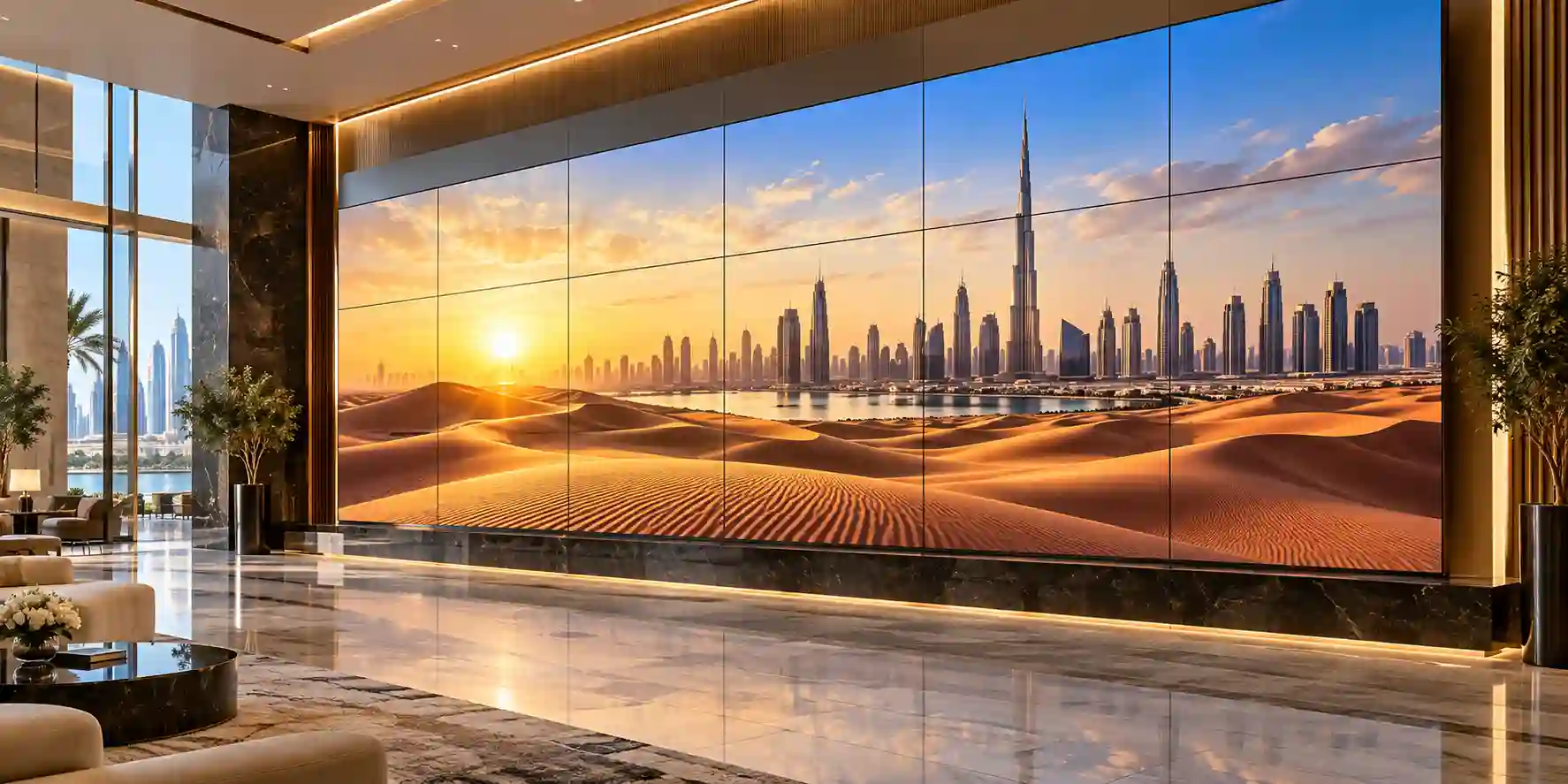
Deployment Context Matters
Premium televisions are frequently selected because they can blend into hospitality and executive interiors more naturally than conventional commercial panels. The image shown here illustrates a Samsung premium-TV use context rather than the exact QN65QN900F product. When planning a similar venue, account for viewing angle, ambient light, sound coverage, mounting height, cable routing and staff control. A technically excellent panel can still produce a poor experience if installed too high, too small for the space or opposite an uncontrolled source of direct sunlight.
FourTeck can help buyers distinguish aesthetic requirements from operational requirements before the bill of materials is finalized, including whether a premium TV, hospitality TV, commercial signage display or interactive display better matches the application.
Technical Feature Deep Dive 1: Processing, Throughput & Workload Performance Architecture
The QN900F’s defining technical proposition is not resolution alone; it is the processing chain that keeps a high-resolution panel useful when source material is inconsistent. Native 8K content remains less common than 4K, so a 7,680 × 4,320 display must spend much of its life transforming lower-resolution material. Samsung’s NQ8 AI Gen2 architecture uses a large set of trained processing models to analyze characteristics such as edges, textures, objects, noise and motion. The objective is to map source information to the much denser 8K pixel grid while avoiding obvious artifacts such as ringing, excessive edge sharpening or block noise. Results still depend heavily on source quality, but strong processing can make everyday broadcast and streamed content look more coherent on a large, high-density screen.
For corporate content, scaling behavior matters in a different way. A laptop might output 4K with sharp text and fine interface elements, while a conferencing system may output compressed video at a lower effective detail level. The television has to preserve the crispness of the first source while cleaning and adapting the second. Buyers should therefore evaluate real sources during acceptance testing instead of relying only on showcase video. If text is a critical workload, set the source computer to an appropriate resolution and scaling factor, use a low-latency or PC-oriented mode where suitable, and avoid unnecessary intermediate converters that can alter chroma or introduce overscan.
Motion throughput is another performance layer. Motion Xcelerator 165Hz allows compatible PC gaming at up to 4K 165 Hz. This capability requires the complete signal path to support the mode: graphics hardware, operating system, cable, HDMI input configuration and content must all align. For gaming and simulation, Variable Refresh Rate enables the display refresh to track the source frame cadence within supported ranges, reducing tearing and perceived stutter. Auto Low Latency Mode can switch the television into a lower-latency processing state when a compatible gaming device is detected. These features are valuable for premium gaming suites and visualization environments but should not be misinterpreted as a requirement for ordinary video playback.
For film, sports and streaming, frame cadence and motion processing are more subjective. Some users prefer stronger interpolation for sports because it produces smoother camera pans, while cinema viewers often choose a less processed presentation that preserves filmic motion. Samsung provides picture controls and Filmmaker Mode to accommodate those preferences. In a hotel or shared executive environment, procurement teams may want a standard commissioning profile so every room behaves consistently. That profile can define picture mode, motion settings, energy options, network configuration and source labels, reducing inconsistent user experience across multiple televisions.
The deeper performance lesson is that throughput is end-to-end. An 8K panel cannot recover detail absent from a heavily compressed source, a 165 Hz mode cannot compensate for a source that outputs 60 Hz, and high dynamic range cannot appear correctly if an intermediary device strips metadata. FourTeck therefore recommends documenting the complete media chain for demanding projects. This includes source resolution, frame rate, HDR format, cable length, switching equipment, audio routing and network transport where applicable. A premium display delivers the most value when the upstream architecture is designed to feed it appropriately.
Technical Feature Deep Dive 2: Security, Redundancy & System Resilience
A connected television is an endpoint on the network and should be treated with the same basic security discipline applied to printers, conferencing appliances and IoT devices. Samsung lists Knox Security and Knox Vault capabilities on this platform family, providing a hardware- and software-backed security foundation for protected platform functions. That does not eliminate the need for enterprise controls. IT teams should decide whether the television requires internet access, whether users are permitted to install applications, what accounts are used, and whether device discovery or casting is enabled on a shared corporate network.
Network segmentation is often the simplest resilience measure. Placing smart AV endpoints on a dedicated VLAN can reduce broadcast noise, limit lateral access and give administrators clearer control over outbound services. In hospitality or residential projects, segmentation can also help isolate guest devices from building-management networks. The QN900F supports both Ethernet and Wi-Fi 6, but wired connectivity is generally preferred for fixed enterprise installations because it is easier to document and less sensitive to RF changes. Wi-Fi remains useful where cabling is impractical or where the screen is part of a flexible environment.
Redundancy for a television is primarily operational rather than internal. Unlike an enterprise server, the QN900F does not use redundant power supplies or hot-swappable components. Business continuity therefore comes from installation strategy: keep spare compatible HDMI cables and remotes, standardize mounting where practical, maintain purchase and warranty records, and consider a spare display for venues where downtime has a material impact. For a hotel, event venue or executive briefing center, having a preplanned replacement path can be more valuable than attempting field repair during an active event.
Power quality also affects resilience. UAE facilities typically provide stable utility power, but sensitive AV installations may still use surge protection or appropriately sized UPS systems to ride through short interruptions and protect connected equipment. If a UPS is used, size it for the television’s actual and peak demand plus any source devices, and confirm output waveform compatibility. A UPS is not a substitute for correct earthing, branch-circuit design or local electrical compliance. Facilities teams should also ensure that concealed sockets remain accessible enough for service and do not place stress on power connectors.
Software lifecycle is the final resilience layer. Samsung indicates an extended Tizen upgrade policy for this model generation, but firmware updates should still be managed deliberately in enterprise settings. Automatic updates are convenient for individual homes; managed environments may prefer change windows, validation and consistent settings across rooms. Application support can change independently of firmware, and cloud services may evolve over time. For that reason, critical meeting or presentation functions should not depend solely on a consumer streaming application. Use dedicated conferencing or media endpoints where business continuity requires predictable behavior.
Technical Feature Deep Dive 3: Remote Management, Telemetry & Infrastructure Integration
The QN900F is a smart television rather than a dedicated enterprise signage controller, so its management model differs from Samsung’s commercial display portfolio. It supports IP control and SmartThings-related integration functions on regional specifications, which can be valuable for room automation and connected-space workflows. In an executive suite, a control system may use supported commands to coordinate power state, source selection or room scenes. In a premium residence, SmartThings can integrate the television with compatible smart-home devices. The exact control capability should be validated against the project’s automation platform before purchase, especially where an integrator expects a specific API or driver.
Remote management requirements must be defined precisely. If the buyer needs centralized fleet monitoring, scheduled content playback, proof-of-play reporting, remote application deployment or hundreds of displays under a signage console, a commercial Samsung signage solution is normally the better architecture. If the requirement is simply to control a handful of premium TVs inside automated rooms, the QN900F may be perfectly suitable. Confusing these two management models can lead to unnecessary workarounds after installation, so the procurement brief should state whether the screen is an entertainment endpoint, a presentation endpoint or a managed signage endpoint.
Telemetry in consumer smart TVs is generally designed around device health, software updates and service functionality rather than enterprise observability platforms. Organizations with strict monitoring requirements may therefore track the surrounding AV system instead: managed power distribution, network switch port state, conferencing endpoint status or room-controller heartbeat can indicate whether the environment is operational. This layered approach is common in professional AV because the screen is only one component in the signal chain. A black screen could be caused by the source, cable, switcher, network service or power state, so troubleshooting benefits from visibility beyond the television itself.
Infrastructure integration also includes physical and logical interfaces. HDMI-CEC can simplify control in smaller systems, while eARC can streamline audio routing. Ethernet provides stable network access; Wi-Fi 6 offers flexible connectivity; Bluetooth supports peripherals and audio devices; AirPlay and mobile mirroring functions can help ad hoc collaboration where organizational policy permits them. In secure enterprises, discovery and casting features may need to be constrained to prevent accidental screen sharing. In hospitality, ease of guest connection may be the priority instead. The same hardware can support both approaches, but the commissioning policy should match the environment.
Finally, integration quality depends on documentation. Record input assignments, cable routes, MAC addresses where required, mount model, firmware baseline, room name, warranty reference and any automation settings. Label hidden cables at both ends. For multi-room rollouts, use a common naming scheme and commissioning template. These practices cost little but materially reduce support time over the life of the deployment. FourTeck can assist procurement teams by ensuring the quoted model and accessory set are aligned with the intended integration architecture before technicians arrive on site.
What Buyers Should Check Before Purchase
Risk Overview
The largest procurement risks are usually not hidden inside the panel specification. They come from buying the wrong regional SKU, choosing an undersized screen, overlooking mount or cable requirements, assuming every smart application is available in the UAE, or expecting consumer-TV management behavior from a product intended primarily for premium viewing. The four checks below close those gaps before a purchase order is released.
01 / FIT: Configuration Fit & Model Sizing
Confirm the exact QN65QN900F regional suffix, screen size and intended role. A 65-inch model may be ideal for an executive office but too small for a deep boardroom. Define the farthest viewing position and smallest content to be read. Check whether the project genuinely benefits from 8K processing, premium HDR, gaming features and advanced smart functions. If the use case is static signage, continuous operation or centralized content management, compare a commercial display before committing to a television platform.
02 / MATCH: Compatibility & Environmental Requirements
Validate VESA bracket compatibility, wall load, cable length, HDMI bandwidth, audio integration, network access and power outlet location. Evaluate room brightness and direct-sunlight exposure. The Glare Free screen helps with reflections, but no premium TV should be expected to overcome every architectural lighting problem. If a soundbar, game console, conferencing unit or AV receiver is included, confirm eARC, CEC and resolution behavior in advance. For custom joinery, provide ventilation and service clearance.
03 / TERMS: Availability, Delivery & Warranty Terms
Request written confirmation of current UAE stock, lead time, supplied model code, included remote and stand, warranty duration and service route. Availability can change quickly on premium television lines, especially as model years transition. For multi-unit projects, ask whether all units can be supplied from the same regional batch. Confirm whether delivery includes only transport or also positioning, wall mounting, cable installation, commissioning and packaging removal. These details should be explicit rather than assumed from the product price.
04 / REQUEST: Quote Preparation Data Needed
Provide FourTeck with the model, required quantity, delivery emirate, site type, desired deployment date and any mounting or audio accessories. If the project includes multiple rooms, list screen quantity by room and whether each room uses wall mounting or the supplied stand. Mention any requirement for 4K 165 Hz gaming, eARC audio, commercial-hours operation, VLAN onboarding or centralized control. A well-defined request allows the quote to address the real deployment rather than only the television carton.
UAE Regional Availability & Service Ecosystem
FourTeck supports UAE buyers by coordinating sourcing, model validation, commercial quotation and delivery planning for premium display projects. The practical objective is to match the quoted QN65QN900F variant and accessories to the destination before dispatch. Project inquiries can include quantity, site location, mounting needs, preferred delivery date and warranty expectations so that procurement teams receive a clearer scope. Exact stock and response time depend on live supply conditions, so availability should be confirmed at the time of quotation.
K1. Dubai Supply & Logistics Support
Dubai projects range from corporate headquarters and Free Zone offices to hotels, restaurants, luxury residences and developer show suites. FourTeck can coordinate quotation and delivery across these environments, including projects that require screen-size validation, compatible mount guidance and accessory planning before shipment. For Free Zone and business-district sites, buyers should share access restrictions, loading-bay rules and receiving hours early. Where the screen will be integrated into custom joinery or a meeting-room system, provide drawings or mounting constraints so the procurement package can be checked against the intended installation.
K2. Abu Dhabi & Al Ain Logistics Reach
For Abu Dhabi and Al Ain, FourTeck can support corporate, government-adjacent, industrial, hospitality and residential procurement with model sourcing and delivery coordination. Larger sites may require scheduled receiving, security clearance or consolidated delivery with other IT and AV equipment. Buyers should state whether the television is intended for an executive room, hospitality area, client lounge or private residence, because accessory and support requirements differ. Warranty and service terms should be confirmed against the exact supplied UAE model rather than inferred from a foreign-market specification.
K3. Sharjah & Northern Emirates Logistics Infrastructure
Sharjah and the Northern Emirates include education, manufacturing, logistics, hospitality, retail and residential projects with varied site conditions. FourTeck can coordinate commercial quotes, product availability checks and delivery planning for single units or multi-display requirements. If the deployment involves remote sites or controlled industrial facilities, include access timing and contact details for receiving personnel. For bright reception or showroom spaces, it is also useful to provide basic room dimensions and lighting conditions so the display class can be validated before the order is finalized.
K4. Ajman & Surrounding Emirates Logistics Coverage
Ajman buyers can request current model availability, pricing, delivery coordination and pre-sales compatibility guidance through FourTeck. This is particularly useful for hospitality, real-estate, education and SME projects where the screen may need to work with an existing wall mount, audio system or media source. Sharing the current installation details reduces the chance of discovering bracket, cable or space conflicts after delivery. For project quantities, FourTeck can align the requested batch and commercial documentation with the buyer’s procurement workflow, subject to current supply conditions.
GCC & Pan-African Supply Chain Reach
FourTeck can support cross-border technology procurement by coordinating product sourcing, quotation, documentation and shipment planning from the UAE into regional markets. Export projects need more than a model number: destination voltage, regional SKU, warranty pathway, packing requirements, customs documentation and consignee details can all affect the correct supply route. Buyers should provide destination country, city, quantity and preferred Incoterm or delivery expectation so the commercial team can structure a suitable offer.
L1. Saudi Arabia (KSA) Export & Supply Support
Saudi projects can include executive offices, hospitality properties, residential developments and premium client areas. FourTeck can route inquiries for configuration validation and project quotation while clarifying whether the proposed television variant is appropriate for the destination market. Cross-border buyers should identify the receiving entity, city, quantity and required documentation early. Where local warranty coverage is a key decision factor, request explicit confirmation in the commercial offer rather than assuming UAE warranty terms transfer automatically.
L2. Qatar Market Supply Reach
For Qatar, FourTeck can coordinate sourcing and project quotation for premium display requirements, including multi-unit hospitality and corporate opportunities. Buyers should distinguish between television use and managed commercial signage use, because the recommended Samsung family may change depending on duty cycle and centralized management needs. Shipping method, import documentation, delivery address and warranty expectations should be agreed during quotation so the product and logistics route are aligned.
L3. Oman Regional Distribution Support
Oman-based buyers can request hardware procurement guidance and quote coordination for Muscat and other project locations. For high-value televisions, shipping protection, destination handling and clear consignee information are important. If the project includes wall mounts, soundbars or source equipment, bundling these items into one validated bill of materials can reduce integration risk. Regional model and service terms should be confirmed before shipment.
L4. Kuwait Supply Chain Coverage
FourTeck supports project quotation and export coordination for Kuwait, subject to current product availability and shipping conditions. Buyers can provide the exact screen requirement, quantity and destination details for a structured commercial response. For Kuwait-focused inquiries, visit FourTeck Kuwait to route regional procurement requirements and supporting product requests.
L5. Kenya & East Africa Supply Infrastructure
Kenyan system integrators, businesses and project contractors can request regional distribution support, technical inquiry routing and delivery coordination for premium display requirements. Import projects should account for local duties, shipping insurance, destination handling and warranty strategy. For Kenya-specific project engagement, use FourTeck Kenya and provide quantity, destination city and deployment purpose.
L6. Uganda Regional Procurement Support
Uganda procurement requests can be coordinated for corporate, hospitality, education and premium residential deployments where high-end Samsung television technology is required. FourTeck can assist with product sourcing and project supply planning, while the buyer confirms import and site requirements. Visit FourTeck Uganda for localized inquiry routing and include any accessory, mounting and delivery requirements with the request.
L7. Pan-African Regional Logistics & Trade Reach
For broader African projects, FourTeck can coordinate multi-country technology sourcing and export planning from the UAE. The best supply path depends on destination, quantity, documentation and after-sales requirements, so cross-border projects should be scoped carefully before dispatch. Buyers can explore FourTeck Africa for regional engagement and FourTeck Global for broader international procurement coordination.
Meeting-Room Integration Perspective
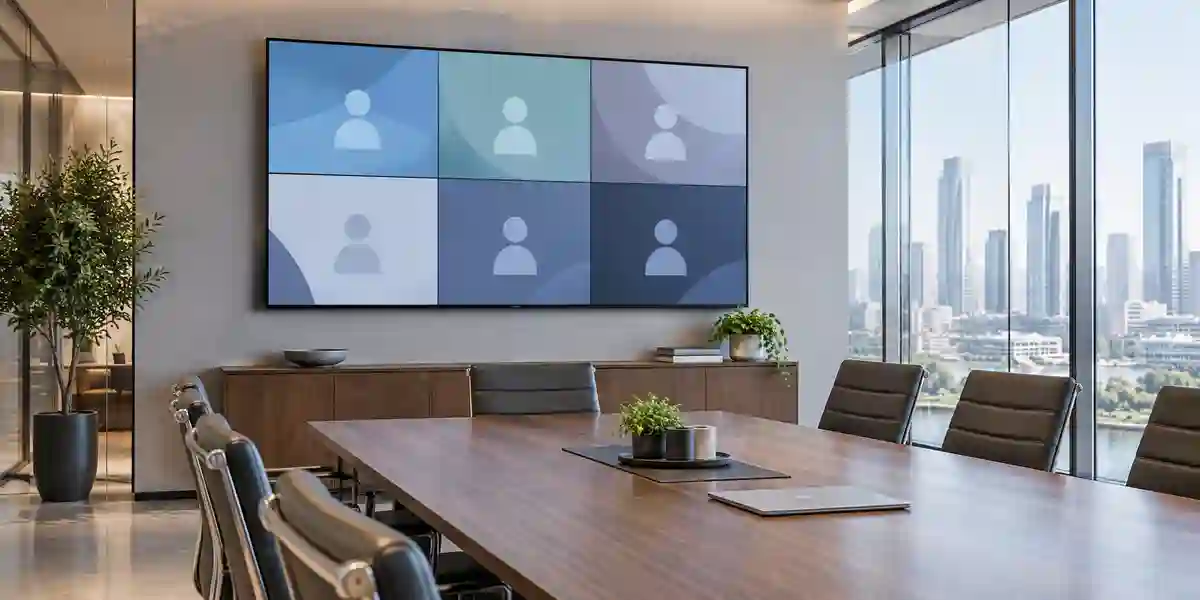
The QN65QN900F can be used in a premium meeting room when its entertainment and image-quality capabilities are desirable, but it should be compared with Samsung business displays if the room requires centralized fleet management, extended commercial duty cycles or signage tooling. The contextual image alongside this note represents a Samsung meeting-room television deployment, not the exact QN65QN900F. Room designers should validate camera placement, microphone coverage, screen height and cable routing as a complete collaboration system.
Related FourTeck Products & Compatible Alternatives
The right alternative depends on whether the buyer wants the same premium TV experience at a different size or needs a different product architecture altogether. FourTeck can compare the following Samsung categories during quotation so the chosen device matches duty cycle, management requirements and room geometry rather than only brand preference.
Samsung QN900F 75-inch
Choose the larger QN900F family size when the room is deeper, the display must serve more viewers or 65 inches does not provide adequate visual scale. Confirm exact regional model and dimensions.
Samsung QN900F 85-inch
A stronger fit for large executive lounges, premium media rooms and spacious boardrooms where a 65-inch screen would appear undersized. Mounting and delivery logistics become more demanding.
Samsung QN990F Neo QLED 8K
Consider the higher-tier 8K family when the project specifically requires its feature set, such as the model generation’s premium connectivity architecture. Exact availability and size options are quote dependent.
Samsung QHC / QMC Commercial Signage
Prefer commercial signage for managed business content, longer operational schedules and centralized signage workflows. These platforms trade some consumer-TV features for business deployment characteristics.
Samsung Hospitality TV Range
For hotel fleets, hospitality-specific Samsung models may provide better room-management and channel-control capabilities than a premium consumer smart TV. They should be evaluated for multi-room properties.
Samsung Interactive Display
For classrooms and collaborative rooms that need touch, annotation and whiteboarding, an interactive display is usually more appropriate than the QN900F, even if the television has superior entertainment-oriented picture processing.
The key comparison is therefore architectural: premium TV, commercial signage, hospitality TV and interactive display are distinct product classes. A buyer who only compares diagonal size may miss major differences in operating schedule, remote management, user interaction and warranty. FourTeck can build a short comparison around the intended room so the selected Samsung platform aligns with operational requirements.
Why Enterprises Choose FourTeck
Enterprise procurement needs more than a product hyperlink. FourTeck’s role is to help buyers convert a model request into a practical supply decision by checking configuration, intended usage, quantity, delivery destination and accessory requirements before the commercial offer is finalized. For the Samsung QN65QN900F, that can include confirming the supplied regional suffix, checking whether the 65-inch size is appropriate, identifying compatible mounting requirements and clarifying whether an external sound system or commercial Samsung display would be a better fit.
Quote coordination can also consolidate related requirements. A project may need wall mounts, HDMI cabling, soundbars, conferencing sources, network accessories or power protection alongside the television. Bringing those items into one review reduces the chance that the screen arrives before the room is ready to use it. For multi-site deployments, consistent documentation and model selection also make asset tracking and support easier.
Delivery planning is handled according to the destination and project scope. Dubai office towers, Free Zone sites, hotels, villas, Abu Dhabi corporate campuses and Northern Emirates facilities can have different access and receiving constraints. Buyers can provide these details with the request so logistics expectations are visible before dispatch. After purchase, warranty support follows the terms associated with the supplied product and regional service route; FourTeck can clarify those terms in the quotation rather than making unsupported blanket claims.
Frequently Asked Questions
1. Is the Samsung QN65QN900F a native 8K television?
Yes. The QN65QN900F family uses a native 7,680 × 4,320 panel, commonly described as 8K. Samsung’s NQ8 AI Gen2 processing also upscales lower-resolution video toward the panel’s 8K pixel grid. Upscaling can improve perceived detail and reduce artifacts, but it does not turn a low-quality source into true native 8K content. Image quality still depends on the original signal, compression, viewing distance and picture settings.
2. Does the QN65QN900F support 165 Hz gaming?
Samsung lists Motion Xcelerator 165Hz with support for gaming up to 4K at 165 Hz when a compatible PC graphics source is connected. The complete signal chain must support that mode, including the GPU, HDMI output, cable and game settings. The 165 Hz figure applies to supported 4K gaming rather than 8K at 165 Hz. Regional specifications list high-frame-rate HDMI capability up to 8K 60 Hz and 4K 165 Hz.
3. Is the QN900F suitable for bright rooms in Dubai?
It is well suited to many bright interiors because Samsung includes a Glare Free screen treatment and a high-performance Mini LED backlight architecture. These features help reduce distracting reflections and preserve perceived contrast under ambient lighting. However, no television should be installed where strong direct sunlight continuously strikes the panel without assessment. Window orientation, room lighting and screen angle should be reviewed, especially in glass-heavy villas, hotel lounges and executive offices.
4. What audio system is built into the 65-inch QN900F?
Regional Samsung specifications for the 65-inch QN900F list a 70 W RMS, 4.2.2-channel speaker system with Dolby Atmos, Object Tracking Sound+ and Q-Symphony. This is strong integrated audio for a television and may be sufficient in moderate rooms. Larger spaces or buyers seeking higher impact can add a compatible soundbar or AV system. HDMI eARC provides a high-quality connection path for external audio equipment.
5. Can the QN65QN900F be used in a boardroom?
Yes, especially in executive rooms where premium picture quality, smart functions and design are important. Four HDMI inputs, wired and wireless networking, AirPlay-related capabilities and strong built-in audio make it flexible for presentations and media. For larger enterprise fleets requiring centralized display management, long commercial duty cycles or signage scheduling, a Samsung business display may be more appropriate. Screen size should also be validated against the farthest viewing position.
6. What network connections are available?
Samsung’s regional specification lists Ethernet, Wi-Fi 6 and Bluetooth 5.3. Wired Ethernet is generally recommended for fixed enterprise installations where predictable connectivity is important, while Wi-Fi is convenient when cabling is unavailable. Smart services and mobile-sharing functions may require internet access, user accounts or compatible devices. Organizations should place the television on a network segment that matches their security policy and should disable unnecessary discovery features where appropriate.
7. What wall mount does the QN65QN900F require?
Regional 65-inch specifications list a VESA pattern of 400 × 300 mm and a television weight of approximately 25.5 kg without the stand. The selected wall mount must support that VESA geometry and provide an adequate load rating with a suitable safety margin. The wall itself must also support the installed load. Professional installation is recommended, particularly for stone, decorative panel, gypsum or custom-joinery walls where anchor selection requires assessment.
8. Is the QN900F a commercial signage display?
No. The QN900F is a premium smart television. It can be used in executive, hospitality and retail-experience spaces, but buyers needing continuous signage schedules, centralized content management, portrait installations or commercial-duty warranties should compare Samsung’s business signage range. The distinction matters because commercial displays are engineered around operational management requirements that differ from consumer television use, even when the screens look similar at first glance.
9. Is the exact QN65QN900F specification identical in every country?
The core display platform is consistent, but regional model suffixes can differ in tuner standards, voice-assistant support, bundled accessories, energy labeling, smart applications, plug type and warranty terms. FourTeck recommends that UAE buyers request the exact model code included in the quotation and confirm the required applications and accessories before purchase. This is especially important when online research mixes US, European, Indian and Middle East product pages.
10. How can I request a FourTeck quote for Dubai or the UAE?
Send FourTeck the Samsung QN65QN900F model reference, required quantity, delivery location, preferred deployment date and any wall-mount, soundbar or cabling requirements. For business projects, also describe the room type and whether the display will be used for meetings, hospitality, gaming, executive media or signage-like content. FourTeck can then confirm current supply options, regional SKU details, commercial pricing, delivery coordination and applicable warranty guidance for the proposed order.
Request a Samsung QN65QN900F Project Quote
For an accurate Dubai/UAE quotation, send FourTeck the required model, quantity, delivery location and target deployment timeframe. Add any requirements for wall mounting, high-frame-rate PC gaming, soundbar integration, meeting-room sources, custom joinery or multi-room standardization. FourTeck can use this information to confirm current supply options, exact regional model suffix, accessory compatibility and warranty pathway before the purchase order is released.