Samsung QN85QN85F 85-Inch Neo QLED 4K TV in Dubai, UAE
The Samsung QN85QN85F is an 85-inch Neo QLED 4K smart television engineered for buyers who need a very large, high-impact screen with advanced picture processing, modern connectivity, premium smart features, and strong motion handling. Its combination of Mini LED class backlighting, Quantum Matrix control, the NQ4 AI Gen2 Processor, 4K AI Upscaling, Neo Quantum HDR+, and Motion Xcelerator up to 144Hz makes it suitable for both high-end entertainment and selected business display scenarios where image quality matters.
For Dubai and UAE projects, FourTeck can help validate the exact regional variant, confirm installation accessories, coordinate delivery, and prepare a project quotation based on quantity, location, wall or stand deployment, and integration requirements.
Procurement Snapshot
Model: QN85QN85F / QN85F 85-inch family
Panel: Neo QLED 4K
Primary fit: Boardrooms, hospitality, premium retail, training, executive spaces, residential AV
UAE supply: Contact FourTeck for current options
Regional services: Configuration dependent
Quick Procurement & Configuration Matrix
Samsung
QN85QN85F / QN85F 85-inch
Neo QLED 4K Smart TV
Large-room presentations, premium viewing, collaboration, hospitality, media and gaming
Single 85-inch display; multi-screen deployments require external AV design
220–240V, 50/60Hz on published regional variants; verify UAE unit
Dubai, UAE and coordinated regional export projects
Confirm regional warranty and service route with quotation
Executive Product Architectural Overview
The Samsung QN85QN85F sits in the premium large-screen Neo QLED category, combining a very large 85-inch panel with advanced backlight control and Samsung’s NQ4 AI Gen2 processing platform. For an enterprise buyer, the most important architectural point is that this is not simply a large consumer screen enlarged for visibility; it is a high-performance display platform that can serve as the visual endpoint for several different classes of room experience. In a boardroom it can display presentation decks, spreadsheets, conferencing layouts, dashboards, video content, and executive briefings. In hospitality it can anchor premium suites, lounges, restaurants, and high-value guest areas. In retail it can support visually rich branded content, live campaigns, high-resolution product demonstrations, and immersive customer-facing media. In executive residential installations it can function as the primary display for cinema, sports, gaming, and connected-home content.
The 4K 3840 x 2160 pixel structure is particularly relevant at 85 inches because large physical screen area increases the visibility of weaknesses in scaling and content preparation. Samsung addresses this through the NQ4 AI Gen2 Processor and 4K AI Upscaling. The processor analyzes incoming content and applies image processing intended to improve perceived clarity, texture, edge definition, contrast behavior, and source adaptation. Buyers should understand that no upscaling platform can restore source information that was never captured, but competent processing can make mixed-resolution content more usable on a supersized display. This matters in organizations where content originates from multiple systems, including conferencing appliances, IPTV sources, notebook computers, digital media players, streaming applications, legacy 1080p sources, and modern 4K endpoints.
Neo QLED architecture uses miniaturized backlighting and precise light control to improve brightness management and contrast relative to conventional edge-lit LCD designs. Samsung markets Quantum Matrix technology as the control layer for this backlight behavior. In practice, the business value is better handling of bright highlights, darker regions, and mixed-luminance scenes. This can improve readability of presentation material in large spaces, enhance perceived depth in hospitality content, and provide stronger visual impact for premium media. Neo Quantum HDR+ adds high dynamic range processing, while HDR10+ support on published variants improves compatibility with dynamic HDR content where supported by the source.
Wide Viewing Angle support is another practical architecture consideration. An 85-inch screen is frequently installed in rooms where viewers are distributed across a broad seating area rather than directly centered. Boardrooms, training spaces, reception lounges, restaurants, and large family rooms all produce off-axis viewing. Although any LCD-based display can exhibit some change in contrast or color at angles, Samsung’s wide-viewing design is intended to preserve a more consistent image for users who are not directly on the centerline. Proper room design still matters: screen height, tilt, lighting, and seating geometry should be considered together.
Motion handling is equally significant. The QN85F family supports Motion Xcelerator up to 144Hz, with published regional refresh specifications varying between a 100Hz or 120Hz native baseline depending on market documentation. This means buyers should confirm the exact UAE model code if high-refresh gaming or specialized PC presentation use is part of the deployment. For ordinary business presentation and video, the set offers more than sufficient motion capability. For gaming zones, e-sports lounges, premium hotel entertainment, or executive spaces where a compatible console or PC is connected, the combination of high frame rate HDMI capability, variable refresh rate, Auto Low Latency Mode, and FreeSync Premium Pro on published variants can materially improve responsiveness and motion smoothness.
The Tizen smart platform brings application access, connected-device integration, SmartThings functionality, browser capability, wireless casting, and media services into the television. In commercial environments, this can simplify some lightweight scenarios because the display can access content without a permanent external player. At the same time, organizations with strict security, lifecycle, content-management, or network segmentation policies may prefer to treat the TV as a display endpoint and connect a managed conferencing appliance, signage player, IPTV decoder, or AV-over-IP receiver. That approach can simplify governance because the intelligence and credentials remain on controlled enterprise hardware.
From an AV integration standpoint, four HDMI ports, USB interfaces, Ethernet, optical digital audio, Wi-Fi, Bluetooth, eARC, and HDMI-CEC create broad compatibility with current sources and peripherals. The internal 40W 2.2-channel speaker system with Dolby Atmos capability, OTS Lite, Adaptive Sound Pro, Active Voice Amplifier Pro, and Q-Symphony gives the television a capable standalone audio foundation. For larger boardrooms, premium hospitality zones, or cinema-oriented environments, an external soundbar, AV receiver, ceiling-speaker system, or DSP-controlled audio solution may still be preferable. FourTeck can help the buyer separate what the television can do natively from what requires an external audio or collaboration layer.
Enterprise Business Value & ROI Benefits
A premium 85-inch display can create value when it replaces a collection of compromises: undersized screens, low-brightness projection, weak motion performance, poor image scaling, complicated source switching, or inconsistent smart-device integration. The QN85QN85F should therefore be evaluated not only by panel specifications but by how effectively it supports the room experience, reduces friction for users, and extends the useful life of the installation.
Large-Screen Productivity
At 85 inches, the screen provides enough visual area for large conference rooms, collaborative review sessions, dense dashboards, and multi-window presentation layouts. Teams can review detailed content from farther away than they could with a 55-inch or 65-inch display. The practical return is improved room usability and reduced pressure to replace a display simply because it becomes too small when seating plans or room capacity expand.
Premium Visual Impact
Neo QLED backlight control, HDR processing, wide color capability, and high brightness are valuable in customer-facing spaces where the display contributes directly to brand perception. Hotels, restaurants, executive lounges, dealerships, property showrooms, and premium retail environments can use the display as both a functional screen and a visual centerpiece. Stronger perceived image quality can improve engagement without requiring a specialist projection room.
Source Flexibility
Four HDMI inputs allow several persistent source devices to remain connected, such as a conferencing appliance, media player, game console, IPTV receiver, or presentation computer. This reduces cable swapping and the support calls that often follow from improvised room setups. Ethernet, Wi-Fi, Bluetooth, optical audio, USB, and wireless casting options further expand integration choices.
Motion & Interactive Media
Motion Xcelerator up to 144Hz and gaming-oriented features support fast-moving media, interactive demos, sports, simulation, and compatible PC or console content. This broadens the use of the display beyond passive television viewing. A single screen can serve executive presentation during business hours and premium media or entertainment use afterward, increasing utilization.
Audio Consolidation
The integrated 40W 2.2-channel audio system can be sufficient for smaller premium rooms and informal spaces, potentially reducing the need for additional speakers in simple deployments. Where enhanced audio is necessary, eARC and Q-Symphony-compatible Samsung audio products create an upgrade path without changing the display.
Energy & Lifecycle Awareness
Published regional specifications include power-saving functions, automatic power-off, an eco sensor, and standby consumption around 0.5W, although the exact UAE model should be confirmed. Energy management matters on large displays because screen size naturally increases consumption. Scheduling and power policy can therefore influence total ownership cost over a multi-year deployment.
Return on investment for a display like this is best measured against the room outcome rather than a single component benchmark. If a larger, brighter, more flexible screen eliminates the need for an aging projector, reduces meeting setup time, improves premium guest experience, enables both presentation and media use, or postpones future upsizing, the business case can be substantial. However, buyers should avoid over-specifying the QN85QN85F for environments that primarily require 24/7 signage duty cycles, centralized commercial display management, or ultra-high brightness for direct sunlight. In those use cases, Samsung’s dedicated professional signage families may be more suitable. FourTeck can help compare the QN85F against commercial signage models before purchase.
Hardware & Technical Architecture Highlights
The central processing component is Samsung’s NQ4 AI Gen2 Processor. Its role is to coordinate picture analysis, 4K scaling, HDR treatment, motion processing, and scene-adaptive adjustments. On an 85-inch panel, this processing layer becomes especially important because compression artifacts, edge noise, low-resolution text, and weak source material are easier to notice. Buyers using videoconferencing systems should still configure those systems for 4K output where supported, because native high-resolution content remains preferable to relying on scaling.
The display architecture combines Quantum Dot color technology with Mini LED class backlighting and local light control. This arrangement is designed to deliver a wider luminance range than basic LCD televisions while keeping the durability and high-brightness characteristics that make premium LCD technology attractive for bright rooms. Quantum Matrix Technology Plus, as listed on several regional variants, governs fine light control across the panel. Market descriptions can vary, with some Samsung regions referring to Quantum Mini LED Pro, so the final UAE specification should be checked against the supplied model code.
The panel supports 4K resolution at 3840 x 2160. Published Samsung regional pages list refresh behavior as 100Hz up to 144Hz or 120Hz up to 144Hz depending on the territory. The critical procurement implication is that 144Hz should be treated as a supported high-refresh mode under compatible source and connection conditions rather than assumed to be the universal refresh rate for every input scenario. Buyers planning PC use should validate the graphics output format, HDMI cable bandwidth, selected HDMI input behavior, and resolution/refresh combination before installation.
Connectivity includes four HDMI inputs and two USB-A ports on widely published variants, together with Ethernet LAN, optical digital audio, RF input where regional tuner support applies, Wi-Fi, Bluetooth, HDMI-CEC through Anynet+, and eARC. For an integrated meeting room, one HDMI port might be assigned to a conferencing codec, another to a wireless presentation gateway, a third to a local PC, and a fourth to a media or signage source. In a hospitality or residential AV room, those connections could instead support a set-top box, game console, media player, and receiver.
Audio architecture on published 85-inch variants is rated at 40W with a 2.2-channel speaker arrangement. Dolby Atmos capability provides immersive-format support, while Object Tracking Sound Lite uses signal processing to create a more spatial relationship between on-screen action and audio. Adaptive Sound Pro evaluates content and environment to adjust sound, while Active Voice Amplifier Pro is intended to improve dialogue intelligibility. Q-Symphony allows compatible Samsung soundbars and the television speakers to work together, making it a useful path for installations that start with internal audio and later expand.
Physical integration deserves the same attention as image processing. Published 85-inch variants are approximately 1.89 metres wide, roughly 1.08 metres high without the stand, and around 4.7 cm deep at the body, with a VESA pattern commonly published as 600 x 400 mm. Set weight without stand is approximately 41.6 kg on one regional specification, rising to about 43.6 kg with the stand. These dimensions mean wall structure, bracket rating, fixing method, lifting plan, cable routing, and service access must be validated before installation. Large screens should not be treated as ordinary two-person desktop equipment; a safe mounting plan is a procurement requirement.
Definitive Technical Specifications & Sizing Notes
| Category | Published Specification | Procurement Note |
|---|---|---|
| Screen Size | 85 inches / approx. 214 cm | Confirm room viewing distance and wall area |
| Resolution | 4K UHD, 3840 x 2160 | Recommended for large-room detailed content |
| Display Type | Neo QLED | Mini LED class backlighting with Quantum Dot color |
| Processor | NQ4 AI Gen2 Processor | Handles scaling and picture processing |
| HDR | Neo Quantum HDR+, HDR10+ Adaptive/Gaming | Source and app support required for HDR formats |
| Motion | Motion Xcelerator up to 144Hz | High-refresh support depends on source and mode |
| Viewing | Wide Viewing Angle | Useful for broad seating layouts |
| Audio | 40W, 2.2CH, Dolby Atmos, OTS Lite, Q-Symphony | External audio recommended for very large rooms |
| Smart Platform | Tizen Smart TV | Services and applications vary by region |
| HDMI | 4 ports | Published variants support 4K high frame rate capability |
| USB | 2 x USB-A | Use for supported media/accessories, not as enterprise device management |
| Network | Ethernet, Wi-Fi, Bluetooth | Corporate network policies should be reviewed |
| Audio Return | eARC | Supports compatible soundbar/receiver integration |
| Typical Published Size | Approx. 1.89 m x 1.08 m x 4.7 cm without stand | Regional chassis details should be confirmed |
| VESA | 600 x 400 mm on published 85-inch variants | Bracket must support weight and fixing environment |
| Weight | Approx. 41.6 kg without stand on published variant | Plan safe lifting and installation team |
| Power | 220–240V 50/60Hz on published regional model | Verify UAE power label and final model code |
Specification tables should always be read as a deployment framework rather than a substitute for model-code validation. Samsung can publish region-specific differences in native refresh rate presentation, tuner standards, voice assistants, bundled stand, smart applications, accessibility functions, remote-control model, and local service terms. For a UAE project, the exact commercial part number supplied by the distributor should be checked against the planned workload. High-refresh PC gaming requires compatible source hardware, suitable HDMI cabling, correct input settings, and a graphics mode that the television supports. Wall installation requires a mount rated for the screen size and weight, a wall structure capable of carrying the load, and adequate ventilation and cable clearance. Audio planning should consider room size, reverberation, voice intelligibility, and whether the television will be used for conferencing or only media playback. FourTeck can incorporate these checks into the quotation process so that the display, mount, cables, audio, and source equipment are treated as one system rather than independent purchases.
Configuration, Sizing & Deployment Workbench
01. Establish Viewing Distance and Room Geometry
Start with room dimensions, not with the television specification sheet. An 85-inch 4K display is most effective when viewers are far enough away to comfortably take in the full image but close enough to benefit from 4K detail. Boardrooms should account for the farthest chair, the nearest seat, table depth, and the vertical sightline over other occupants. Hospitality and residential layouts should consider primary seating position and glare sources. Retail should evaluate customer circulation and whether the screen will be viewed straight on or from a moving angle.
02. Define Source Resolution and Workload
List every source expected during the display lifecycle. Examples include a room PC, Microsoft Teams or Zoom appliance, IPTV receiver, signage player, wireless presentation gateway, game console, streaming application, and local laptop input. If the room needs 4K at high frame rate, verify that the source device and cable path support the required format. If most content is 1080p, the QN85F can upscale it, but buyers should still improve source quality whenever possible.
03. Decide Whether Native Smart Services Are Appropriate
Tizen provides a rich built-in platform, but organizations should decide whether the television itself is permitted on the corporate network. Some businesses will use native streaming, SmartThings, AirPlay, or browser functions. Others will isolate the display and connect only managed external devices. The second approach may be easier for regulated sectors because software updates, user accounts, credentials, and application access stay on enterprise-controlled endpoints.
04. Size Audio for the Actual Space
The integrated 40W audio system is capable for a television, but acoustic requirements vary. A quiet executive room may be adequately served by internal speakers, while a boardroom with conferencing may need dedicated microphone, DSP, and loudspeaker systems. A hotel lounge or restaurant may require distributed audio independent of the screen. If a Samsung soundbar is selected, eARC and Q-Symphony can simplify integration, but compatibility should be confirmed by model.
05. Validate Mounting, Power and Service Access
An 85-inch panel needs a structural mounting plan. Confirm the wall type, bracket rating, VESA dimensions, fixing depth, cable route, mains outlet position, conduit capacity, and access for future service. For floor or furniture placement, confirm stand footprint and furniture load rating. Leave enough clearance to connect HDMI, Ethernet, optical, and power cables without creating sharp bends. Consider surge protection or suitable power-conditioning policy where required by the site.
06. Plan Content Governance and Lifecycle
If the TV is being considered for business content, define who owns content updates, who can change inputs, and whether remote controls will be freely available. A consumer-oriented smart TV can work well in a meeting or hospitality environment, but it is not a substitute for centralized commercial signage management when continuous remote fleet control is essential. For multi-site retail or 24/7 signage, compare Samsung’s professional signage platforms before final selection.
A practical deployment package typically includes the television, approved mount or stand solution, certified HDMI cabling, Ethernet patching if required, surge or power accessories according to site policy, and any external soundbar, conferencing codec, wireless presentation system, or signage player. Buyers should also specify whether installation, lifting, wall reinforcement, cable containment, configuration, user handover, or old-display removal is required. These items influence the project cost more than the panel price alone and should be identified before purchase-order release.
Industry Use Cases & Workload Scenarios
Banking & Finance
Executive meeting rooms can use the 85-inch canvas for financial dashboards, portfolio review, strategy presentations, video conferencing, and market news. The large format helps teams review dense visual material without relying on a projector. Regulated institutions should normally use managed external endpoints and apply internal network policy rather than depend on consumer smart applications.
Healthcare
Administrative conference spaces, training rooms, premium patient lounges, and education areas can use the display for presentations, approved media, and collaboration. It should not be represented as a diagnostic medical display; clinical imaging applications require purpose-built certified equipment. The QN85F is better positioned for communication, training, and hospitality-style environments.
Government & Public Sector
Large meeting spaces and briefing rooms can benefit from 4K readability and wide viewing support. Procurement teams should define network isolation, source control, warranty expectations, and installation scope before purchase. For command centres requiring 24/7 operation, bezel-managed walls, or centralized device control, commercial signage may be a better fit.
Logistics & Corporate Operations
Management rooms can display live dashboards, warehouse KPIs, transport feeds, route visualizations, and business review material. The large format supports team visibility, while multiple HDMI inputs enable switching among computers, conferencing hardware, and operational media. Continuous always-on control-room duty should be assessed against professional signage alternatives.
Retail & Hospitality
Premium stores, restaurants, hotels, and lounges can use the panel for high-impact brand content, menus, sports, entertainment, promotional media, or guest experiences. The strong picture platform and 85-inch scale create immediate visual presence. Where centrally scheduled content across many locations is required, pair the screen with a managed player or evaluate Samsung commercial signage products.
Education & Training
Training centres and executive classrooms can present 4K learning material, videos, demonstrations, and remote instruction on a screen large enough for group viewing. The television is not an interactive touch board, so classrooms requiring writing, annotation, or multi-user touch should compare Samsung interactive displays or dedicated collaboration boards.
Technical Feature Deep Dive 1: Processing, Throughput & Workload Performance Architecture
The most important performance question for an 85-inch 4K television is not whether it can display 4K, but how well it manages the range of content that reaches the panel. Real deployments rarely use one pristine 4K source. A boardroom may receive a 1080p conferencing feed, a 4K local presentation, compressed video embedded inside a slide deck, a browser-based dashboard, and a guest laptop that outputs an unexpected color format. Hospitality environments combine broadcast feeds, streaming applications, signage content, and guest devices. The NQ4 AI Gen2 Processor is intended to normalize this diversity by applying scaling, image enhancement, contrast management, and scene analysis before the final image is driven to the panel.
Samsung’s 4K AI Upscaling is particularly relevant when a large screen is used with lower-resolution sources. Upscaling cannot create authentic source detail, but it can identify patterns and edges, reduce visible roughness, and map content to the 3840 x 2160 pixel panel more intelligently than basic nearest-neighbour scaling. This becomes valuable on 85 inches because individual artifacts occupy more physical area than they would on a small television. Buyers who plan to display spreadsheets or text-heavy dashboards should still prioritize a true 4K source, because native text rendering provides the cleanest result.
Motion processing and high-refresh capability extend the performance envelope. Published QN85F 85-inch variants list Motion Xcelerator 144Hz and support gaming features including variable refresh rate, Auto Low Latency Mode, Game Motion Plus, HGiG, and FreeSync Premium Pro. For enterprise users, the benefit is not limited to games. High-refresh PC output can improve pointer motion, animated visualizations, simulation, scrolling, and certain interactive applications. However, this capability should not be assumed to work automatically. The connected PC or console must output the correct resolution and refresh format, the HDMI cable must support the required bandwidth, and the input mode may need to be configured appropriately.
HDR processing adds another dimension to performance by expanding the relationship between dark and bright scene information. Neo Quantum HDR+ and HDR10+ support allow compatible sources to present greater highlight detail and richer contrast. In a hospitality lounge, sports venue, or premium media room, that can create a noticeably more dynamic picture. In a boardroom, HDR is less important for ordinary slides, but the underlying brightness and contrast capability can still help maintain perceived clarity under ambient light. Room lighting should nevertheless be controlled where possible because no display can fully eliminate reflections or the effect of bright direct light.
The Supersize Picture Enhancer is designed for large screens where image flaws are more obvious. This reinforces the idea that picture processing on an 85-inch display must be judged as a system. The panel size, source resolution, compression quality, viewing distance, and room lighting all interact. Buyers should therefore test representative content when the project is unusually demanding. For standard meeting rooms, hospitality, and premium viewing, the published architecture provides a robust performance base, but specialist post-production, medical diagnostics, broadcast reference monitoring, or color-critical design work requires purpose-built calibrated displays.
Technical Feature Deep Dive 2: Security, Redundancy & System Resilience
A television does not provide infrastructure redundancy in the way a server or network appliance does, so resilience planning should focus on how the display behaves as part of the room system. The first consideration is source redundancy. With four HDMI inputs, an installation can keep multiple source devices connected at the same time. A boardroom could maintain a primary conferencing system, a secondary local PC, a wireless presentation device, and a backup media source. If one source fails, users can switch inputs rather than lose the entire room. This is a simple but effective form of operational resilience.
Network security requires more deliberate design. Tizen offers connected services, SmartThings integration, casting, browser access, and downloadable or region-provided applications. Those capabilities are useful, but enterprises must decide whether the television should join the same network as business endpoints. In many corporate deployments, a segmented AV VLAN, guest wireless network, or isolated internet connection is more appropriate. Highly regulated organizations may disable or avoid native network services entirely and rely on an external managed endpoint. That choice reduces convenience but can simplify governance, patch responsibility, credential management, and access control.
Physical security also matters in public or shared spaces. Remote controls can be misplaced, input settings changed, applications opened, or network features altered. Hospitality and shared meeting spaces should define who controls configuration and whether the remote should be secured after commissioning. External players can be physically locked in furniture or racks, while cables can be routed through managed containment to reduce accidental disconnection. For public areas, anti-tamper measures may be as important as picture quality.
Power resilience depends on the use case. Most television installations do not need UPS-backed operation, but an executive command room, VIP event space, or critical briefing facility may require conditioned or backed-up power. If a UPS is specified, the installer should size it for the television and any connected AV equipment using measured or published consumption figures with adequate headroom. The published maximum consumption of some 85-inch QN85F regional variants is around 340W, while typical consumption is lower. The exact UAE label should be checked before power-system sizing.
Thermal resilience is largely passive for the buyer but still influenced by installation. The television should not be recessed into a sealed cavity without respecting ventilation requirements. Cable bundles should not block rear airflow, and wall mounts should preserve suitable clearance. Direct heat sources and extreme environmental conditions should be avoided. For continuous high-duty commercial environments, professional signage models with explicitly rated operating schedules can be preferable because their thermal and management design is targeted at business duty cycles.
Finally, service resilience means planning how the screen will be replaced or accessed if a fault occurs. Large 85-inch displays require trained handling, packaging strategy, and sufficient access to remove them from a wall. For large multi-site projects, organizations should document model codes, purchase dates, mounting hardware, serial numbers, and warranty channels. FourTeck can support this procurement record by aligning the quotation with the selected regional configuration and accessories.
Technical Feature Deep Dive 3: Remote Management, Telemetry & Infrastructure Integration
The QN85F includes a modern smart platform, but buyers should distinguish between consumer smart-device management and enterprise display fleet management. Tizen can provide application access, device connectivity, SmartThings integration, IP control on published variants, and wireless interaction. These capabilities can be useful in single-room or small-scale deployments where local users need flexibility. They are not automatically equivalent to the centralized management tools available with Samsung professional signage platforms, which are designed for large fleets, scheduled content, remote monitoring, and managed commercial operation.
IP control is useful when the television is integrated into a room-control ecosystem. Depending on the exact model and supported control interface, an AV integrator may be able to coordinate power, input selection, volume, or basic functions from a third-party control system. The design should be validated before procurement if automation is essential because control capabilities, command sets, and integration certifications can vary by region and firmware. For simple installations, HDMI-CEC through Anynet+ can provide basic device coordination, such as powering and switching compatible connected hardware.
Wireless integration includes Wi-Fi, Bluetooth, and Apple AirPlay on many published variants. Multi-device experience features may support mobile-to-TV and TV-to-mobile interactions, mirroring, or tap-based workflows depending on region and compatible devices. These can reduce friction in executive spaces where users need fast ad hoc sharing. Enterprises should still define whether wireless presentation is allowed on the secure network. Where guest presenters are common, a dedicated wireless presentation gateway can provide clearer access control and a more predictable multi-platform experience.
SmartThings capability extends the TV into Samsung’s connected-device ecosystem. In hospitality or premium residential projects, this can create useful interaction with compatible smart devices and automation. In conventional enterprise conference rooms, SmartThings may be optional rather than central. The procurement team should decide whether connected-home style functions add value or simply create unnecessary network exposure. A disciplined design activates only the features that support the intended operating model.
Telemetry for enterprise support is usually better handled by the source devices and room-management platform. Conferencing appliances can report call quality, microphone state, peripheral health, and software version. Managed signage players can report content status and connectivity. Network infrastructure can log link behavior and traffic. The television then becomes the visual endpoint rather than the primary telemetry source. This layered approach is particularly effective in larger deployments because support teams can isolate whether a failure originates in content, source hardware, cabling, network, audio, or the panel itself.
For an integrated room, FourTeck can help define where responsibilities sit. The television supplies high-quality image reproduction, smart services, and flexible local connectivity. The conferencing or signage endpoint supplies application governance. The network provides controlled transport. The mount and cable system provide physical reliability. Audio hardware provides intelligibility at the required room scale. Treating each layer separately produces a more supportable deployment than expecting the television to perform every system role by itself.
What Buyers Should Check Before Purchase
Large-format televisions create procurement risk when buyers focus on screen size but overlook regional model code, mounting structure, source compatibility, delivery access, warranty route, and operating duty. The checklist below helps convert the television specification into a deployment-ready bill of materials.
01 / FIT — Configuration Fit & Model Sizing
Confirm that 85 inches is appropriate for the room and that the exact Samsung regional part number belongs to the QN85F 85-inch family required. Validate refresh behavior if 144Hz use is important, verify expected HDR formats, and identify whether native smart applications will be used. Buyers should also decide whether the screen is for intermittent presentation, premium media, hospitality, gaming, or prolonged commercial content because duty cycle may change the recommended product family.
02 / MATCH — Compatibility & Environmental Requirements
Measure the wall, doorway, lift, staircase, and installation path before delivery. Confirm VESA mount compatibility, structural wall capacity, furniture dimensions if stand-mounted, cable lengths, source formats, audio requirements, network access, and mains outlet location. Consider reflections and room brightness. If the screen will be installed inside cabinetry, ensure ventilation and service access remain adequate.
03 / TERMS — Availability, Delivery & Warranty Terms
Ask for the final model code, country variant, included accessories, estimated delivery schedule, warranty period, warranty administrator, and whether installation is included or separate. For multi-unit projects, confirm whether all units will be supplied from the same regional specification where consistency matters. Do not assume a warranty from another market automatically transfers to the UAE.
04 / REQUEST — Quote Preparation Data Needed
Provide quantity, delivery emirate, exact site location, required date, wall or stand preference, installation height, source devices, audio requirement, conferencing or signage use, and whether accessories should be included. For project supply, share the expected deployment schedule and whether partial deliveries are acceptable. Better input data allows FourTeck to prepare a more accurate bill of materials and reduce follow-up questions.
One frequent buyer gap is confusing a premium smart television with a dedicated commercial signage panel. The QN85QN85F is compelling where premium image quality, smart services, entertainment capability, gaming features, and high-end presentation are important. A professional signage product may be better where the screen must run for extended daily schedules, operate under centralized fleet control, accept specialist mounting layouts, or provide commercial warranties tailored to public display. FourTeck can compare both approaches rather than forcing every project into one product class.
UAE Regional Availability & Service Ecosystem
FourTeck supports UAE buyers by coordinating product sourcing, configuration validation, compatible accessory selection, project quotation, and delivery planning. Availability can change with distributor allocation and regional model cycles, so current stock, warranty path, and final part number should be verified at quotation stage. For project orders, providing quantity and deployment date early helps the sourcing team align delivery with site readiness.
K1. Dubai Supply & Logistics Support
Dubai projects can include corporate offices, hotels, restaurants, villas, free-zone businesses, education providers, meeting rooms, retail stores, and executive facilities. FourTeck can coordinate quotation and delivery planning across Dubai, including projects where multiple screens, mounts, cables, and AV accessories must arrive as one package. Free Zone delivery requirements, access windows, loading-bay procedures, and installation coordination should be shared when requesting a quote. For large 85-inch panels, site access is particularly important because the carton is significantly larger than the final display.
K2. Abu Dhabi & Al Ain Logistics Reach
For Abu Dhabi and Al Ain, FourTeck can support corporate, government, industrial, hospitality, education, and premium residential procurement by coordinating model verification, commercial quotation, and scheduled delivery. Organizations with formal vendor onboarding or purchase-order workflows should provide required documentation at the enquiry stage. If the project involves boardrooms or training facilities, include mounting and source-device information so the display package can be planned around the room rather than quoted as an isolated television.
K3. Sharjah & Northern Emirates Logistics Infrastructure
Businesses in Sharjah and the Northern Emirates can request project supply for office installations, hospitality spaces, retail environments, training centres, and customer-facing displays. FourTeck can assist with quantity-based sourcing, delivery coordination, and pre-sales compatibility review. For locations outside central business districts, provide exact site address, receiving hours, floor level, lift dimensions, and whether installation crews require security registration.
K4. Ajman & Surrounding Emirates Logistics Coverage
Ajman buyers can obtain current availability checks, quotation support, delivery coordination, and guidance on mounting and connectivity. Large televisions are sensitive to transport and handling, so procurement teams should avoid arranging informal last-mile movement without suitable packaging and vehicle capacity. FourTeck can align supply timing with installation readiness and advise what project details are needed before dispatch.
GCC & Pan-African Supply Chain Reach
FourTeck can support regional technology procurement beyond the UAE through coordinated quotation, export-oriented order handling, configuration validation, and logistics planning. Cross-border projects should account for customs documentation, destination power standards, local tuner or smart-service differences, warranty coverage, shipping method, insurance, and receiving capability. For televisions, the destination-market model code can matter because software services and tuner formats vary by region.
L1. Saudi Arabia (KSA) Export & Supply Support
Saudi Arabian enterprise and hospitality projects can request regional quotation support for large-format Samsung displays, accessories, and related AV hardware. Buyers should provide destination city, quantity, preferred delivery terms, required date, and whether local installation will be arranged separately. The exact supplied model should be checked for destination compatibility and warranty path before shipment.
L2. Qatar Market Supply Reach
Qatar buyers can coordinate hardware sourcing and project quotation for corporate offices, hotels, premium residences, and customer-facing spaces. Export planning should include packaging, freight mode, consignee information, delivery location, and any project deadline associated with fit-out or opening dates.
L3. Oman Regional Distribution Support
Oman procurement teams can request guidance on the appropriate Samsung display family, model verification, accessory compatibility, and regional logistics. For Muscat and project locations farther from main logistics hubs, include final destination and receiving constraints early so transport can be planned appropriately.
L4. Kuwait Supply Chain Coverage
Kuwait projects can receive quotation and export coordination support for Samsung large-format displays and related technologies. Buyers can also visit FourTeck Kuwait for regional enquiries. Confirm destination warranty expectations and model-code compatibility before finalizing purchase.
L5. Kenya & East Africa Supply Infrastructure
Kenyan system integrators, enterprises, hospitality groups, and resellers can coordinate regional distribution and technology sourcing through FourTeck Kenya. Large-screen shipping requires careful packaging and freight planning, so project quantity, destination city, and site deadline should be included with the enquiry.
L6. Uganda Regional Procurement Support
Uganda customers can use FourTeck Uganda for project sourcing, quotation coordination, and technology procurement enquiries. Destination requirements, local standards, and commercial terms should be agreed before shipment.
L7. Pan-African Regional Logistics & Trade Reach
For broader African multi-country projects, FourTeck can coordinate technology sourcing and export-oriented supply through FourTeck Africa and FourTeck Global. Multi-site deployments should standardize model families where possible while still checking each destination’s electrical, warranty, service, and smart-platform requirements. Large-screen freight is especially sensitive to handling, so shipment consolidation should be balanced against safe delivery and installation sequencing.
Related FourTeck Products & Compatible Alternatives
Samsung QN90F 85-inch Neo QLED 4K
Consider a higher-tier Neo QLED alternative when the project prioritizes stronger premium picture performance, advanced brightness handling, or a more flagship-oriented feature set. Final model availability and exact regional specifications should be compared before selection.
Samsung QN85D 85-inch Neo QLED 4K
The previous-generation family can be relevant when procurement is driven by project budget or existing site standardization and suitable regional stock remains available. Buyers should compare processing generation, smart platform features, refresh capabilities, and warranty.
Samsung Q8F / Q7F Large-Format QLED
These can suit buyers who want a large Samsung 4K screen but do not need Neo QLED’s higher-end backlight control. They may be appropriate for general meeting rooms, hospitality, and residential spaces where budget has greater weight than peak picture performance.
Samsung QBC/QMC Commercial Signage
Choose dedicated signage when the requirement shifts toward managed business content, commercial operating schedules, fleet administration, or standardized multi-site deployment. These products prioritize commercial manageability rather than premium television and gaming features.
Samsung Interactive Display
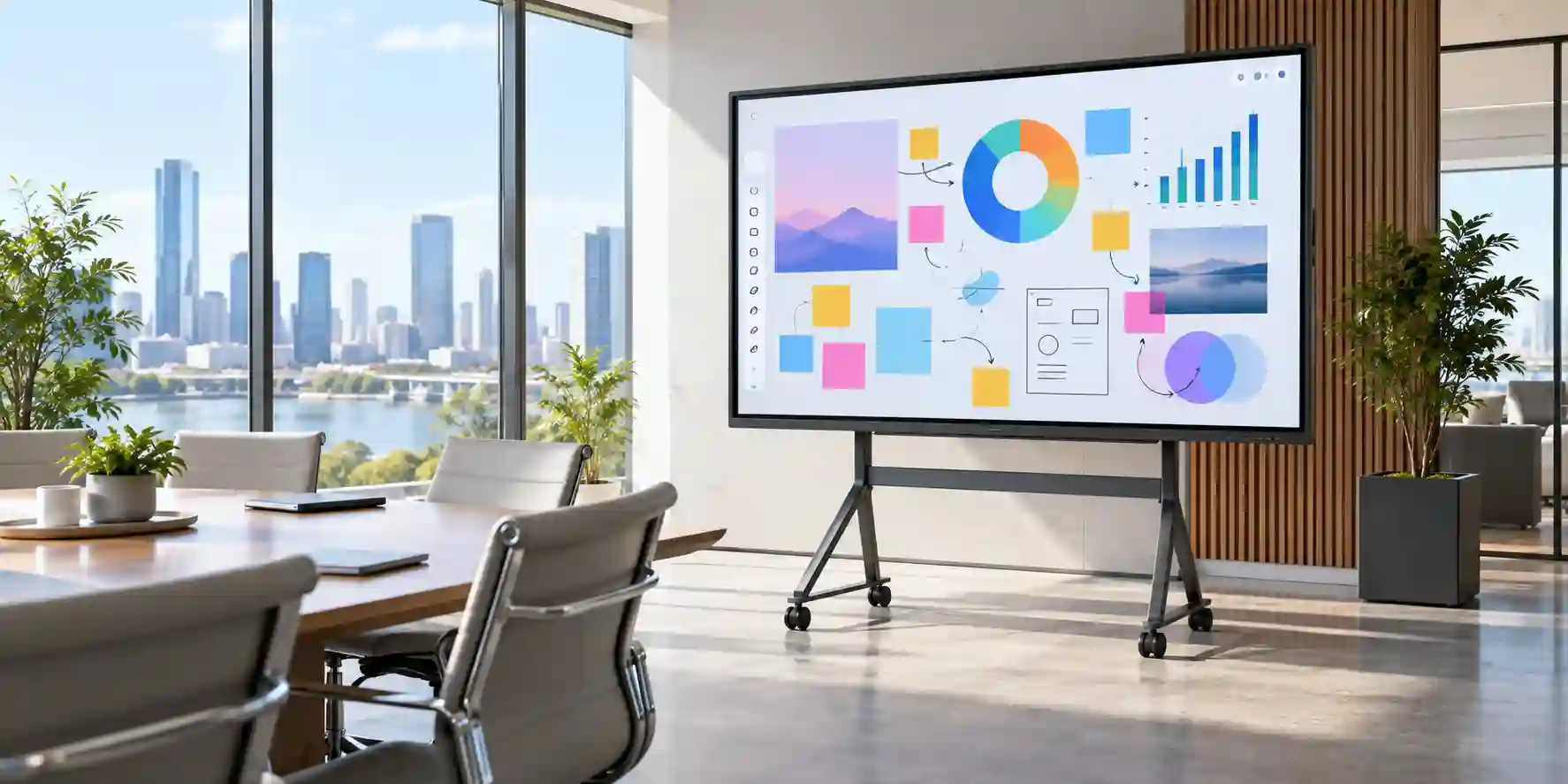
For education or collaboration rooms that need touch, annotation, whiteboarding, or interactive lesson workflows, a dedicated Samsung interactive display is more suitable than the QN85F television, which is designed primarily for viewing and smart-media interaction.
The correct alternative depends on operating model. A premium smart TV is strongest when users need excellent television picture quality, streaming, entertainment, gaming, flexible HDMI connectivity, and a refined all-purpose experience. A commercial signage screen is stronger when the organization needs long operating schedules, standardized remote management, controlled content playback, and business-focused warranties. An interactive display is stronger when touch is the core requirement. FourTeck can compare these categories at quotation stage so buyers avoid paying for features they will not use or selecting a product whose operating model does not fit the site.
Why Enterprises Choose FourTeck
Enterprise display procurement is most successful when the supplier helps translate a model name into a deployment-ready solution. FourTeck can support that process by validating the requested Samsung family, identifying the appropriate regional variant, checking key specifications against the use case, and building a quotation that includes accessories where required. This is especially important for an 85-inch display because the mount, delivery route, lifting plan, cable set, audio requirements, and source equipment can be as important as the television itself.
Pre-sales guidance can help prevent common mismatches, such as buying a premium television for a 24/7 signage requirement, selecting a wall bracket without verifying load and VESA pattern, expecting 144Hz operation from an incompatible source, or assuming that a smart application available in one country is also provided in the UAE. FourTeck can also coordinate quote revisions when project quantities, site locations, or accessory requirements change.
For multi-site or regional projects, procurement support can include consolidated model planning, phased deliveries, and export coordination subject to commercial terms. Warranty and service expectations should be documented before order placement so the buyer understands the route for support. FourTeck avoids unverified promises around stock, price, or warranty duration and instead confirms current commercial details as part of the quotation process.
Frequently Asked Questions
Is the Samsung QN85QN85F a true 4K television?
Yes. Published Samsung specifications for the 85-inch QN85F family list a native resolution of 3840 x 2160 pixels, which is 4K UHD. The NQ4 AI Gen2 Processor also provides 4K AI Upscaling for lower-resolution sources. Buyers should still use native 4K source output whenever possible for the cleanest text, presentation graphics, and fine detail on an 85-inch screen.
Does the QN85QN85F support 144Hz?
Samsung publishes Motion Xcelerator up to 144Hz for the QN85F family, and multiple regional specifications list high-frame-rate HDMI capability. Native baseline refresh documentation varies by region, with some markets listing 100Hz and others 120Hz before the 144Hz maximum mode. If 144Hz is a core requirement, confirm the exact UAE model code, source device, cable specification, and supported resolution before deployment.
How many HDMI ports are provided?
Published 85-inch QN85F variants provide four HDMI inputs. This is useful for rooms that need several permanently connected sources, such as a conferencing appliance, local PC, wireless presentation gateway, set-top box, signage player, or game console. The television also supports eARC for compatible audio systems and HDMI-CEC through Samsung Anynet+.
Is the Samsung QN85QN85F suitable for boardrooms?
It can be an excellent choice for premium boardrooms where the priorities are large 4K presentation space, strong picture quality, wide viewing support, modern connectivity, and premium media capability. Organizations requiring 24/7 operation, centralized commercial fleet management, or specialized room-control certification should compare the QN85F with Samsung professional signage before purchase.
Can it be wall mounted?
Yes. Published 85-inch variants support VESA mounting, commonly listed at 600 x 400 mm. Because the screen is approximately 1.89 metres wide and weighs more than 40 kg without the stand on published regional specifications, the wall structure, bracket rating, fixing method, lifting plan, cable access, and ventilation clearance must all be checked before installation.
Does it include Dolby Atmos and Q-Symphony?
Yes. Samsung lists Dolby Atmos, Object Tracking Sound Lite, and Q-Symphony for published 85-inch QN85F variants. The internal speaker system is listed at 40W with a 2.2-channel configuration. Q-Symphony can work with compatible Samsung soundbars so the television speakers and soundbar contribute together, although exact soundbar compatibility should be checked by model.
What smart platform does the QN85F use?
The QN85F uses Samsung’s Tizen Smart TV platform. Published features include application access, SmartThings functionality, wireless device interaction, browser support, AirPlay, and other connected services. App catalogs, voice assistants, tuner functions, and media services vary by country, so UAE buyers should confirm the local feature set rather than assume every service shown on an overseas Samsung page is included.
Is the QN85QN85F appropriate for digital signage?
It can display promotional or informational content in selected retail, hospitality, and corporate environments, especially when premium picture quality is important. For heavy commercial schedules, centralized fleet control, multi-site content administration, or extended daily operation, Samsung’s professional signage products may be better suited. FourTeck can compare the television and signage options based on duty cycle and management requirements.
What should I provide when requesting a quotation in Dubai?
Provide the model name, required quantity, delivery location, desired delivery date, whether wall mounting or stand placement is planned, and whether you need accessories such as a wall bracket, HDMI cables, soundbar, signage player, or conferencing equipment. For project installations, also include room dimensions, installation height, source-device requirements, and any site-access restrictions that may affect delivery of an 85-inch carton.
Are warranty and smart features identical in every country?
No. Warranty administration, bundled accessories, tuner support, voice assistants, applications, power labels, and some feature descriptions can vary by regional model code. Samsung publishes different suffixes for different markets. FourTeck should confirm the exact UAE-supplied part number and current warranty terms on the quotation so the buyer knows which regional configuration is being supplied.
Request a Dubai/UAE Project Quote
For the fastest and most accurate quotation, send FourTeck the Samsung QN85QN85F model reference, required quantity, delivery emirate and site, target deployment date, wall-mount or stand preference, and any associated requirements for audio, HDMI cabling, conferencing, signage playback, or installation. For multi-unit projects, include whether all units are required together or can be delivered in phases. FourTeck will use this information to validate the applicable regional configuration, prepare a bill of materials, and confirm current commercial terms.