ZKTeco LH6500 Electronic Hotel Lock in Dubai, UAE
A slim standalone hospitality lock built for MIFARE card-based guest-room access, controlled door entry, and practical hotel lock administration.
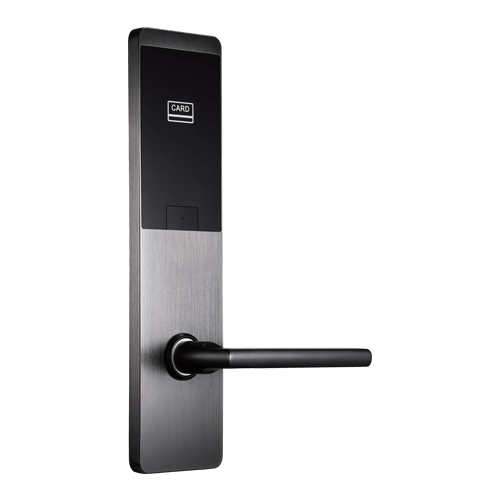
The LH6500 combines 13.56 MHz MIFARE card reading, an American-standard five-latch mortise, a 224-event audit trail, low-battery alerts, and support for ZKTeco hotel lock management software. It is aimed at hospitality projects where the door hardware, card format, software workflow, and installation details must be checked together before purchase.
40–50 mm Door Range
224-Event Audit Trail
Key facts to confirm before procurement
The model is straightforward in purpose, but successful hotel deployment depends on matching the lock to the door, card system, management software, installation method, and property operating process.
A hotel lock designed around controlled card access
The ZKTeco LH6500 is a standalone electronic hotel door lock for hospitality environments that issue MIFARE cards to guests or staff. It replaces the operational burden of relying only on conventional guest-room keys with a card-based workflow that can be managed through compatible ZKTeco hotel lock software.
For a hotel, serviced apartment operator, holiday accommodation manager, or staff housing project, the lock becomes part of a broader room-access process. Front-desk personnel need a practical method to issue cards for the intended room and stay period, housekeeping or maintenance staff may need controlled access based on the property’s operating policy, and management may need a way to review recent lock activity when investigating access questions. The LH6500 supports this model with 13.56 MHz MIFARE technology and an audit trail that records the latest 224 lock transactions.
The hardware is described by ZKTeco as a super-thin hotel door lock. Its zinc-alloy construction gives it a professional appearance for guest-room doors, while the American-standard mortise with five latches is a core mechanical element of the installation. The published door-thickness requirement is 40–50 mm, so buyers should measure representative doors before finalizing quantity. A property with mixed door types should not assume that one installation condition applies to every room.
ZKTeco lists support for ISO14443 RFID Type-A S50 1KB and S70 4KB cards and references ZKBiolock Hotel Lock System and ZKBiosecurity software. Software versions and hospitality modules can differ by region or project, so the lock should be selected as part of a complete compatibility review rather than as an isolated piece of door hardware. Card encoding, management workstation requirements, software licensing where applicable, door preparation, mortise suitability, and project commissioning should all be reviewed together.
For UAE projects, FourTeck can help buyers structure the requirement before a quote is prepared. Useful details include the number of doors, door thickness, existing card technology, whether an existing ZKTeco hotel lock environment is already in use, the intended software workflow, required accessories, delivery location, and whether installation support needs to be coordinated. This approach helps reduce the risk of ordering the correct model name but an incomplete project solution.
Why hospitality buyers consider the LH6500
The main value is operational control. The lock is designed to fit a managed hospitality access process in which cards, doors, recent entry records, and front-desk administration are treated as one connected workflow.
Card-based room entry supports a structured check-in process
13.56 MHz MIFARE card technology gives hotels a familiar way to issue room credentials without depending on a physical metal-key handover for every guest. When deployed with compatible hotel lock software and the correct card-encoding workflow, the property can standardize how room access is assigned. For buyers, the important point is not simply that the lock reads a card; it is that the card technology, encoder, software, and operational procedure must be aligned across the property.
Recent event history helps with access questions
The lock can retain the latest 224 transactions. That record can be useful when a property needs to review recent activity associated with a room, subject to the correct management process and tools. It is not a replacement for a complete building security system, but it adds practical transaction visibility at the room-lock level.
Low-battery warning supports preventive attention
ZKTeco includes warning beeps for low battery power. In a multi-room property, this helps maintenance teams identify a lock that requires attention before battery depletion becomes an avoidable guest-service issue. Buyers should still define an inspection and replacement routine suited to their occupancy and maintenance policy.
Published door parameters simplify early screening
The stated 40–50 mm door-thickness range gives project teams a clear starting point for site assessment. This does not remove the need to review the mortise, handing, door construction, existing cut-outs, frame condition, and installation method, but it helps identify obvious mismatches before purchase.
Software compatibility matters as much as the lock hardware
ZKTeco references professional hotel lock management software, including ZKBiolock Hotel Lock System and ZKBiosecurity. For procurement teams, this is significant because a hotel lock normally needs card issuance and administrative tools to deliver its intended business value. Existing customers should confirm whether their current software environment supports the model and whether any module, encoder, workstation, or version requirement applies. New deployments should scope the full operating workflow instead of budgeting only for door locks.
Suitable for room-by-room hospitality projects
The LH6500 fits projects where a consistent electronic lock is intended across multiple rooms. Quantity planning should include spare units, card requirements, encoding tools, software needs, installation scheduling, and the possibility that different door conditions may require separate treatment.
A concise capability set for hotel-room access
The LH6500 focuses on the core needs of an offline or standalone hospitality-lock environment: card identification, robust mortise hardware, recent transaction history, management software support, and a practical low-battery warning.
These strengths should be considered together rather than individually. A hotel project benefits when card technology, door preparation, lock hardware, management software, front-desk procedures, and maintenance routines are designed as one system. The lock itself cannot correct an incompatible door, an unsupported card type, or a software mismatch, so pre-purchase verification remains essential.
Confirmed ZKTeco LH6500 specifications
The table below reflects published manufacturer information. Project-level requirements such as software version, accessories, installation preparation, card issuance tools, and final supply package should be confirmed for the selected deployment.
| Specification | Published detail | Buyer note |
|---|---|---|
| Brand | ZKTeco | Confirm project support and supply source. |
| Model | LH6500 | Super-thin electronic hotel door lock. |
| Card technology | 13.56 MHz MIFARE | Match existing or planned hotel card environment. |
| Card type | ISO14443 (RFID) Type-A S50 1KB / S70 4KB | Verify encoder and software compatibility. |
| Mortise | American standard, five latches | Door and frame preparation should be checked on site. |
| Door thickness | 40–50 mm | Measure representative doors before bulk ordering. |
| Material | Zinc alloy | Confirm finish expectations for the property design. |
| Audit trail | Latest 224 lock transactions | Useful for recent access review within the supported workflow. |
| Software | ZKBiolock Hotel Lock System & ZKBiosecurity | Version and hospitality module requirements should be confirmed. |
| Battery warning | Warning beeps at low battery power | Include the lock in a preventive maintenance schedule. |
| Availability | Contact FourTeck for current options | Supply can depend on quantity, source and project timing. |
The specification most likely to cause an early purchasing mistake is door compatibility. A 40–50 mm published thickness range is easy to measure, but thickness alone does not confirm a complete fit. Hotels should also review mortise dimensions, existing door cut-outs, lock orientation, frame condition, fire-door requirements where applicable, and any local installation constraints. Card compatibility is the second major decision point. If a property already uses MIFARE credentials for guest rooms or other functions, the exact card type, encoder, and software workflow should be checked before assuming interoperability. Software should also be treated as part of the project scope. A buyer replacing a few locks in an established ZKTeco installation has different needs from a hotel deploying a new room-lock system across an entire building. FourTeck can use the room count, existing platform, card type, door information, and project timeline to help prepare a more relevant supply request.
Plan the lock as a hotel access project, not a single hardware item
For most buyers, the right starting point is the property workflow: how many rooms need electronic access, what cards are used, how credentials will be issued, what doors are installed, and who will manage the system after commissioning. Answering those questions first makes the hardware choice much safer.
Measure and inspect the doors
Confirm the 40–50 mm thickness range, mortise fit, handing, current cut-outs, door material, frame condition, and any project-specific door compliance requirements. For renovation projects, photograph representative doors and existing lock preparation.
Check the card environment
The LH6500 supports ISO14443 Type-A S50 1KB and S70 4KB MIFARE cards. Existing hotels should verify what card type is already issued and whether current encoders and administrative processes align with the intended lock deployment.
Define software and front-desk needs
Confirm the required ZKTeco hotel lock management environment, version compatibility, encoding tools, workstation needs, and administrative workflow. Software naming and packages may vary by region or generation, so the complete solution should be checked before order confirmation.
Budget for accessories and project spares
A room-lock project may need cards, encoding devices, software, installation consumables, spare locks, and maintenance items. The exact package depends on the property and should be quoted as a system rather than assumed from the lock unit alone.
Plan quantity by phase and room type
For larger properties, verify whether all guest-room doors share the same construction and installation condition. A pilot installation on a representative door can reduce surprises before a full rollout, especially in refurbishment projects with mixed door histories.
Clarify warranty and service expectations
Warranty terms, service process, and replacement handling depend on the final supply source and project arrangement. Ask for these details in the quotation rather than assuming a universal term from the model name.
To receive a useful quotation, send FourTeck the required quantity, door thickness, door photos or drawings when available, current lock model if this is a replacement, preferred card type, existing ZKTeco software details, property location, target project date, and whether installation or commissioning assistance needs to be considered. This information is far more useful than asking for a unit price without project context.
Where this hotel lock fits best
The LH6500 is best considered where a property wants room-level MIFARE card access managed through a hotel lock workflow. The following scenarios show how that requirement appears in different hospitality environments.
Hotels replacing conventional room keys with managed RFID cards
This is the clearest deployment. A hotel can issue compatible MIFARE cards through its chosen management workflow and use the LH6500 on guest-room doors that meet the installation requirements. The 224-event audit trail adds recent transaction visibility, while low-battery warning beeps support routine maintenance. The project should include card issuance, software compatibility, encoder requirements, door preparation, staff procedure, and spares planning.
Properties with frequent guest turnover
Serviced apartment operators can use a hotel-style card process where reception or property staff need to manage room access for changing occupants. Before selection, the operator should confirm whether the chosen management software and card workflow fit the property’s check-in process and staffing model.
Smaller accommodation needing professional room access
A guest house can benefit from card-based access without requiring the door lock itself to be treated like a complex online building-control system. The management side still matters: the correct software, cards, encoder, and operating procedure should be defined so staff can issue and manage guest credentials reliably.
Managed rooms with controlled staff access
Companies operating staff housing, dormitory-style accommodation, or managed residences may find the hotel lock format useful when rooms require controlled card access and a repeatable credential-management process. Suitability depends on the organization’s access policy and software requirements.
Upgrades where door conditions need careful review
Renovations often contain the highest fitting risk because existing doors may have old cut-outs, differing thicknesses, or previous mortise patterns. The LH6500 can be considered only after representative doors are measured and inspected. A small pilot installation is often a sensible procurement step before a large quantity is committed.
Standardization across similar accommodation sites
A hospitality group considering one lock model across several properties should first verify that door construction, card systems, software versions, and operational processes are sufficiently consistent. Standardization can simplify training and spares, but only when the physical and administrative environment is genuinely compatible.
ZKTeco LH6500 MIFARE Card Access
The 13.56 MHz MIFARE reader is the central guest-access feature. It supports ISO14443 RFID Type-A S50 1KB and S70 4KB cards, giving hospitality teams a defined credential family around which to design the room-access workflow.
For a buyer, card support should trigger several practical questions. Is the hotel already using one of these card types? Will a new card encoder be required? Does the selected hotel lock software support the intended card-issuance process? Is the property expecting one credential to be used for additional services beyond the room lock? Those wider functions may have separate requirements and should not be assumed from the lock specification alone.
Buyer outcomes
- Standardized card-based guest-room entry.
- Clear card types published by the manufacturer.
- Suitable for structured front-desk credential issuance.
- Requires compatibility review with encoder and software.
- Existing card estates should be verified before rollout.
ZKTeco LH6500 Audit Trail and Maintenance Awareness
The lock records the latest 224 transactions and warns when battery power is low. These are small features with meaningful operational value in a property where dozens or hundreds of guest-room doors must be managed consistently.
A hotel should decide who is responsible for responding to low-battery alerts, how frequently room locks are inspected, how spare batteries or replacement hardware are managed, and who is authorized to review recent transaction records. Procurement should therefore include an operating-plan discussion, not only hardware selection. For large properties, this can also influence the quantity of spares, maintenance staffing, and rollout schedule.
ZKTeco LH6500 Mortise and Door Compatibility
Door fit is the most important physical buying check. The manufacturer specifies an American-standard mortise with five latches and a door-thickness range of 40–50 mm, but a successful installation still depends on the actual door and frame condition.
New-build projects can incorporate the correct preparation into the door schedule before installation. Renovation projects require more caution because existing holes, mortise pockets, lever positions, edge preparation, and door handing may have been created for another lock. A model can be electronically suitable and still require substantial door work if the mechanical preparation does not match.
Confirm 40–50 mm on representative doors, not only one sample room.
Review mortise pattern, edge cut-out, lever position and frame strike arrangement.
For refurbishments, consider a pilot room before approving a full project quantity.
What Buyers Should Check Before Purchase
The biggest risk is buying the lock without confirming the surrounding hotel access system. The LH6500 should be evaluated together with door preparation, card type, software, encoding tools, operating procedures, project quantity, installation plan, and after-sales expectations.
Configuration Fit
Confirm whether the property needs a standalone MIFARE hotel lock rather than a different online, wireless, biometric, or residential lock architecture. Review room count, card issue process, audit requirements, and how staff will manage credentials during check-in, stay changes, and checkout. The LH6500 is designed around MIFARE hotel-card access, so properties wanting another credential type or remote connected-lock behavior should review alternatives before ordering.
Compatibility Check
Check 40–50 mm door thickness, mortise preparation, handing, card type, encoder requirements, and hotel lock software. If replacing an existing ZKTeco model, provide the current model and software version. If replacing another brand, share door photos and available cut-out drawings. Similar-looking hotel locks are not automatically mechanically interchangeable, and card systems that operate at the same frequency are not automatically compatible.
Availability and Warranty
Ask for current availability, lead time, source, warranty terms, replacement procedure, and whether the quotation includes only the lock or a wider hotel access package. Do not assume that every region supplies identical software versions, accessories, or commercial terms. For project quantities, agree how spares, phased delivery, and any installation coordination will be handled before purchase approval.
Quote Preparation
Send the required quantity, property type, door thickness, door photos, current lock model if any, existing MIFARE card details, software environment, delivery location, target date, and installation expectation. For a new hotel, include the planned number of guest rooms and any phased opening schedule. These details allow FourTeck to structure the inquiry around the full requirement instead of quoting an incomplete unit-only package.
Buying support for Dubai and UAE hospitality projects
FourTeck supports inquiries for the LH6500 across the UAE with assistance that starts before the purchase order. Availability can vary by supplier status, order quantity, project timing, and the final package required, so current supply should be confirmed through a quotation rather than assumed from the model name alone.
For a hotel renovation or new build, FourTeck can also help buyers organize the information needed for a more accurate request. That may include a door schedule, sample-door photographs, quantity by floor or phase, existing card technology, preferred deployment date, and whether the purchase must include compatible hotel-lock software or accessories. A structured inquiry is especially useful for properties ordering many locks because small assumptions can multiply across every room.
Project inquiries across the Emirates
Businesses and hospitality operators in Dubai, Abu Dhabi, Sharjah, Ajman, and other UAE locations can contact FourTeck for product selection, current availability, quotation support, delivery coordination, and warranty guidance. For multi-site projects, buyers should identify which property needs which quantity, whether door conditions are standardized, and whether one shared hotel lock management environment will be used. This helps separate genuine standardization opportunities from sites that may require different installation preparation or a different lock model.
GCC and Africa project inquiries
FourTeck also supports business technology inquiries across selected GCC and Africa markets through regional inquiry channels. Customers in Saudi Arabia, Qatar, Oman, Kuwait, Bahrain, Kenya, Uganda, and other supported markets can request information for hospitality lock projects, but availability, delivery arrangements, warranty handling, software packages, and local installation support can differ by country.
For cross-border hotel groups, the safest approach is to prepare one technical requirement and then confirm the commercial and service conditions for each destination. Include room count, door details, card technology, software environment, target delivery date, and whether the project is a new deployment or a replacement. This makes it easier to identify where the same model can be standardized and where a local constraint requires a different approach.
Other ZKTeco hotel lock options buyers may consider
ZKTeco lists several hotel-lock models alongside the LH6500. A related model may be appropriate when the preferred mortise standard, physical design, door condition, deployment architecture, or property requirement differs. Final specifications should be checked for the exact model before substitution.
ZKTeco LH6800 Hotel Lock
Consider when reviewing another ZKTeco hospitality lock in the same broader family. Compare the door hardware, card support, design, and software requirements against the actual project before deciding.
ZKTeco LH6000
Useful as a comparison point for buyers who want another ZKTeco hotel lock model and need to evaluate mechanical fit and project requirements.
ZKTeco LH7500
A suitable model to review when the project calls for a different hotel-lock format or mortise approach. Confirm all specifications before changing models.
ZKTeco LH4000
Another ZKTeco hotel-lock option for projects comparing physical design, door fit, card requirements, and supply availability.
Hotel Access Control Assistance
If the right model is unclear, send the property details, door information, card requirements, and room count for selection guidance.
Procurement support built around the requirement
Hospital lock projects sit between electronic access control, door hardware, hospitality operations, and procurement. FourTeck’s role is to help buyers define the request clearly enough that the selected product and commercial offer can be evaluated against the real property requirement.
Current sourcing can be reviewed according to model, quantity, timing, and delivery destination without making unsupported stock claims.
Door thickness, card type, management software context, and project scope can be checked before quotation.
The request can be structured around room count, accessories, support needs, and delivery rather than a unit-only question.
Delivery planning can reflect project location, quantity, phased rollout, and current supplier conditions.
Commercial terms and service expectations can be clarified according to the actual supply source before purchase.
When the LH6500 does not match the door or project architecture, another ZKTeco hotel lock can be reviewed rather than forcing an unsuitable fit.
For procurement teams, this can shorten the back-and-forth that often occurs when a request contains only a model name and quantity. A useful inquiry should tell the supplier what is being installed, where it will be used, what it must work with, and what support is expected. That information helps buyers compare quotations more fairly and identify missing items before the project reaches installation.
ZKTeco LH6500 buyer questions
What is the LH6500 used for?
It is an electronic hotel door lock designed for hospitality room access using compatible 13.56 MHz MIFARE cards. ZKTeco positions it as a super-thin hotel lock and lists support for hotel lock management software. It is most relevant to hotels, serviced apartments, guest accommodation, and similar properties that need a structured card-issuance process.
Which cards does the lock support?
The manufacturer specifies ISO14443 RFID Type-A MIFARE S50 1KB and S70 4KB cards operating at 13.56 MHz. Buyers should still confirm the exact card, encoder, and hotel management software combination for the intended deployment because using the same frequency alone does not guarantee that every existing card system will work as expected.
What door thickness is supported?
ZKTeco publishes a 40–50 mm door-thickness range. This is an important first check, but not the only installation requirement. The mortise, door cut-out, handing, frame, strike preparation, and existing hardware should also be reviewed. Renovation projects should measure several representative doors because older properties may not be mechanically consistent.
Does the LH6500 record entry activity?
The lock records the latest 224 lock transactions according to ZKTeco’s published specification. This can help a property review recent lock activity when used with the appropriate management process. Buyers should define who is authorized to access those records and how transaction review fits into the hotel’s security and incident-handling procedures.
Which hotel lock software is listed by ZKTeco?
Manufacturer material references ZKBiolock Hotel Lock System and ZKBiosecurity. Some regional ZKTeco material may use different version naming for hospitality software. Before purchase, confirm the software version, required hospitality module, encoder, workstation, and licensing or deployment requirements that apply to the specific project and region.
How does the low-battery warning work?
ZKTeco states that the lock provides warning beeps when battery power is low. That cue is intended to support maintenance attention before the power condition becomes more serious. Properties should still create a preventive inspection and battery replacement routine suited to room occupancy, staff availability, and the scale of the installation.
Is the LH6500 available in Dubai and the UAE?
FourTeck can review current sourcing and quotation options for UAE projects. Availability can vary by quantity, supplier status, required accessories, software package, and project timing, so it should be confirmed at the time of inquiry. Send the required number of locks, delivery location, and target date for a more useful availability check.
Can FourTeck help with a bulk hotel lock project?
Yes, FourTeck can assist with requirement review and quotation support for multi-room projects. Provide the room count, door information, existing lock and card environment, software requirements, delivery schedule, and whether the rollout will happen in one phase or several. This helps identify accessories, spares, compatibility checks, and delivery planning that may be missed in a simple unit-price request.
How do I choose between the LH6500 and another ZKTeco hotel lock?
Compare the physical door and mortise requirement first, then review card technology, management software, property workflow, design preference, project scale, and current supply options. If the property already uses a ZKTeco hotel lock system, existing software and card compatibility may narrow the choice. For a new deployment, FourTeck can help review the requirement before a specific model is selected.
Need help preparing a hotel lock requirement?
FourTeck can review the intended property use, door condition, MIFARE card environment, software context, quantity, delivery location, project date, and warranty expectations before preparing a quote. This is especially useful for refurbishment and multi-room projects where one compatibility mistake can affect an entire rollout.
Share: model requirement, room count, door thickness, card type, current software, delivery location, target date, and whether installation support is required.