
ZKTeco Plock 2 Automatic Parking Lock in Dubai, UAE
A battery-powered steel parking lock that raises to reserve an individual parking bay and lowers for authorized vehicle access through auto-sensing or remote control.
Plock 2 is intended for buyers who need convenient control over a designated parking space without installing a full lane barrier. Its selection is straightforward, but placement, vehicle approach, mounting surface, user workflow and environmental exposure should still be reviewed before purchase.
IP67 Protection
Battery Powered
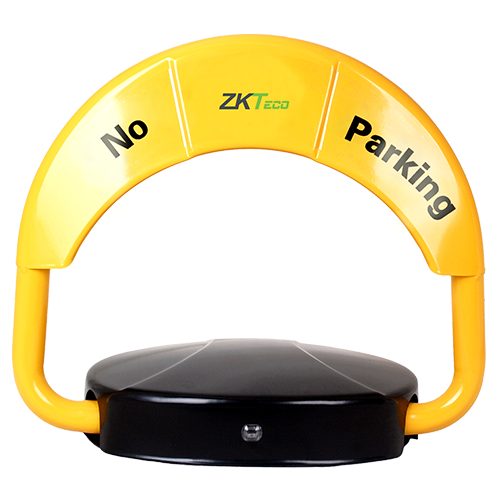
A Practical Way to Protect a Reserved Parking Space
Plock 2 is a standalone parking-space control device designed for situations where one vehicle bay needs to remain reserved until an authorized driver arrives. Instead of relying on cones, signs or a manually folded metal post, the unit uses a powered arm that can rise to discourage unauthorized parking and lower when access is allowed. That makes it relevant for homes, office buildings, allocated staff parking, industrial sites, hospitality properties and other locations where a specific bay has an assigned user.
The defining advantage is convenience. ZKTeco equips this generation with an auto-sensing function that works with a sensor placed in the vehicle’s cigarette-lighter receptacle. The official specification lists a sensing distance of up to 15 metres, while the control distance is up to 20 metres. In practical terms, the driver does not need to get out of the vehicle simply to lower a traditional manual parking lock. A remote-control method is also part of the operating concept, giving users another straightforward way to manage the barrier.
The steel construction and IP67-rated dust and water protection make the unit suitable for outdoor parking applications when it is installed and maintained correctly. The arm reaches 420 mm after rising and sits at 75 mm when dropped. Its specified rise or fall time is no more than six seconds, so the sequence is fast enough for normal individual-bay use without creating the infrastructure of a lane-control barrier gate.
For UAE buyers, the important question is not simply whether a parking lock can raise and lower. The site should be reviewed for the parking surface, water exposure, vehicle approach, wheel path, driver visibility and how many users need access. A single reserved executive bay has different requirements from a hotel property with multiple assigned spaces. A facility manager may also want clear responsibility for battery replacement, remote or sensor management and physical inspection.
FourTeck can help buyers confirm the model, quantity and intended parking environment before a quotation is prepared. This is especially useful when a project may be better served by several parking locks, a barrier gate, access-control integration or a broader vehicle-management solution. The goal is to match the control method to the actual parking problem rather than choosing by appearance alone.
Key Benefits for Property and Facility Teams
The strongest benefits come from reducing manual handling, protecting allocated spaces and keeping operation simple for the person who actually uses the bay.
Less manual handling at the parking bay
A traditional folding parking post normally requires the driver to stop, exit the vehicle, unlock or move the device and then repeat the process after leaving. Plock 2 replaces that routine with powered movement. For assigned users who enter and leave every day, this can make the parking process noticeably easier while still keeping the bay physically marked when it should remain unavailable.
Clear control of an individual space
The raised arm provides a direct physical signal that the bay is reserved. This is useful where painted markings or signage alone may not prevent casual use by another vehicle.
Designed for exposed parking areas
IP67-rated protection supports use in environments where dust and water exposure must be considered. Correct installation, drainage and periodic inspection still matter, especially in outdoor parking locations.
No permanent mains feed at the device
The unit uses four D-size alkaline batteries at DC 6V. That can simplify planning for a single parking bay where running a dedicated electrical circuit would be inconvenient, although battery replacement must become part of the maintenance routine.
Anti-collision design with alarm
ZKTeco lists a 180-degree anti-collision mechanism and built-in alarm system. This is useful in real parking environments where accidental contact can occur, but it should not be treated as permission to drive over or intentionally strike the device.
Simple ownership for a designated user
This product is most valuable when one person, tenant, executive, property owner or defined user group needs control of a specific bay. It avoids the extra infrastructure of a full gate system while still creating a visible physical barrier. For larger shared car parks, multiple users or centrally managed access, FourTeck can help determine whether an individual parking lock remains the right architecture.
What Stands Out in Daily Use
The most important technical story is not any single specification. It is how the sensing range, powered arm, battery operation and protected steel enclosure work together to make a reserved bay easier to manage. A driver approaches, the device can respond through the supported sensing workflow, and the arm moves without requiring the user to handle a lock at ground level.
A control distance of up to 20 metres gives practical flexibility for remote operation, while the up-to-15-metre sensing distance is intended for the automatic approach method. The six-second-or-less rise and fall time is appropriate for a personal parking-space workflow where the user expects a short response rather than the high-speed cycle of a commercial barrier gate.
The device is also physically substantial enough to act as a clear parking deterrent: it weighs 8 kg, measures 460 × 460 × 75 mm when considered by base dimensions, and rises to 420 mm. Buyers should use those dimensions when checking wheel paths, underbody clearance and the exact location in the bay.
Plock 2 Technical Specifications
The table below summarizes confirmed manufacturer specifications. For procurement, verify the supplied package, accessories and current regional version before issuing a purchase order.
| Specification | Confirmed detail | Buyer note |
|---|---|---|
| Brand / model | ZKTeco / Plock 2 | Use the exact model on quotation and PO |
| Product type | Automatic parking lock | For individual parking-space control |
| Material | Steel | Confirm mounting environment |
| Control distance | ≤ 20 m | Actual use can depend on site conditions |
| Sensing distance | ≤ 15 m | Used for supported auto-sensing workflow |
| Arm rising / falling time | ≤ 6 seconds | Plan driver approach accordingly |
| Height after rising | 420 mm | Check visibility and bay position |
| Height after dropping | 75 mm | Confirm vehicle clearance and placement |
| Operating temperature | -10°C to +55°C | Review actual site exposure |
| Power supply | LR20 alkaline dry battery recommended, D × 4 | Plan replacement responsibility |
| Rated voltage | DC 6V | Use suitable battery type |
| Quiescent current | ≤ 1.5 mA | Reference electrical value |
| Operating current | ≤ 2.5 A | Reference electrical value |
| Dimensions | 460 × 460 × 75 mm | Check available footprint |
| Weight | 8 kg | Relevant to handling and mounting |
| Environmental protection | IP67 | Outdoor exposure still requires correct installation |
| Pressure resistance | 2–3T stated high-pressure resistance | Not a substitute for correct driving clearance |
When choosing the unit, buyers should pay most attention to physical placement rather than only the electrical values. The dropped height is 75 mm, so the parking layout should be reviewed for underbody clearance, wheel path and the point where the car will stop. The raised height of 420 mm should remain clearly visible to a driver approaching the space. The auto-sensing workflow also assumes that the supported vehicle sensor can be used in the intended car. If several different users or vehicles must share the same bay, discuss that operating pattern before purchase. Battery operation simplifies power planning, but it also creates a maintenance task. Decide who will respond to low-battery prompts and how spare batteries will be handled. For sites with many parking spaces, centralized access requirements or lane-level vehicle control, a barrier gate or integrated parking system may be more suitable than installing many independent locks.
Configuration and Buyer Guidance
This is a relatively simple product, but the wrong placement or operating assumption can still make the purchase unsuitable. Confirm the following points before ordering.
Is one bay being protected?
Plock 2 is most logical for an individual reserved space. If the real need is to control an entrance lane, multiple vehicles or a shared car park, discuss a barrier-gate or vehicle-access design instead.
Will the vehicle clear the lowered arm?
Use the 75 mm dropped height and the 460 × 460 mm footprint when reviewing where the device will sit. Low-clearance vehicles, wheel position and stopping point should be checked before installation.
Who will manage batteries?
The unit uses four D-size alkaline batteries. Assign responsibility for low-battery alerts, replacement and periodic inspection so the parking lock does not become an unmanaged facility item.
How will the authorized driver operate it?
Confirm whether auto-sensing, remote control or both will be used. If several drivers rotate through one space, make sure the selected control workflow is practical for the organization.
Is the environment suitable?
IP67 protection is useful, but drainage, standing water, physical impacts, road-cleaning practices, heat exposure and mounting-surface condition should still be reviewed as part of the site plan.
What should go in the quote request?
Share quantity, parking location, indoor or outdoor exposure, vehicle type, intended user workflow, delivery destination and whether installation guidance is required. That gives FourTeck enough context to review fit.
Ideal Business and Property Use Cases
The best use cases are places where a specific space belongs to a known user and unauthorized occupancy creates recurring inconvenience.
Executive, tenant or reserved staff bays
When one parking space is assigned to an executive, tenant, manager or staff member, a parking lock creates a physical reservation point without changing the entire car-park entrance. The authorized user can manage access locally, while other drivers receive a clear indication that the bay should not be occupied. This is often the most direct fit for the product.
Residential properties
Villa owners and residents with deeded or allocated parking can use an automatic lock when a space is repeatedly taken by visitors or neighboring vehicles. The device is especially relevant where there is no staffed gate controlling every individual bay.
Corporate buildings
Companies may reserve bays for management, visitors, service teams or specific departments. A local parking lock can help protect selected spaces without requiring access-control changes to the full vehicle entrance.
Industrial and warehouse sites
Industrial parks often have staff, contractor and loading-area traffic competing for limited marked spaces. A reserved-bay lock can support selected parking positions where the user and purpose are clearly defined.
Hotels and hospitality
Properties may need to protect specific VIP, management or pre-assigned guest spaces. The device can work where the requirement is to reserve individual bays rather than control all vehicle movement through the property.
When a parking lock is not enough
If the site needs license-plate recognition, ticketing, visitor validation, centrally managed permissions, high vehicle throughput, entrance-lane control or integration with a larger access platform, a single-space parking lock is not the same solution. In that situation, buyers should consider ZKTeco parking barriers, long-distance readers, LPR products or a broader vehicle-management design. FourTeck can help separate an individual-bay problem from a full car-park access problem before procurement begins.
Plock 2 + Auto-Sensing Parking Control
Auto-sensing is the feature that most clearly separates this model from a basic manual parking lock. ZKTeco’s operating concept uses a sensor in the vehicle’s cigarette-lighter receptacle so the parking lock can respond as the authorized car approaches. The official sensing distance is up to 15 metres. For a daily user, this removes the repeated step of leaving the vehicle to handle a ground-level barrier.
The buyer should still think through real operating behavior. A privately assigned car is the simplest case because the sensor remains with one vehicle. A company bay used by several people is different: the business needs a clear method for sharing or assigning control. If the user sometimes drives a different vehicle, the remote-control option may matter more. The feature is convenient when the operating model is understood; it is not a substitute for access-policy planning.
Plock 2 + Outdoor Durability and Collision Protection
Parking hardware lives close to the ground, where dust, water, cleaning activity and accidental contact are normal operational risks. ZKTeco lists IP67 dust and water protection for Plock 2, together with a 180-degree anti-collision mechanism and a built-in alarm system. The manufacturer also states 2–3T high-pressure resistance. These features make the unit more appropriate for real parking environments than an indoor-only mechanism.
Those ratings do not remove the need for careful placement. A driver should be able to see the raised arm before entering the bay, and the lowered device should be positioned so normal wheel and underbody movement can clear it. Drainage and mounting-surface condition also matter. A protected enclosure can resist environmental exposure, but poor siting can still create avoidable impact or water problems.
Plock 2 + Battery-Powered Deployment
The unit operates from four LR20 D-size alkaline batteries at a rated DC 6V. For an individual parking bay, that is a meaningful deployment benefit because the device does not depend on a permanent mains cable running across or under the parking area. It can reduce electrical planning for small standalone installations and keeps the product concept self-contained.
What this simplifies
- No dedicated DC power supply is specified for normal operation.
- Useful for isolated reserved bays away from service cabinets.
- Low-battery prompts help signal when maintenance is needed.
- Electrical work around the parking position can be reduced.
What the buyer must plan
- Assign someone to respond to low-battery prompts.
- Use the recommended battery type and replace as required.
- Include periodic operation checks in facility routines.
- For multiple units, keep a simple maintenance record by bay.
A buyer comparing battery-powered and mains-powered parking devices should think in lifecycle terms. Battery power can make installation easier, while mains power may suit larger centrally controlled systems. For one or a few dedicated spaces, battery operation is often consistent with the standalone nature of the product. For dozens of spaces, the maintenance burden of many individual batteries may influence the architecture decision.
What Buyers Should Check Before Purchase
The biggest purchase risk is treating every parking-control problem as an individual parking-lock problem. First confirm that you really need to reserve one specific bay, then validate placement, control method, maintenance responsibility and commercial requirements.
Configuration Fit
Confirm how many spaces must be protected, whether each space has a dedicated user and whether auto-sensing or remote control is the preferred operating method. A one-bay requirement and a 50-space car park should not be planned in the same way.
Compatibility Check
Review vehicle ground clearance, wheel position, bay dimensions, surface condition, drainage and how the authorized vehicle will approach. If the sensor workflow is required, also confirm how the supported in-vehicle sensor will be assigned and used.
Availability and Warranty
Do not assume stock, accessory contents or warranty terms from the model name alone. Ask FourTeck to confirm the current supply position, supplied package, applicable warranty guidance, delivery expectations and any project-specific installation scope before ordering.
Quote Preparation
Provide the exact model, quantity, site type, number of users, vehicle type, delivery location, target date and whether installation or configuration guidance is needed. For multi-site projects, list quantities by location so the commercial request is clear.
It can protect individual assigned spaces, but it is not a substitute for a complete car-park access system. If drivers need centralized permissions, ticketing, license-plate recognition or barrier-gate entry, FourTeck should review a broader vehicle-management solution before the project is quoted.
Availability, Selection and Delivery Guidance
FourTeck supports inquiries for the ZKTeco Plock 2 across Dubai and the wider UAE. Availability can change with supplier status, quantity and project timing, so buyers should request a current check rather than assume a fixed stock position. For a useful quotation, share whether the requirement is for one private bay, several assigned corporate spaces or a wider parking project.
Selection support
FourTeck can help distinguish a single-space parking lock requirement from a barrier-gate or vehicle-access project, reducing the chance of buying a device that does not match the real operating model.
Delivery coordination
Delivery planning can be discussed after model, quantity, destination and supplier availability are confirmed. Project orders may need staged coordination when several parking locations are involved.
Warranty guidance
Applicable warranty terms should be confirmed with the quotation. FourTeck can help buyers understand the commercial coverage and what information should be retained for future support.
Support for Dubai, Abu Dhabi, Sharjah and Ajman
Businesses and property teams in Dubai, Abu Dhabi, Sharjah and Ajman can contact FourTeck for product availability checks, requirement review, quotation assistance and delivery coordination. A private villa parking bay may need only one device, while a corporate facility can require multiple reserved-space units with a consistent operating and maintenance plan.
For multi-location customers, send the required quantity by site and identify whether the parking areas are indoor, shaded, basement or fully outdoor. This helps the quote discussion cover delivery and implementation planning without turning city names into separate product variants. The same product page and model reference should remain the commercial baseline.
GCC and Africa Project Availability
FourTeck also supports business technology inquiries through regional channels serving selected GCC and Africa markets. Customers in Saudi Arabia, Qatar, Oman, Kuwait and Bahrain, as well as buyers managing projects in Kenya, Uganda and other African markets, can discuss model suitability, quantities and procurement requirements through the relevant FourTeck platform.
Availability, delivery options, warranty handling and installation scope can vary by country and supplier route. Regional buyers should therefore provide the destination, project quantity, intended use and required date before expecting a firm commercial response. This is particularly important for parking hardware because transport, installation responsibility and site conditions may differ from one market to another.
Regional information is available through FourTeck Kenya, FourTeck Uganda, FourTeck Africa and FourTeck Kuwait. These links are useful when the procurement destination sits outside the UAE.
Other Options Buyers May Consider
Parking projects vary from one reserved bay to a complete vehicle-entry system. These alternatives and supporting categories help buyers decide whether Plock 2 is the right scale of solution.
ZKTeco Plock 1
Plock 1 is the earlier parking-lock generation. Buyers comparing the two should focus on whether the auto-sensing workflow of Plock 2 is important for daily convenience. Contact FourTeck to check current product options rather than assuming both versions are equally available.
ZKTeco BGM1000
A barrier-gate direction is more appropriate when the requirement is to control a vehicle entrance or exit rather than reserve one parking bay.
ZKTeco CMP200
CMP200 belongs to ZKTeco’s vehicle barrier range and should be considered when the project needs entry-lane control instead of independent bay protection.
CCTV and access control planning
Sites that need parking control plus monitoring, intercom, door access or video evidence should plan these systems together rather than purchasing isolated components.
PoE switching for security projects
Larger security installations may also need network power for cameras, intercoms or access-control endpoints, even though Plock 2 itself is battery powered.
Axis modular camera solutions
For parking areas that also need discreet video coverage or compact camera placement, modular surveillance can be reviewed as a separate supporting layer.
Why Buyers Contact FourTeck
The value of a supplier is clearest when the buyer has a real site question rather than only a model number. FourTeck can help turn the parking requirement into a clearer procurement request.
Review whether an individual parking lock, barrier gate or broader vehicle-control solution matches the problem.
Organize quantity, site conditions, user workflow, installation expectations and delivery location before quotation.
Prepare a commercial request around a defined model and scope instead of a vague parking requirement.
Discuss delivery after the current supply position, quantity and destination are confirmed.
Clarify applicable terms at quotation stage so the buyer knows what commercial support to expect.
Connect parking control with CCTV, access control and site-security planning when the project extends beyond one device.
Buyers can also review the wider FourTeck CCTV and access-control portfolio or visit the FourTeck UAE home page for broader business technology support.
Plock 2 Buying Questions
What is Plock 2 used for?
It is used to protect an individual reserved parking space with a powered steel arm. The arm can raise when the space should remain unavailable and lower for an authorized vehicle. It is most suitable for private, residential, corporate, hospitality or industrial locations where a specific bay needs local control rather than a complete entrance-lane barrier system.
How does the auto-sensing feature work?
ZKTeco designed the auto-sensing workflow around a sensor placed in the vehicle’s cigarette-lighter receptacle. The official sensing distance is up to 15 metres. This allows the parking lock to support hands-free operation as the authorized vehicle approaches. Buyers should confirm how the sensor will be assigned if several vehicles or users share the same bay.
Is the parking lock suitable for outdoor use?
The manufacturer lists IP67 dust and water protection and an operating temperature range of -10°C to +55°C. Those specifications support outdoor deployment, but correct site preparation still matters. Buyers should review drainage, standing water, mounting surface, vehicle movement and exposure before installation rather than relying on the protection rating alone.
Does Plock 2 need a mains power connection?
No permanent mains supply is specified for normal operation. The unit uses four LR20 D-size alkaline dry batteries and runs at a rated DC 6V. This can simplify installation for an isolated parking bay, but it also means the facility owner should plan periodic battery checks and replacement when the low-battery prompt indicates maintenance is needed.
How quickly does the arm raise or lower?
ZKTeco specifies an arm rising or falling time of six seconds or less. This timing is intended for individual parking-space use rather than high-throughput entrance lanes. Drivers should still approach the space carefully, confirm the arm has completed its movement and avoid treating the parking lock like a traffic barrier designed for continuous vehicle flow.
Can FourTeck help confirm whether this model fits my site?
Yes. Share the number of spaces, vehicle type, parking layout, indoor or outdoor environment, control preference and delivery location. FourTeck can help determine whether this type of standalone parking lock is appropriate or whether a barrier gate, license-plate recognition system or broader vehicle-management solution should be considered instead.
Is it available in Dubai and the UAE?
FourTeck can check current supply options for Dubai and other UAE locations. Availability should be confirmed at the time of inquiry because supplier status, quantity and project timing can change. For a useful response, provide the required quantity, delivery destination and target date rather than relying on an assumed stock position.
What should I include when requesting a quote?
Include the exact model, required quantity, parking environment, number of authorized users or vehicles, delivery location, target date and whether you need installation or configuration guidance. If the project includes CCTV, barrier gates or other access-control components, mention those requirements as well so FourTeck can review the broader system context.
Can businesses request multiple units for a project?
Yes, project quantities can be discussed. Before buying many independent parking locks, however, the organization should confirm that each bay really needs standalone control and that battery maintenance remains manageable. For larger shared car parks, a centralized vehicle-access design may be operationally easier. FourTeck can review the quantity and intended workflow before quotation.
What is the difference between a parking lock and a barrier gate?
A parking lock protects one individual bay. A barrier gate controls vehicles at an entrance or exit lane and is normally part of a wider access workflow. If your problem is unauthorized use of one assigned space, Plock 2 may fit. If the requirement is to manage every car entering a property, a barrier solution is the more relevant product class.
Need Help Planning a Reserved Parking Bay?
FourTeck can review the intended parking space, vehicle type, required quantity, control method, installation environment, delivery location and warranty expectations before preparing a quote. This helps confirm whether a standalone automatic parking lock is the right fit or whether a wider vehicle-management solution should be considered.
Share the model, quantity, site type, vehicle details, delivery location and target date.