
ZKTeco VR10 Pro Long-Distance Vehicle Reader in Dubai, UAE
A 79GHz radar sensor for parking barriers that detects vehicles and pedestrians within an adjustable 1 to 6 metre zone and communicates through Bluetooth, RS485 and relay interfaces.
The VR10 Pro is intended for controlled vehicle lanes where the barrier system needs a practical way to know when an object remains in the boom area. FourTeck can help buyers confirm barrier compatibility, detection-zone placement, power, wiring and project requirements before purchase.
IP67 Protection
Bluetooth + RS485 + Relay
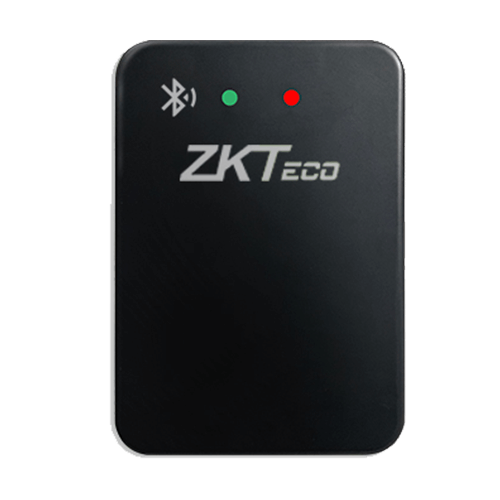
What the VR10 Pro Does in a Vehicle Entrance System
The VR10 Pro is a radar-based presence sensor for parking barriers, not an RFID credential reader. Its job is to detect vehicles, motorcycles, trucks and pedestrians near the barrier gate so the connected barrier logic can react to what is physically in the lane.
That distinction is important for procurement. A long-range UHF reader identifies a tag or credential; the VR10 Pro instead monitors an adjustable detection area. In a typical barrier deployment, the sensor is linked to the barrier main board and can help prevent the boom from closing while an object remains in the protected zone. Once the lane is clear, the barrier system can follow its configured closing logic. ZKTeco positions the unit as an alternative to conventional loop-detector approaches where a surface-mounted radar can simplify certain installation scenarios.
The hardware works at 79GHz and offers a 1 to 6 metre adjustable detection distance. Bluetooth supports nearby mobile configuration through the Radar Assistant application, while RS485 provides a wired service path and the relay interface supports integration with the barrier system. The enclosure is rated IP67 and the published operating temperature range is -40°C to 85°C, giving integrators a wide environmental envelope to work within. The manufacturer also specifies support for straight boom applications, so barrier type should be confirmed before ordering rather than assumed from the model name alone.
For UAE businesses, the practical value is less about adding another device to the entrance and more about improving how the vehicle lane is sensed. Offices, residential compounds, warehouses, factories, logistics yards, commercial parking areas and managed properties may use radar detection as part of a broader entrance-control design. FourTeck can review the intended lane, barrier model, boom type, power availability, wiring route, mounting position and integration objective before preparing a quote. This helps the buyer order the correct sensor and supporting components for the actual site instead of selecting only by product name.
Why Radar Detection Can Matter at a Barrier Gate
The strongest reason to consider this sensor is operational control around the boom area: it gives the barrier system a configurable way to detect physical presence without relying on a buried induction loop.
Keep the boom decision tied to what is actually in the lane
When linked with the barrier main board, radar presence information can help prevent the boom from closing onto a vehicle, obstacle or person within the configured detection zone. This is especially useful where lane traffic includes different vehicle sizes or where people may occasionally cross close to the barrier. The result is not a claim of eliminating every risk; correct positioning, configuration and barrier logic still matter. The benefit is that the gate controller receives a dedicated sensing input designed around the movement area it is protecting.
Reduce dependency on pavement cutting
A radar sensor can be mounted without cutting a detection loop into the driveway. For existing facilities, finished parking decks or sites where trenching is disruptive, this can make project planning simpler. Cabling and mounting still require attention, but the sensing method may reduce civil work compared with traditional loop installation.
Tune the detection zone to the lane
The 1 to 6 metre adjustable range gives installers room to match the sensing area to the physical entrance rather than accepting one fixed distance. That matters in narrow parking ramps, warehouse gates and visitor lanes where adjacent traffic or nearby objects should not unnecessarily influence the barrier.
Configure locally by phone or wired link
Bluetooth with Radar Assistant gives technicians a practical onsite method to review settings from a supported mobile device. RS485 adds a wired communication option for PC-based service and debugging. Having both paths can make commissioning and maintenance more flexible for integrators.
Plan for exposed entrance areas
The IP67 enclosure and published -40°C to 85°C operating range give designers clear environmental limits for outdoor or semi-outdoor gate locations. Site design should still consider direct impact, mounting stability, cable protection, water paths and the barrier manufacturer’s own environmental requirements.
Low sensor power demand
With published consumption of no more than 2.5W and a 10V to 16V DC supply requirement, the radar itself is a low-power component in the entrance system. The main procurement task is ensuring a suitable and stable supply, correct grounding and wiring rather than budgeting for significant operating energy.
The Technical Points That Change the Buying Decision
For most buyers, the important facts are the sensing method, adjustable distance, barrier compatibility and how the unit is commissioned. Those are the details that determine whether the device fits the lane and the maintenance workflow.
The radar operates at 79GHz and detects vehicles and pedestrians around the barrier. The published adjustable detection distance is 1 to 6 metres. ZKTeco lists Bluetooth, RS485 and relay interfaces, with Radar Assistant used for supported mobile configuration. The manufacturer’s datasheet also notes straight-boom support and a maximum vehicle speed of 15 km/h for the application. Buyers should therefore treat lane speed and boom style as design inputs, not afterthoughts.
VR10 Pro Specifications for Procurement Review
The table below consolidates manufacturer-published values relevant to the product. Final installation details such as cable type, barrier board terminals, mounting position and required accessories should be checked against the actual barrier and site.
| Specification | Published value | Buyer note |
|---|---|---|
| Brand | ZKTeco | Vehicle management / entrance control |
| Model | VR10 Pro / VR10 in parameter table | Confirm exact supply reference on quotation |
| Product type | Radar sensor for parking barrier | Detects physical presence; not a tag credential reader |
| Detection distance | 1 m to 6 m, adjustable | Match to lane geometry and boom area |
| Working frequency | 79GHz | Radar sensing platform |
| Working voltage | DC 10V to 16V | Confirm barrier cabinet power source |
| Working current | 0.2A | Use correct power and cable sizing |
| Power consumption | ≤ 2.5W | Low-power sensing component |
| Transmitter output | 12.5dBm | Manufacturer value |
| Antenna gain | 10dBi | Manufacturer value |
| Interfaces | Bluetooth, RS485, Relay | Review integration path before installation |
| Dimensions | 107.5 × 73.2 × 18 mm | Compact surface-mounted form |
| Package dimensions | 166 × 94 × 97 mm | Useful for logistics planning |
| Net weight | 228.4 g | Lightweight device |
| Operating temperature | -40°C to 85°C | Site conditions still require review |
| Protection rating | IP67 | Plan cable and mounting protection appropriately |
| Supported application | Radar Assistant | Bluetooth mobile configuration |
| Barrier note | Supports straight boom | Confirm the exact barrier model |
Choosing the correct configuration is mostly an integration exercise rather than a choice between many VR10 Pro hardware variants. Start by confirming the barrier model and boom style, because the sensor must work with the gate’s control inputs and physical lane arrangement. Next, measure the detection zone from the planned sensor position and make sure the required coverage falls within the adjustable 1 to 6 metre range. Verify that the barrier cabinet can provide suitable 10V to 16V DC power and that a clean wiring route is available for the relay or RS485 connection. For a retrofit, ask whether the existing loop detector is being replaced completely or whether radar will work alongside other safety inputs. Finally, consider how technicians will commission and maintain the system. Bluetooth configuration through Radar Assistant is convenient near the gate, while RS485 may be preferred for wired servicing. FourTeck can review these points with the site team before quotation.
Configuration and Buyer Guidance
The highest-risk buying mistake is treating the radar as a universal accessory. It should be selected as part of a specific barrier system, with lane geometry, control logic, power and service access confirmed in advance.
Which barrier and boom will the radar work with?
Share the barrier brand, model, control-board information and boom type. ZKTeco documentation specifies straight-boom support, so buyers using folding, fence or other boom formats should not assume compatibility. The control board must also have a suitable integration method for the radar signal.
How large is the detection zone?
Measure the actual area that must remain protected when the boom is open or preparing to close. The adjustable 1 to 6 metre range is useful, but the sensor should not be set simply to the maximum. Adjacent lanes, parked vehicles, walls and pedestrian routes can influence the best setting.
Is power and wiring available?
Plan for DC 10V to 16V power and the required control wiring. The radar may be physically small, but poor cable routing, incorrect power, loose terminations or exposure to mechanical damage can undermine an otherwise sound installation.
What traffic actually uses the lane?
Consider cars, motorcycles, delivery vans, trucks and pedestrian crossover. Also note the expected approach speed; the datasheet states a maximum vehicle speed of 15 km/h for the application. High-speed approaches need separate design attention rather than only a longer detection setting.
Who will commission and maintain it?
Decide whether technicians will use Radar Assistant through Bluetooth, RS485 from a PC or both. This affects service workflow and should be documented for future maintenance teams, especially in multi-site deployments.
For a useful quotation, send FourTeck the required quantity, barrier brand and model, boom type, lane width, planned mounting point, expected vehicle mix, available power, preferred integration method, delivery location and target project date. If this is a retrofit, add photos or a simple diagram of the current barrier cabinet and detector layout where possible.
Where This Radar Sensor Fits Best
The VR10 Pro is most relevant where a controlled barrier lane needs reliable presence detection close to the boom and where installers want a radar-based approach instead of, or as part of a design replacing, a ground loop.
Commercial parking entrances and exits
Office towers, mixed-use buildings, shopping facilities and managed parking areas often need the barrier to remain open while a vehicle is still crossing the boom zone. A radar sensor can provide the presence input needed for this safety logic without installing a buried loop. The site team should still confirm lane width, barrier controller compatibility, approach speed and the location of pedestrians or adjacent lanes before selecting the detection distance.
Residential compounds
Apartment, villa and community entrances can combine credential recognition with radar presence detection. The credential system decides who may enter; the radar helps the barrier system know whether a vehicle or pedestrian remains in the sensing zone. This separation of functions can produce clearer system design than asking one device to handle both identification and physical presence.
Warehouses and logistics yards
Loading facilities may see cars, delivery vehicles and heavier traffic sharing access points. The radar’s ability to detect different vehicle categories is useful near controlled gates, provided the lane speed is kept within the application design and the mounting location is chosen to avoid interference from parked equipment or parallel traffic.
Industrial and factory entrances
Industrial sites often prefer surface-mounted equipment when cutting established pavement is undesirable. An IP67 radar sensor can fit this type of entrance, but the broader environment still matters: cable protection, vehicle clearance, impact risk, dust, wash-down practices and nearby metal structures should all be reviewed during design.
Retrofit barrier projects
A retrofit is often where radar becomes most attractive because it may reduce civil work compared with installing or replacing a loop detector. The integrator should first determine why the existing system is being changed, whether the barrier board can accept the radar output, and whether the sensor can be mounted with a clear and stable view of the required zone.
Visitor and controlled service lanes
Visitor entrances, hotel driveways and service gates may have stop-and-go traffic near a guard post. Radar detection can complement intercom, access control, ANPR or UHF identification systems by providing a separate presence signal at the boom. The complete workflow should be designed so that access permission and safe barrier movement are treated as different functions.
VR10 Pro + Adjustable 79GHz Radar Detection
The 1 to 6 metre adjustable zone is the feature that most directly affects whether the sensor fits a specific entrance. It allows installers to set the detection distance around the boom area rather than accepting a fixed reach. That flexibility can help in narrow parking ramps, single-lane entrances, warehouse gates and retrofits where the mounting point is dictated by the existing barrier cabinet.
The key is to treat adjustment as a commissioning task, not a marketing number. A longer zone is not automatically better. If the range extends into an adjacent lane or catches vehicles waiting where they should not influence the barrier, the system may stay open unnecessarily. If it is set too short, the protected area may not cover the full boom crossing. Site testing with the actual traffic pattern is therefore part of a professional deployment.
VR10 Pro + Bluetooth and RS485 Configuration
Commissioning is easier when the installer has more than one service path. The radar supports Bluetooth communication for the Radar Assistant mobile application and RS485 for wired communication. Through the supported app, technicians can work with settings such as detection distance and other radar parameters while standing near the gate, which can shorten the feedback loop between adjustment and real-world testing.
RS485 remains useful when a wired service connection is preferred or when the commissioning workflow is PC-based. This dual approach matters to organizations with internal facilities teams because it gives them a clearer maintenance strategy: local mobile access for quick onsite tuning and a wired path for structured service. It is still important to control who may adjust the device and to document the final settings after commissioning so later maintenance does not unintentionally change the protected zone.
VR10 Pro + Barrier Safety Integration
The business value of the radar comes from how its detection signal is used by the barrier controller. ZKTeco describes linkage with the barrier main board so the system can help prevent the boom from striking a vehicle, obstacle or passer-by and can support automatic closing once the area is clear. That makes integration logic as important as the sensor itself.
A buyer should therefore avoid evaluating the sensor in isolation. The barrier controller must be compatible with the required input, the boom should match the supported application, and commissioning should test the full cycle: approach, stop, crossing, lingering in the zone and clearing the lane. Where ANPR, UHF tags, ticketing or guard control are also present, those systems should authorize access while the radar handles physical presence. Separating those responsibilities helps make fault-finding easier and reduces ambiguity about why the boom opened or remained open.
What Buyers Should Check Before Purchase
The biggest purchase risk is assuming that any parking barrier can accept the radar and that a longer detection range automatically improves performance. Correct fit depends on the barrier controller, straight-boom application, lane geometry, approach speed, power, wiring and the exact area that must remain protected.
Configuration Fit
Confirm the barrier model, boom type and sensing distance before requesting a quote. The official documentation states support for straight booms and an adjustable 1 to 6 metre detection distance. If the site has a folding boom, fence boom, unusually wide lane or fast-moving approach, ask for a compatibility review rather than assuming the same setup will apply.
Compatibility Check
Review the controller terminals, relay logic, available 10V to 16V DC supply and cable path. Decide whether Bluetooth configuration, RS485 servicing or both are required. For a retrofit, identify the existing loop detector or safety sensor and document whether it will be removed, retained as a secondary input or replaced by the radar.
Availability and Warranty
Ask for current availability, expected sourcing route, delivery timing and warranty terms for the supplied unit. These commercial details can change by supplier, project quantity and destination. FourTeck can provide current guidance when preparing the quote; the page does not assume ready stock or a fixed warranty period.
Quote Preparation
Provide quantity, barrier model, boom style, lane dimensions, traffic type, expected approach speed, available power, mounting location, project city and required date. For multi-lane projects, state how many barriers need radar sensing and whether installation or commissioning assistance is expected. These details help separate a simple product supply request from a full entrance-control requirement.
Also consider long-term service. Decide who will retain the Radar Assistant access, who may change parameters, where commissioning settings will be documented and how replacement units would be configured if the sensor is changed later. A good purchase plan covers not only installation day but also maintenance, barrier upgrades and future lane changes.
UAE Availability and Service Support
FourTeck supports product inquiries in Dubai and across the UAE with selection guidance, configuration review, quote assistance, delivery coordination and warranty guidance. Availability can vary with supplier status, order quantity and project timing, so current supply should be checked when the requirement is active rather than assumed from a catalog listing.
Selection support
FourTeck can review whether the radar fits the barrier, boom type, lane dimensions and traffic pattern. This is particularly useful for retrofits, multi-lane entrances and projects combining radar with UHF, ANPR or other access technologies.
Delivery coordination
Buyers can request current lead-time and delivery guidance for their required quantity and location. Project schedules should allow time for compatibility confirmation, accessory planning and site readiness in addition to product sourcing.
Warranty guidance
Warranty coverage can depend on the supplied channel and commercial terms. FourTeck can clarify the applicable guidance with the quotation so procurement teams understand the support path before issuing an order.
Support for Dubai, Abu Dhabi, Sharjah and Ajman Projects
Businesses in Dubai, Abu Dhabi, Sharjah, Ajman and other UAE locations can contact FourTeck for vehicle entrance-control product assistance. The request can be as simple as a quantity and delivery location for a known replacement sensor, or as detailed as a multi-lane project requiring a review of barrier type, detection distance, power and integration. For new installations, sharing the proposed barrier model and lane plan helps identify compatibility issues before equipment reaches the site. For retrofits, photos of the barrier cabinet and existing detector wiring are often more useful than a long written description. FourTeck can also help buyers consider related access-control components when the requirement extends beyond radar sensing, including barrier systems, UHF identification, ANPR and integrated entrance-control solutions. The goal is to provide a quotation that reflects the actual deployment rather than treating every vehicle gate as an identical application.
GCC and Africa Availability
FourTeck also supports business technology inquiries across selected GCC and Africa markets through regional inquiry channels. Customers in Saudi Arabia, Qatar, Oman, Kuwait, Bahrain, Kenya, Uganda and other markets can request product and project assistance, but supply route, delivery options, warranty handling and configuration support may differ by country.
For a radar sensor used with a parking barrier, regional buyers should include the barrier model, electrical supply, required quantity and site conditions with the inquiry. This makes it easier to check whether the same configuration can be supplied across multiple facilities. Organizations rolling out a standardized gate design in several countries should also document commissioning settings and barrier-board mapping so future replacements remain consistent.
Other Options Buyers May Consider
The right alternative depends on whether the project needs presence detection, vehicle identification or a complete barrier system. These are different functions and should not be substituted for one another without reviewing the full entrance design.
Complete CCTV and access-control system review
Choose this route when the requirement includes barriers, vehicle identification, cameras, access credentials, visitor management or multiple security layers rather than only a replacement radar sensor. FourTeck can review the entrance as one system so control logic and supporting infrastructure are considered together.
ZKTeco VR30
Consider the VR30 family when the design calls for a different long-distance vehicle-management radar option. Final capability and barrier fit should be checked against the current ZKTeco documentation before selection.
ZKTeco UHF5 Pro / UHF10 Pro
Use a UHF reader when the requirement is to identify authorized vehicle tags from a distance. UHF identification and radar presence detection solve different problems and may be used together in a complete parking entrance.
ZKTeco parking barriers
For a new entrance rather than a sensor retrofit, review the barrier, boom, controller and detection device as one package. The correct combination depends on lane width, opening speed, duty cycle and access workflow.
ANPR-based vehicle access
Automatic number plate recognition can identify vehicles by plate rather than by tag. Radar may still be used for presence detection, depending on the final barrier design and controller logic.
Why Business Buyers Contact FourTeck
Vehicle entrance products sit at the intersection of physical security, electrical installation and access-control logic. FourTeck’s role is to help procurement teams turn a model request into a workable requirement by checking the practical details that influence the order.
For project buyers, this approach also helps with standardization. If several entrances need the same sensing method, the team can document mounting position, parameter values, wiring logic and maintenance ownership so future installations follow the same design. For a single replacement unit, the process can be much simpler: confirm the existing model, controller connection and required quantity. FourTeck can scale the buying discussion to the complexity of the actual requirement.
VR10 Pro Buyer FAQs
What is the VR10 Pro used for?
It is a 79GHz radar sensor used around a parking barrier to detect vehicles and pedestrians in an adjustable 1 to 6 metre zone. When integrated with the barrier controller, the detection signal can help prevent the boom from closing while something remains in the protected area. It is a presence-detection device rather than an RFID credential reader.
Can it replace a ground loop detector?
It can be considered as a radar-based alternative in suitable barrier applications and may reduce the need for pavement cutting associated with loop installation. Whether it should replace an existing loop depends on the barrier controller, lane design, safety logic and site requirements. A retrofit should be reviewed before removing existing detection hardware.
Does the radar read vehicle tags or license plates?
No. Its primary function is physical presence detection near the barrier. If the project needs to identify authorized vehicles, use a suitable UHF reader, ANPR camera, ticketing system or another access-control method. The radar can complement those technologies by telling the barrier system whether the lane is still occupied.
How is the detection distance configured?
ZKTeco specifies an adjustable range from 1 to 6 metres. The Radar Assistant application can connect through Bluetooth for supported parameter settings, and RS485 provides a wired service option. The correct distance should be established during commissioning by testing the actual boom area and nearby traffic rather than selecting the longest range by default.
Is the sensor suitable for outdoor barrier locations?
The published enclosure protection is IP67 and the operating temperature range is -40°C to 85°C. These specifications support demanding environments, but installation quality still matters. Mounting stability, cable glands, impact protection, drainage, power quality and the environmental limits of the connected barrier should all be considered in the complete design.
Which barrier boom types are supported?
The manufacturer documentation for this model specifies support for straight booms. If the site uses a folding, fence, articulated or other boom style, compatibility should be checked before purchase. Also confirm the barrier controller input and operating logic, because physical boom compatibility alone does not guarantee a complete electrical integration.
What information should I send for a quote?
Send the required quantity, barrier brand and model, boom type, lane width, planned sensor position, vehicle types, expected approach speed, available power, delivery location and target date. If installation or commissioning support is needed, state that as well. For retrofits, photographs of the barrier cabinet and current detector wiring can make the review much more accurate.
Is ZKTeco VR10 Pro available in Dubai?
FourTeck can check current Dubai and UAE availability for the required quantity and project timing. Supply status can change, so the product should not be treated as guaranteed stock unless the sales team confirms it for the specific request. Buyers can also ask for delivery coordination and related entrance-control components in the same quotation.
Can FourTeck help with installation planning?
FourTeck can help review the practical installation requirements, including barrier compatibility, power, wiring, detection distance and integration expectations. The level of support depends on the project scope. If the requirement covers a complete gate, access system, UHF reader, ANPR or CCTV integration, share that early so the quotation can reflect the wider system rather than only the radar sensor.
What should be documented after commissioning?
Record the sensor mounting position, configured detection distance, wiring terminals, barrier controller mapping, service method and any relevant app settings. This makes future troubleshooting and replacement easier, especially where several gates use the same design. Also note who is responsible for changing parameters so routine maintenance does not alter the protected zone without approval.
Need Help Matching the Radar to Your Barrier?
FourTeck can review the barrier model, straight-boom application, detection distance, power, wiring, project quantity and delivery location before preparing a quote. This is useful for both new vehicle-gate projects and replacements where the existing sensor or loop detector is being changed.
Share these details:
- Barrier brand and model
- Boom type and lane dimensions
- Required quantity and delivery location
- Available power and integration method
- Target project date and support expectations