

D-Link DVX-8000/M/E IP Telephony System in Dubai, UAE
Build a structured business calling environment with a modular SIP-based IP PBX designed to connect users, departments, branch workflows and legacy telephone services. FourTeck helps UAE buyers review the correct DVX-8000/M/E configuration, telephony interfaces, endpoint requirements, deployment scope and commercial options before purchase.
Quick Product Information
D-Link
DVX-8000/M/E
Modular SIP IP telephony system
Two 10/100/1000 Mbps interfaces
Up to 32 ports, based on configuration
SIP
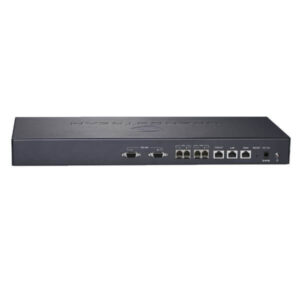
19-inch 2U chassis
Contact FourTeck for current options
Product Overview
The DVX-8000/M/E is a business communications platform for organisations that want to manage telephone extensions, incoming and outgoing call routes, voicemail, conferencing, user services and mixed line technologies from a central system. Rather than treating voice as a separate island, the appliance uses SIP and Ethernet connectivity to place telephony within the wider business network. This approach can simplify extension management, support IP handsets and softphone-style users, and create a clearer path for businesses that still need analogue, ISDN or carrier interfaces alongside IP calling.
Its modular design is particularly valuable in environments where the telephone infrastructure cannot be replaced in a single phase. A hotel may retain analogue room phones while moving administration teams to IP handsets. A hospital may need controlled integration between wards, offices, reception and external lines. A corporate office may require operator functions, call groups, personal extensions, conferencing and voicemail delivery while maintaining selected legacy connections. Because the exact capabilities depend on the installed telephony modules and software configuration, the purchasing process should begin with a requirements map rather than a model-only request.
D-Link lists a broad set of user and administration capabilities, including audio conferencing, call-recording access, a corporate phone book, fax-to-email, web-based faxing, instant messaging, one-number reach, mobile integration, multiple devices per user, switchboard functions, personal call logs, personal IVR and voicemail-to-email. Administrative features include IP phone provisioning, notifications, hot-desking, high-availability options, storage monitoring, disaster-recovery capabilities and a user-friendly web interface. These functions can help an organisation create a more consistent experience for callers and employees while reducing dependence on separate tools for common voice workflows.
For Dubai and UAE projects, FourTeck can help clarify whether the system is appropriate for the expected extension count, concurrent calls, trunk connections and endpoint mix. The review can also cover rack space, network readiness, VLAN planning, quality-of-service requirements, power protection, backup strategy, gateway modules and implementation responsibilities. This pre-purchase work is important because an IP PBX is not simply a standalone box; it becomes part of the organisation’s network, carrier service, user workflow and continuity plan.
Key Business Benefits
Hybrid Migration
A modular interface strategy lets businesses preserve useful legacy lines or analogue endpoints while introducing SIP extensions and IP phones in controlled stages. This can reduce disruption during a communications refresh.
Centralised Call Control
Extension rules, call routing, voicemail, directories and user services can be administered from one platform, giving IT teams a more consistent way to manage everyday telephony requirements.
User Productivity
Features such as one-number reach, mobile integration, personal call logs, visual voicemail and voicemail-to-email help employees handle business calls from multiple working patterns and locations.
Operational Continuity
High-availability and disaster-recovery capabilities can form part of a wider continuity design. The final architecture must be planned around power, network, storage, carrier and failover requirements.
Expandable Architecture
The platform can be configured with different telephony interfaces, allowing buyers to align the chassis with present trunk requirements and future changes rather than purchasing a rigid fixed-port system.
Business Application Fit
Call groups, switchboard functions, recording access, conferencing, personal IVR and hotel integration can support reception, administration, service desks, hospitality and departmental call flows.
The practical value of these benefits depends on correct design. A system with enough extensions but insufficient concurrent call capacity may still create bottlenecks. A platform with the right software features but the wrong carrier interface may require additional gateways. FourTeck therefore recommends evaluating total call behaviour, not merely counting desk phones. Buyers should document peak inbound traffic, outbound calling, conference usage, remote users, operator positions, analogue devices, fax requirements, recording expectations and business-hour routing before approving a bill of materials.
Product Highlights
Supports standards-based IP telephony workflows and integration with suitable SIP endpoints, trunks and gateways.
Two 10/100/1000 Mbps interfaces provide the network connectivity required for administration and voice services.
Configurations can include analogue, BRI or E1/T1 options, subject to the selected model and installed modules.
A user portal can provide access to voicemail, fax, recordings, personal extension settings and call information.
Audio conferencing, corporate phone books, chat and multi-device user options support connected teams.
Web management, provisioning, monitoring, high availability and recovery features support structured operations.
The highlights should be considered as a capability framework, not a promise that every deployment includes every interface or service by default. Module selection, software version, endpoint compatibility, carrier provisioning and project configuration determine the final outcome. Buyers should request a written configuration that identifies the exact chassis, telephony cards, licences, phones, gateways, cabling, rack accessories, installation work and support scope.
Technical Specifications
| Item | Confirmed or Configuration Guidance |
|---|---|
| Brand | D-Link |
| Model | DVX-8000/M/E |
| Product category | Modular IP PBX / IP telephony system |
| Signalling protocol | SIP |
| Ethernet | 2 × 10/100/1000 Mbps |
| Analogue interfaces | Up to 32 FXO/FXS/GSM analogue ports, depending on configuration |
| Digital telephony options | Up to eight BRI ISDN ports and up to two E1/T1-class interfaces, based on module selection |
| Chassis | 19-inch, 2U rack chassis |
| Power supply | Internal |
| User functions | Voicemail, conferencing, personal IVR, call logs, mobile integration, fax and portal functions; feature availability may depend on software and configuration |
| Administration | Web-based administration, phone provisioning, notifications, storage monitoring and related management tools |
| Resilience | High-availability and disaster-recovery capabilities are listed by D-Link; final design is configuration dependent |
| Compatibility | Confirm SIP phones, trunks, gateways, carrier services, codecs and third-party applications before order |
| Warranty and lifecycle | Contact FourTeck for current supply, warranty and lifecycle guidance |
Choose the configuration by starting with external line types and internal endpoint types. Count PSTN lines, analogue extensions, fax devices, door phones, lift phones, SIP phones, operator consoles and remote users separately. Then estimate peak simultaneous calls rather than assuming all users call at once. Confirm whether recording is required, how long recordings must be retained, whether calls need to reach mobiles, and whether branch locations will connect over VPN or dedicated links. Network switches, VLANs, QoS, PoE, firewall rules, UPS capacity and cabling may be as important as the PBX itself. A complete quote should clearly distinguish included hardware from optional modules and services.
Configuration and Buyer Guidance
A successful telephony project begins with a call-flow document. Identify the main company number, department numbers, direct inward dial ranges, reception handling, after-hours rules, queues, ring groups, escalation routes and voicemail behaviour. This gives the implementation team a practical map of how callers should move through the organisation. It also helps determine whether the required workflow is simple extension calling or a more advanced deployment with operators, recordings, conferencing, hospitality functions or distributed branches.
Users and Calls
Provide total extensions, remote users, operator positions and expected simultaneous internal and external calls.
Line Interfaces
Confirm SIP trunks, analogue PSTN lines, BRI, PRI/E1/T1 or GSM integration and the number of channels required.
Endpoints
List IP phones, analogue phones, cordless units, conference phones, fax machines and special devices.
Network Readiness
Review switching, PoE, voice VLANs, addressing, internet links, VPN design, QoS, firewall policy and redundancy.
Buyers should also establish who will own ongoing administration. Some organisations need only initial configuration and user training, while others require a documented support arrangement for moves, additions, changes, backups and fault escalation. Confirm whether the existing rack has enough space and ventilation, whether a UPS is available, and whether cabling reaches every endpoint. Where the system must integrate with a hotel PMS, CRM, recording platform, paging system or door access solution, technical validation should happen before purchase. FourTeck can help collect these inputs and structure them into a practical quotation request.
Ideal Business Use Cases
Corporate Offices
Centralise reception, department extensions, direct numbers, voicemail, call transfer rules and user directories across a structured office network.
Hotels and Hospitality
Support mixed analogue and IP environments where guest-room phones, front desk operations and hotel management integration may be required.
Healthcare Facilities
Connect reception, administration, departments and selected analogue devices through controlled call routes and central management.
Education Campuses
Provide extensions for administration, departments, security, reception and shared spaces while maintaining a consistent numbering plan.
Customer Service Teams
Use call groups, recordings, conferencing and routing functions for structured handling of customer enquiries, subject to final configuration.
Multi-Site Organisations
Plan SIP-based extension connectivity between suitable locations, with network security, bandwidth, resilience and numbering reviewed as one design.
The platform is most suitable when the organisation needs more than basic dial tone. It becomes useful where call handling rules, mixed interfaces, user mobility, central administration and integration matter. However, suitability should be confirmed against current lifecycle, firmware availability, support expectations and alternative platforms. For a new long-term deployment, buyers should compare the DVX-8000/M/E with current-generation unified communications systems, especially when cloud calling, modern collaboration clients or long support horizons are priorities. FourTeck can help identify whether this model, a related D-Link solution or another business telephony architecture better matches the project.
D-Link DVX-8000/M/E Hybrid Telephony Flexibility
One of the most important characteristics of this platform is the ability to bridge different generations of telephone infrastructure. Many businesses do not operate in a clean all-IP environment. They may have analogue room phones, fax devices, emergency lines, door-entry systems or existing carrier circuits that must remain operational. A modular PBX can provide a transition layer between these assets and SIP-based users. This protects operational continuity while allowing the organisation to modernise in practical phases.
The design process should distinguish station ports from trunk ports. FXS connections typically serve analogue endpoints, while FXO ports connect analogue exchange lines. BRI and PRI-class interfaces address different digital carrier requirements. Selecting the wrong combination can lead to unnecessary gateways or unusable ports. A detailed port schedule should therefore accompany the order. It should state each line, device, extension and destination, including any spare capacity planned for growth.
Hybrid flexibility also affects support. Analogue faults, SIP registration issues, carrier signalling, network latency and power conditions require different troubleshooting skills. The implementation plan should document responsibility boundaries among the PBX supplier, network team, telecom operator, cabling contractor and internal IT department. When these boundaries are clear, faults can be isolated more quickly and changes can be controlled. FourTeck can assist buyers in organising the required information before quotation so the proposed configuration reflects the actual environment rather than a generic chassis description.
D-Link DVX-8000/M/E User Services and Call Management
Business telephony value is created by call behaviour, not only by physical ports. The system includes user-facing capabilities that can make daily communication more organised. Voicemail-to-email can reduce the need to repeatedly dial a mailbox. One-number reach and mobile integration can help selected employees remain reachable. Corporate phone books, personal call logs and extension settings give users access to useful information without routing every request through IT. Personal IVR and multiple-device support can provide more flexible handling for roles that move between desks or locations.
For administrators, call-routing rules should be designed around real workflows. Reception may need overflow destinations when lines are busy. Sales may need ring groups and timed forwarding. Support teams may need queues, recordings and escalation. Management may need assistant handling or whitelist rules. After-hours calls may need recorded announcements, voicemail or on-call mobile routing. Each workflow should be tested with normal, busy, unanswered and failure conditions before go-live.
Recording and fax functions also require policy decisions. Buyers should confirm storage capacity, retention periods, user permissions, privacy requirements and backup procedures. Fax-to-email may simplify document handling, but compatibility with the selected lines and fax usage must be tested. The user portal should be deployed with strong credentials and appropriate access controls. Training should cover common functions, emergency procedures and who to contact when a route or extension needs modification. A well-configured PBX can support productivity, but documentation and governance are essential for sustainable operation.
D-Link DVX-8000/M/E Network, Security and Continuity Planning
Voice quality depends on the underlying network. Packet loss, jitter, congestion, incorrect duplex settings, unstable internet links or poorly designed Wi-Fi can affect calls even when the PBX is healthy. Business deployments should use suitable switching, voice VLANs, QoS policies, structured cabling and monitored uplinks. Remote extensions should connect through a secure architecture, and internet-exposed SIP services should not be enabled without careful firewall, authentication and access-control planning.
Security should include strong administrator passwords, restricted management access, protected backups, controlled user permissions and review of call-routing privileges. International and premium-rate calling should be limited according to business policy. Logs should be monitored for unusual registrations, repeated authentication attempts and unexpected call patterns. Where third-party integration is used, API access should be restricted and documented. Firmware and lifecycle status should be checked as part of the purchasing decision, particularly for a platform that may have been available for many years.
Continuity planning must look beyond the PBX appliance. The design should consider UPS runtime, network switch power, carrier failover, backup internet, spare phones, configuration backups and restoration procedures. High-availability features can contribute to resilience, but they do not replace a complete architecture. Organisations should define recovery objectives and test what happens when a trunk, switch, power source or site becomes unavailable. FourTeck can help buyers identify the components and project questions that should be included in a resilient telephony proposal.
What Buyers Should Check Before Purchase
Before requesting a quote, document the complete business requirement. The model name alone does not identify the correct modules, licences, endpoints or deployment services. Confirm whether the project is a replacement, expansion, migration or spare-system requirement. State the number of employees, locations, extensions and concurrent calls. List every external line type and every analogue device. Explain whether the organisation uses direct inward dial numbers, call recording, conferencing, fax, mobile extension features, hotel integration or remote users.
Configuration Fit
Request a line-by-line bill of materials showing the chassis, telephony cards, licences, phones, gateways and accessories.
Compatibility Check
Validate carrier services, SIP trunks, endpoint models, codecs, fax, PMS or CRM integration and network security.
Availability and Warranty
Ask for current lifecycle, supply status, warranty terms, software version and support arrangements in writing.
Quote Preparation
Share floor plans, rack location, network details, line inventory, call flows, delivery location and implementation deadline.
Also verify the long-term operating cost. Include carrier charges, licences, support, replacement phones, recording storage, UPS batteries, network upgrades and administrator time. Confirm whether the quote includes installation, configuration, testing, training and documentation. Ask how backups are created and restored, and who will provide escalation after deployment. Where the exact model is unavailable or no longer appropriate, request a technically suitable alternative rather than accepting a visually similar product. FourTeck can help organise these details so the commercial proposal is aligned with the business outcome and avoids missing modules, incompatible interfaces or unclear service responsibilities.
UAE Availability and Service Support
FourTeck supports product enquiries across Dubai and the UAE with assistance for model review, configuration planning, quotation requests, delivery coordination and warranty guidance. Availability can vary according to the exact DVX-8000/M/E version, telephony modules, supplier position, order quantity and lifecycle status. Buyers should therefore request confirmation for the complete required configuration rather than assuming that every card or accessory is supplied with the base chassis.
For an accurate proposal, provide the number of extensions, concurrent calls, trunk types, analogue ports, digital interfaces, SIP phones and required applications. FourTeck can also help identify related network switches, PoE requirements, UPS protection, rack accessories and gateways that may be needed for a complete deployment. Delivery and implementation arrangements depend on project scope and destination. Warranty conditions should be confirmed against the offered item and supply channel before purchase.
Service Coverage Across the UAE
Businesses in Dubai, Abu Dhabi, Sharjah, Ajman and other UAE locations can contact FourTeck for product availability, configuration guidance and quote assistance. Support can include reviewing the required model, telephony modules, compatible endpoints, related network components and delivery details. Large projects, branch deployments and phased migration requirements can be evaluated using a structured equipment schedule. Supply and service arrangements remain subject to the selected configuration, location, quantity and current supplier information.
GCC and Africa Enquiries
FourTeck also supports business technology enquiries across selected GCC and Africa markets through regional platforms and inquiry channels. Organisations in Saudi Arabia, Qatar, Oman, Kuwait, Bahrain, Kenya, Uganda and other supported locations can submit requirements for review. Availability, delivery options, warranty handling, compatible carrier interfaces and configuration support may vary by country. Regional buyers should state the destination, electrical environment, telecom line type, endpoint count and required project services when requesting a proposal.
Visit FourTeck UAE, FourTeck Kenya, FourTeck Uganda, FourTeck Africa or FourTeck Kuwait for the relevant inquiry route.
Other Options Buyers May Consider
A telephony platform should be selected against capacity, lifecycle, integrations and support needs. Depending on the project, buyers may compare the DVX-8000/M/E with another D-Link IP PBX, a larger-capacity platform, external gateways or a current unified communications solution. The following links help buyers explore relevant categories and request assistance without forcing a direct like-for-like comparison.
D-Link Business Solutions
Explore related D-Link networking and communication products for a coordinated infrastructure design.
IP Telephony Systems
Review other PBX and unified communications choices for different user counts and deployment models.
Business Network Switches
Choose managed switching and PoE infrastructure to support phones, VLANs and network quality policies.
UPS Power Protection
Protect the PBX, switches and gateways against short power interruptions and unstable utility conditions.
Why Buyers Choose FourTeck
Assistance for organisations purchasing technology as part of an office, branch, hospitality, healthcare or enterprise project.
Review of user counts, ports, interfaces, endpoints, accessories and related infrastructure before quotation.
A structured inquiry process that helps buyers describe the complete requirement rather than requesting only a base model.
Support for arranging product delivery according to destination, configuration, supplier status and order scope.
Clarification of warranty information and offered support terms before the buyer finalises the order.
Help identifying phones, gateways, switches, UPS systems, racks and alternative platforms where required.
FourTeck’s role is to help business buyers convert a technical requirement into a practical procurement request. This is especially useful for modular products, where the base appliance does not describe the final system. By sharing call volumes, line types, endpoint counts, network details and service expectations, customers can receive a more relevant commercial response. FourTeck does not rely on unverified stock, price or partnership claims; current information should be confirmed as part of the quotation process.
Frequently Asked Questions
What is the DVX-8000/M/E used for?
It is a modular business IP PBX used to manage SIP extensions, external telephone lines, call routing, voicemail, conferencing and other communication services. It can suit organisations that need a central telephone system and may also need to retain analogue or digital telephony interfaces. The final use depends on the installed modules, software configuration, endpoints and carrier connections.
How many analogue ports can it support?
Official D-Link specifications identify configurations with up to 32 analogue FXO, FXS or GSM ports. The exact mix is configuration dependent, so buyers should specify how many exchange lines, analogue extensions and GSM channels are required. A quotation should identify each installed telephony module rather than describing only the total port capacity.
Can it work with SIP phones and SIP trunks?
The platform uses SIP, but compatibility should be verified with the exact phone models, firmware versions, codecs, carrier services and security settings. SIP is a standard, yet practical interoperability can depend on implementation details. Buyers should provide their intended endpoint and trunk information so it can be reviewed before purchase and deployment.
Is the system available in Dubai?
FourTeck accepts enquiries for Dubai and other UAE locations. Current availability depends on the required model version, modules, quantity and supplier status. Submit the complete requirement for confirmation. Avoid assuming that a base chassis includes the analogue, BRI or PRI interfaces needed for the project.
Can FourTeck help select the configuration?
Yes. Share the total users, concurrent calls, line types, analogue devices, IP phones, locations, integrations and implementation scope. FourTeck can help organise these details for a configuration review and quotation request. Final technical validation may involve the telecom carrier, network team and implementation provider.
Does it support voicemail and conferencing?
D-Link lists voicemail functions, voicemail-to-email, visual voicemail and audio conferencing among the available capabilities. Feature availability and capacity can depend on software, storage, licences and system configuration. Buyers should state the number of users, expected conference usage and voicemail retention requirements during planning.
What network preparation is required?
The network should be reviewed for switching capacity, VLAN design, QoS, cabling, addressing, firewall rules, remote-access security and power protection. IP voice quality can be affected by congestion, packet loss and unstable links. A UPS should protect the PBX and the network equipment required to keep calls operating.
Can it be used in a hotel or mixed analogue environment?
The modular interface options and listed hotel PMS integration make it relevant for suitable hospitality projects, especially where analogue room phones may coexist with IP endpoints. Compatibility with the hotel platform, room-phone requirements, billing workflow and carrier lines must be confirmed before order. A site-specific design is strongly recommended.
What warranty support is included?
Warranty terms depend on the offered product, supplier channel and country. Request written warranty information with the quotation, including duration, coverage, exclusions and the escalation process. For older product families, buyers should also ask about firmware availability, spare modules, lifecycle status and suitable replacement options.
How can a business request a quote?
Use the FourTeck contact page and provide the model, destination, quantity, user count, simultaneous calls, trunk types, required port mix, endpoint list and service scope. Attach an existing PBX inventory or call-flow diagram where available. This information helps the sales team request a more complete and relevant configuration.
Need Help Planning Your Business Telephony System?
FourTeck can help review product availability, module requirements, endpoint compatibility, network readiness, warranty guidance and delivery requirements for your UAE project. Send your line inventory and user count to begin the quotation process.
Reviews
There are no reviews yet.