
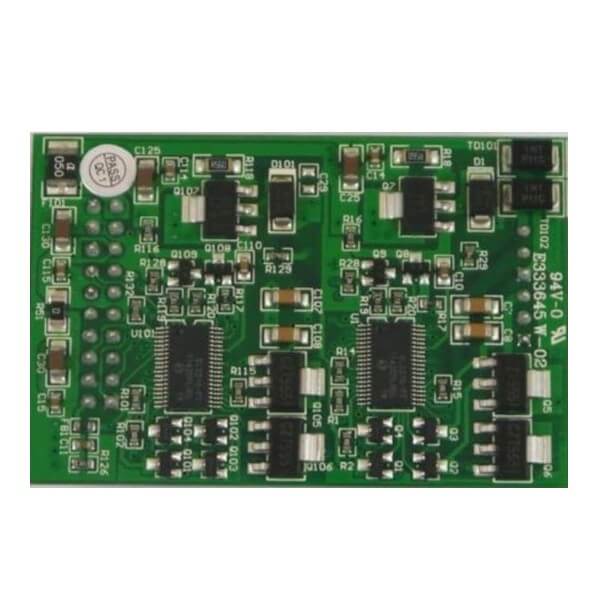
Yeastar S2 Module in Dubai, UAE
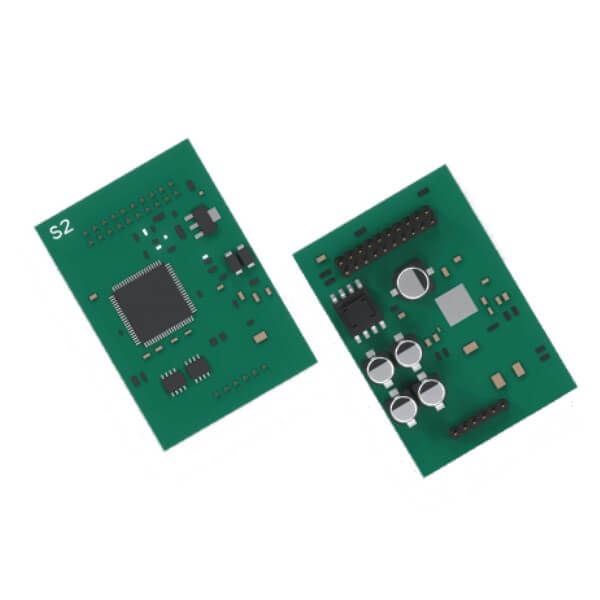
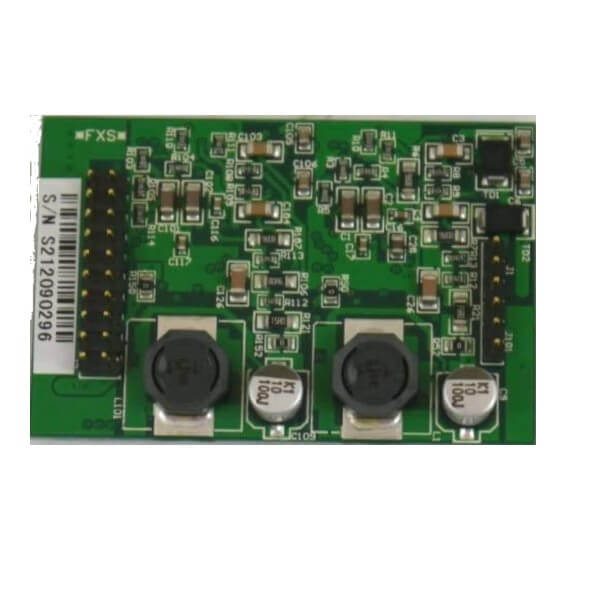
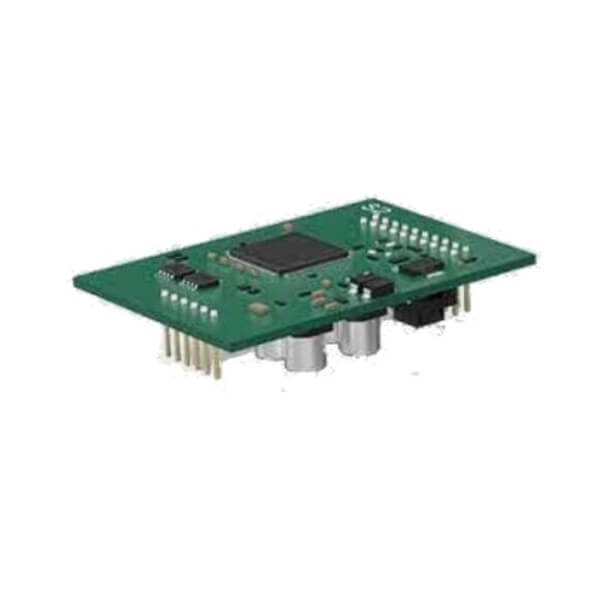
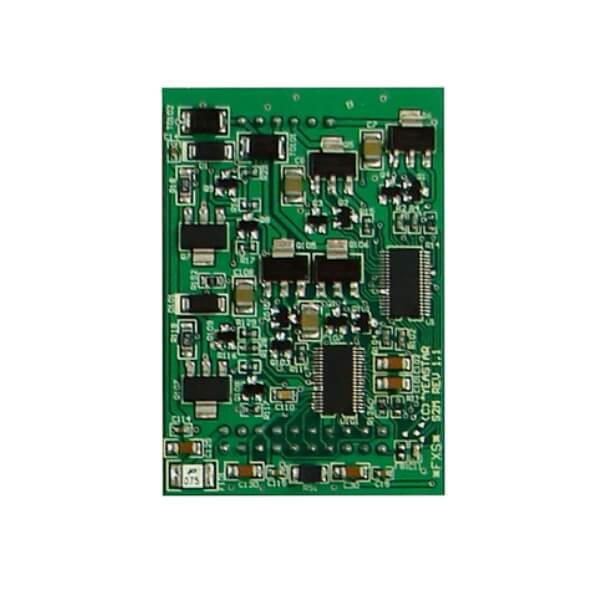
The Yeastar S2 Module is a modular two-port FXS expansion option for compatible Yeastar business PBX systems. It lets an organisation integrate two analog telephones or other supported analog endpoints into an IP communications environment without forcing an immediate replacement of every legacy device.
For UAE projects, the practical value is controlled migration: retain serviceable analog phones, fax endpoints where supported, security-desk handsets, warehouse phones, lift or service-area phones where technically appropriate, while the wider organisation standardises on IP telephony. Host compatibility, available module slots, firmware, endpoint behaviour, cabling distance and regional telecom requirements should be validated before procurement.
Procurement Snapshot
Brand: Yeastar
Model: S2 Module
Interface: 2 FXS ports
Primary role: connect analog endpoints to compatible Yeastar PBX systems
Compatibility: model and slot dependent
UAE supply: contact FourTeck for current options
Quick Procurement & Configuration Matrix
Yeastar
S2 Module
FXS telephony expansion module
Analog phone and supported fax endpoint integration
Two FXS ports per S2 module; total modules depend on host PBX
Powered through the compatible host appliance; validate platform requirements
Dubai, UAE and regional project supply coordination
Confirm current manufacturer and channel terms at quotation stage
Executive Product Architectural Overview
The Yeastar S2 Module is best understood as a bridge between two generations of business telephony. Modern organisations increasingly deploy IP-based call control, SIP trunks, softphones and network-connected desk phones, but many sites still contain analog endpoints that are operationally useful. Reception back offices, guard rooms, warehouses, workshops, remote counters, fax stations and specialised service points can remain dependent on simple two-wire analog connectivity. Replacing these devices solely because the call-control platform is being modernised can add cost, extend the migration schedule and create avoidable disruption. The S2 Module addresses that transition challenge by adding two Foreign Exchange Station interfaces to a compatible Yeastar PBX platform.
An FXS interface is the station-side analog interface that presents service to an analog telephone or compatible endpoint. In practical deployment terms, each S2 port can be associated with an extension so that an analog handset participates in the PBX dial plan. The user can continue to lift a handset, receive dial tone, call internal extensions and place external calls according to the routes and permissions configured in the PBX. This is different from an FXO interface, which is used to connect an analog public telephone line into a PBX. Buyers should therefore select the S2 when the requirement is to attach analog endpoint devices, not when the requirement is to terminate two incoming analog PSTN lines.
The module’s architectural value is its modularity. Rather than buying a separate analog gateway for a small number of endpoints, an organisation can use supported expansion capacity inside the Yeastar appliance. This simplifies the bill of materials, preserves centralised call control and can reduce the number of separately powered and managed devices in the communications rack. The exact number of S2 modules that can be installed is dependent on the host PBX model, available module slots and the rules for that platform. Older S-Series appliances and current modular P-Series appliances have different slot structures, so a quotation should always start with the precise PBX model and existing module occupancy.
For a Dubai enterprise, the design question is rarely whether analog technology is modern; it is whether retaining a limited number of analog devices is operationally sensible. In many projects the answer is yes. A staged migration may allow a headquarters to deploy SIP phones for knowledge workers while preserving analog devices in low-touch locations. A hospitality or facilities environment may keep service-area handsets. A logistics operator may retain rugged or inexpensive analog phones in selected back-of-house spaces. A clinic might need to preserve an existing analog endpoint until a wider system refresh. The S2 supports such phased approaches while keeping extension management under the PBX.
The module also matters for organisations that need a clear separation between endpoint conversion and trunk connectivity. Because the S2 provides FXS interfaces, it should be sized by the number of analog devices that need PBX extensions. Two devices normally require one S2 module; four devices normally require two modules, provided the target appliance has sufficient compatible slots and permits that module count. Larger analog estates may be better served by a dedicated analog gateway or by a broader endpoint-refresh strategy. The correct choice should be based on port quantity, physical cabling, survivability requirements, total cost, rack design, support boundaries and future migration plans rather than simply selecting the maximum number of modules.
Integration into an existing communications environment is straightforward conceptually but deserves disciplined planning. The installer must confirm the PBX model, shut down and install modules according to Yeastar hardware guidance where required, connect analog endpoints to the resulting FXS ports and create or map FXS extensions in the PBX interface. Dial plans, outbound permissions, caller identity and any fax-related settings must then be configured as appropriate. When fax traffic traverses SIP trunks, additional trunk-side considerations such as T.38 support may be relevant. These are system-level choices rather than capabilities delivered by the S2 module alone.
From an enterprise architecture perspective, the S2 is therefore a targeted compatibility component. It does not increase SIP user licensing by itself, create broadband connectivity or replace the host PBX. Its job is narrower and valuable: expose two analog station interfaces from a supported Yeastar system. That narrow scope makes accurate sizing important. FourTeck can help UAE buyers translate a device count into module quantity, check that the intended Yeastar appliance has suitable expansion capacity, identify whether an S2, SO, O2 or external gateway is the correct interface type, and coordinate a quotation based on the project’s exact deployment requirement.
Enterprise Business Value & ROI Benefits
Preserve Useful Analog Assets
When a phone or supported analog device remains fit for purpose, immediate replacement may offer little business value. Two FXS interfaces allow selected analog endpoints to remain connected while the organisation modernises the rest of its telephony estate. This can lower short-term migration cost, reduce disposal of usable devices and help project teams focus capital expenditure on areas where IP endpoints provide a measurable productivity benefit.
Phased Migration Flexibility
Large communications changes are easier to control when they can be delivered in stages. The S2 can support a transition pattern in which new departments or locations receive IP phones while specific legacy endpoints remain analog. This reduces the need for a disruptive all-at-once cutover and gives IT teams more freedom to align endpoint replacement with budgets, renovation schedules and operational windows.
Centralised Call Control
Using PBX-integrated FXS ports keeps analog users inside the same dial plan and administrative framework as other extensions. Instead of treating legacy endpoints as a separate communications island, administrators can apply extension numbers, call permissions and routing logic centrally. The result is a simpler operational model and a clearer handover for support teams.
Compact Expansion
For small analog requirements, an internal module can be more elegant than adding a standalone gateway with its own enclosure, power supply and network connection. The actual economics depend on the PBX model, number of ports and future growth plan, but the modular approach can reduce equipment count and preserve rack or desktop space.
Deployment Continuity
Facilities and operations teams often depend on simple phones in areas where replacing devices would require cabling work or user retraining. Retaining these endpoints during a PBX upgrade can keep workflows familiar while the infrastructure behind them changes. Continuity is particularly valuable in security, logistics, service and maintenance environments.
Controlled Scalability
Each S2 adds two FXS interfaces, so expansion can follow actual analog port demand rather than broad estimates. Because compatible Yeastar appliances support different numbers of modules, buyers can select a host platform with the right mix of present capacity and future headroom. Configuration validation before purchase is essential to avoid consuming slots required for other interface modules.
The strongest return from the S2 is not created by the module in isolation; it comes from avoiding unnecessary migration work while maintaining a coherent communications architecture. A two-port requirement may be solved cleanly with one module. A ten- or twenty-port analog requirement may change the economic comparison completely and justify a dedicated gateway or a broader redesign. Enterprise buyers should therefore calculate value using endpoint count, expected service life, support effort, wiring constraints, growth expectations and the cost of operational disruption. FourTeck can assist with that pre-sales comparison so the selected solution fits the actual environment rather than simply matching a part number.
Hardware & Technical Architecture Highlights
At the hardware level, the S2 is an interface module rather than a standalone PBX. Its two FXS channels are presented through a supported Yeastar host, which supplies the platform resources, call-control software, extension database, routing logic, network interfaces and system power. This division of responsibility is important for procurement: the module cannot be deployed independently and its suitability depends on the exact Yeastar appliance into which it will be installed.
An FXS port is designed to serve the subscriber-side analog device. It provides the electrical and signalling environment required by an analog telephone so that the device can behave as an extension on the PBX. When a user lifts the handset, the PBX recognises the extension state through the FXS interface and applies call-control rules. Dialled digits are interpreted by the PBX, and calls can be routed internally or through configured external trunks. Incoming calls can likewise be delivered to the analog extension according to inbound routing and ring-group logic configured on the system.
Because the S2 participates in a modular architecture, slot planning matters. Yeastar S-Series models support different numbers of telephony modules, and some platforms apply slot-specific rules. For example, the S412 includes fixed FXS ports as well as reserved module slots and documents specific positions for S2 modules. Other models use different expansion arrangements. Current P-Series modular systems also support Yeastar telephony modules on selected appliance models. Buyers should not assume that a module compatible with one chassis can be installed in any slot of another chassis without checking the installation guide.
Power, cooling and system health are managed at the host-appliance level. The S2 does not introduce an independent external power adapter in normal supported installation; instead, its power budget is part of the PBX design. This is operationally attractive because it reduces separate points of failure, but it also means the module inherits the resilience profile of the host. If communications continuity is critical, the PBX itself should be protected with suitable UPS capacity, environmental controls, configuration backup procedures and, where appropriate, redundant upstream network or trunk design.
For fax usage, buyers should distinguish between the local analog interface and the end-to-end transport path. The S2 can provide the FXS connection required for an analog fax machine on supported systems, but successful fax transmission can also depend on PBX configuration and the capabilities of the external trunk. Yeastar documents that a SIP trunk used for fax may require T.38 support. Consequently, a fax project should be tested against the exact carrier, codec, trunk and device combination rather than assuming that adding an FXS port alone guarantees reliable fax delivery.
The architecture is intentionally focused: there is no need to treat the S2 as a processor, memory or storage upgrade. It does not add user licensing or concurrent-call resources on its own. Its engineering purpose is physical telephony interface expansion. That makes module selection easy when the requirement is clearly defined and potentially confusing when it is not. FXS is for analog endpoints; FXO is for analog lines; mixed-port or BRI modules serve different interface requirements. A short discovery process before purchase prevents the most common specification mistake: ordering the correct brand and form factor but the wrong telephony interface type.
Definitive Technical Specifications & Sizing Notes
| Specification | Yeastar S2 Module |
|---|---|
| Product category | Telephony expansion module |
| Interface type | FXS |
| Port count | 2 FXS ports |
| Primary endpoint purpose | Connect two analog telephones; supported systems may also use FXS ports for analog fax machines |
| Standalone operation | No; requires a compatible Yeastar PBX platform |
| Host compatibility | Based on selected model; verify current Yeastar compatibility and slot rules |
| Module scaling | Two analog station ports per module; total module count depends on host appliance |
| S-Series documented maximum S2 modules | S412: 2; S20: 2; S50: 4; S100: 8; S300: 12, subject to overall slot and platform rules |
| Fax considerations | Configuration dependent; SIP-trunk fax may require T.38 support |
| Power source | Host appliance; validate total system power/environmental requirements |
| Warranty | Contact FourTeck for current manufacturer/channel terms |
| Availability | Contact FourTeck for current UAE options and lead time |
Sizing starts with the analog endpoint count, but it should not end there. One S2 module provides two FXS ports, so a project with one or two analog devices normally requires one module, while three or four devices normally requires two modules. The host appliance must, however, have enough compatible module positions and must support the required S2 quantity. On an existing PBX, occupied slots also need to be counted because other modules such as FXO, BRI or cellular interfaces may already consume expansion capacity.
Buyers should also identify what each analog port will connect to. Standard telephones are the simplest case. Fax devices require end-to-end validation of routing and trunk capability. Special-purpose analog equipment can have signalling, voltage, distance or compliance requirements that should be checked with the equipment manufacturer and Yeastar documentation. For any non-standard endpoint, treat compatibility as configuration dependent and plan a proof of concept where operational continuity is critical. FourTeck can use the PBX model, existing modules, endpoint types and port count to help create a more accurate bill of materials.
Configuration, Sizing & Deployment Workbench
01 — Count the Analog Endpoints
Create an inventory of every analog device that must remain connected after the PBX deployment. Separate normal phones, fax machines and any specialist endpoints. Divide the confirmed FXS endpoint count by two and round up to estimate the initial S2 quantity. This is only the starting point; the host appliance must still be checked for available and permitted module slots.
02 — Verify Host PBX Compatibility
Record the exact Yeastar PBX model, hardware generation and current module inventory. Different S-Series and P-Series appliances have different modular designs. Some systems place restrictions on the maximum number of a given telephony module or require particular module positions. Never assume compatibility based only on the Yeastar brand name.
03 — Reserve Expansion Headroom
If future FXO, BRI, cellular or other telephony interfaces may be required, avoid using every available slot solely for FXS unless that is a deliberate design choice. A small amount of expansion headroom can prevent a later chassis change. Where analog demand is large, compare internal modules with an external analog gateway instead of automatically filling all module positions.
04 — Map Cabling and Endpoint Locations
Document where each analog device is physically located and how existing copper cabling terminates in the communications room. Reusing legacy cabling can be practical, but cable quality, distance, joints, patching and environmental exposure can affect service. Confirm that the endpoint cabling can be routed cleanly to the PBX or distribution frame without creating an unsupported physical design.
05 — Define Dial Plan and Call Permissions
An FXS port becomes useful only when it is assigned to the right extension and call policy. Decide extension numbers, caller identification, internal reachability, external call permissions, emergency routing and any department-level restrictions. These controls are configured on the PBX and should be included in the deployment plan rather than treated as post-installation housekeeping.
06 — Validate Fax or Special Devices
Where a port will serve a fax machine, test the complete path from device to external destination. If the call exits through a SIP trunk, carrier capabilities and T.38 configuration may matter. For alarms, intercoms, access systems or other specialist analog equipment, obtain vendor confirmation because an ordinary analog telephone interface does not automatically guarantee compatibility with every legacy device.
07 — Plan Power and Environment
The module relies on the PBX host, so communications resilience depends on the appliance power design. Protect the PBX with appropriately sized UPS capacity where voice continuity matters. Maintain the clearances and environmental conditions stated for the host. In UAE installations, pay particular attention to stable cooling, dust control and disciplined rack or cabinet management.
08 — Prepare Deployment and Test Criteria
Define acceptance tests before installation: dial tone, internal calls, outbound calls, inbound routing where relevant, caller identification, voicemail access, fax transmission if applicable, failover behaviour at the system level and user handover. A clear test plan helps convert a small hardware installation into a controlled communications change with an auditable completion point.
Industry Use Cases & Workload Scenarios
Banking & Finance
Financial organisations may modernise office telephony while retaining selected analog sets in security posts, cash-handling back offices or low-change service areas. The S2 can help preserve those endpoints within a centrally administered PBX. Security policies, recording requirements and resilience expectations should be evaluated at the PBX and network level.
Healthcare
Clinics and healthcare facilities often contain a mix of modern and long-lived communications devices. A limited number of analog phones may remain appropriate in stores, service corridors, reception back offices or utility spaces. The module supports phased replacement while extension numbering and call routing remain under the central communications system.
Government & Public Sector
Public-sector environments can have large installed bases and strict change-control procedures. Two-port modular expansion is useful when a PBX refresh must accommodate a small number of legacy analog endpoints without redesigning an entire floor. Procurement should document compatibility, support terms and lifecycle expectations before approval.
Logistics & Warehousing
Warehouses often value simple, durable handsets in loading, dispatch, guard or service areas. If those devices remain functional, integrating them through FXS can avoid unnecessary endpoint replacement. Cabling distance, dust, temperature and enclosure conditions should be checked as part of the site design.
Retail & Hospitality
Back-office, stock-room and service-area phones may not need the feature set of a full IP desk phone. The S2 allows selected analog devices to coexist with IP endpoints, which can help align technology spend with actual user requirements. Hotels and retail operators should assess larger port counts carefully because an external gateway may be more economical at scale.
Education
Schools, training centres and campuses can retain analog phones in maintenance rooms, gates or administrative areas while deploying IP phones elsewhere. Centralised extension management keeps the communications experience consistent. The design should include UPS protection and documented emergency-calling behaviour where phones support safety workflows.
Technical Feature Deep Dive 1: Processing, Throughput & Workload Performance Architecture
The performance characteristics of the S2 are different from those of a network switch, server or SIP session border controller because the module is not the primary compute engine for the communications platform. Its role is interface conversion and station connectivity. Call processing, dial-plan interpretation, media services, user features and most management functions are executed by the host Yeastar PBX. Consequently, sizing the S2 itself is primarily a port-count exercise, while sizing overall call capacity remains a PBX-platform exercise.
Each S2 provides two analog station interfaces. If both ports are in use, the host PBX must have the call-processing capacity, trunk capacity and configured routes needed to carry those calls. Adding an S2 does not independently increase the maximum SIP users or concurrent calls supported by the host. This distinction protects buyers from a common design error: assuming that more physical ports automatically mean more system-level call capacity. A communications solution must have sufficient resources at every layer—endpoint interface, PBX call control, trunk channels and network transport.
For ordinary analog telephone workloads, the user experience is strongly influenced by the host configuration. Extension permissions determine what numbers can be dialled. Routing rules decide which trunk carries an external call. Codec and trunk settings influence media behaviour after a call leaves the analog edge. Voicemail, ring groups, queues and other business functions remain PBX services. The S2 therefore acts as a dependable access edge to those functions rather than duplicating them in hardware.
Performance planning should focus on concurrency and business context. A pair of analog phones in a security desk may frequently be idle and rarely generate simultaneous external calls. A pair of fax machines can create longer sessions and may need special transport consideration. Two analog sets in a busy reception support area may produce higher call volume. The physical port count is identical in all three cases, but the system design implications are different. Trunk channel capacity, call recording, voicemail, queueing and network uplink requirements should be calculated for the total PBX workload.
For buyers replacing an older analog PBX, the S2 also supports a useful architectural separation. Endpoint migration can happen independently of trunk migration. An organisation might move external calling to SIP trunks while keeping a few analog handsets, or it might retain selected analog trunks through appropriate FXO interfaces while gradually replacing endpoints. The S2 handles only the endpoint side, which gives solution architects freedom to select the right technology for each boundary.
Technical Feature Deep Dive 2: Security, Redundancy & System Resilience
An analog extension may look simple, but its security and availability depend on the larger PBX environment. The S2 provides physical station interfaces; user authentication, administrative access, trunk security, network segmentation and remote management controls are functions of the Yeastar platform and surrounding network. Buyers should therefore evaluate the module as one component inside a communications security architecture rather than as an independent security device.
The first control is physical access. Because the module resides in or is associated with the PBX hardware, unauthorised access to the communications rack can affect the entire system. Equipment should be installed in controlled spaces, and analog cabling should be labelled and terminated consistently. This is especially relevant when old copper pairs are reused across a building, because undocumented cabling can create troubleshooting risks and make it difficult to identify where a line physically terminates.
The second control is extension policy. An FXS extension should receive the minimum external calling privileges required for its role. A lobby phone may need internal calls and a limited set of external destinations, whereas a finance office extension may require broader access. Applying disciplined call permissions helps reduce toll-fraud exposure and makes the communications environment easier to audit. Caller identification and emergency-call behaviour should also be defined according to organisational policy and local requirements.
Resilience is primarily inherited from the host PBX and its power environment. If the PBX loses power, the S2 cannot continue operating independently. A UPS sized for the PBX, networking equipment and relevant trunk devices can therefore be more important to voice continuity than the module choice itself. Organisations with higher availability requirements should consider backup power, configuration backups, alternate trunks, redundant internet links where SIP services are used, and documented recovery procedures.
The S2 should not be confused with the Yeastar SO mixed module, which includes both FXS and FXO functionality and is associated with a PSTN fallback use case. Buyers who specifically require analog-line fallback should confirm whether a mixed-interface design or another resilience strategy is more appropriate. Selecting an S2 only because it is an analog module can leave a gap if the true requirement is trunk survivability rather than endpoint connectivity.
For operational resilience, configuration documentation is equally important. Record which physical S2 port maps to which extension, which wall outlet or endpoint it serves, and which call permissions apply. During a fault, that mapping allows support teams to determine whether the issue is at the device, copper pair, module port, PBX configuration or external trunk. A small amount of documentation can materially reduce restoration time.
Technical Feature Deep Dive 3: Remote Management, Telemetry & Infrastructure Integration
The S2 itself does not require a separate management plane. It is administered through the Yeastar PBX environment, which means extension configuration and call-control settings remain centralised. For operations teams this is often preferable to deploying a standalone analog gateway for only one or two endpoints, because there is no extra network address, separate firmware lifecycle or independent set of administrative credentials for the module.
After installation, an administrator creates or configures an FXS extension and associates it with the relevant FXS span or port. The extension can then participate in the PBX feature set according to the host model and software version. The exact management interface varies across Yeastar product generations, so procedures should follow the documentation for the installed appliance. The key architectural point is consistent: the analog endpoint becomes a managed extension inside the PBX rather than an isolated line.
Telemetry should be considered at the system level. Yeastar S-Series environments expose system and call information that can assist administrators in understanding call volumes, system status and hardware or firmware identity. The module’s value within that framework is that analog calls are processed as part of the PBX environment, allowing support teams to troubleshoot from the central system rather than relying only on physical line testing. Exact monitoring capabilities depend on model and firmware.
Infrastructure integration also includes configuration backup and change control. Before installing a module in an established PBX, back up the system configuration according to Yeastar guidance. Document the current slot arrangement, planned port assignments and rollback procedure. After the hardware is installed, create extensions, apply permissions and perform acceptance tests. This staged approach is especially valuable in enterprises where telephone downtime affects front-desk operations, logistics coordination or customer service.
Remote administration can reduce support travel, but it should be implemented securely. Avoid exposing PBX management interfaces directly to the public internet without appropriate controls. Use the secure remote-management mechanisms supported by the deployed platform, maintain strong administrative credentials and restrict access to authorised support personnel. The S2 does not change these principles; it simply extends the number of endpoint types managed by the PBX.
For multi-site organisations, standardisation is another management benefit. If multiple branches use compatible Yeastar appliances and a small number of analog endpoints, the same module type can support a repeatable migration pattern. IT teams can define a standard bill of materials, port-labelling scheme, extension policy and test procedure. That repeatability reduces deployment variance while still allowing each branch to retain the analog devices that have a legitimate operational role.
What Buyers Should Check Before Purchase
The highest procurement risk with telephony modules is not product quality; it is interface mismatch. Confirm whether the project needs FXS endpoint ports, FXO trunk ports, a mixed module or a larger external gateway. Then confirm that the exact host PBX supports the chosen module and has sufficient compatible slots.
01 / FIT: Configuration Fit & Model Sizing
Start with the Yeastar appliance model and number of analog endpoints. Two endpoint ports equal one S2 module, but the maximum practical quantity depends on the host. Check existing telephony modules, future expansion needs and whether the analog requirement is small enough for internal modules to remain the most efficient design.
02 / MATCH: Compatibility & Environmental Requirements
Identify whether the attached devices are ordinary analog telephones, fax machines or specialist equipment. Standard telephones are the baseline use case. Fax and specialist devices require additional compatibility checks. Also review copper cabling, connector presentation, equipment-room cooling, dust conditions and UPS coverage for the host PBX.
03 / TERMS: Availability, Delivery & Warranty Terms
Module availability and warranty terms can vary by channel and date. Request a formal quotation that identifies the exact model, quantity, delivery destination, warranty guidance and any required host appliance or accessories. For project rollouts, state whether delivery is needed in one shipment or phased by site.
04 / REQUEST: Quote Preparation Data Needed
Provide the PBX model, current module layout if known, analog endpoint count, endpoint types, quantity of S2 modules requested, UAE delivery location and target deployment date. If the PBX is not yet selected, provide total users, concurrent-call estimate, trunk type and analog port requirement so the module can be sized in context.
Buyers should also check lifecycle alignment. If an older S-Series appliance is already near the end of a planned refresh cycle, investing heavily in additional modules may not be the best long-term approach. A current-generation Yeastar PBX or external gateway could provide a cleaner path. Conversely, if the existing PBX remains supported and only two more analog stations are required, an S2 module may be the simplest and most economical extension. Procurement decisions should consider the remaining life of the host system, not only the price of the module.
Another gap is cable assumptions. FXS interfaces reuse analog-style station wiring, but a project should still verify the physical route and termination quality. Old cabling can contain undocumented splices, cross-connects or pairs that have been repurposed. A pre-installation cable check prevents a good module from being blamed for a field-wiring fault. For critical analog devices, label both ends of the pair and keep an updated port map.
UAE Regional Availability & Service Ecosystem
FourTeck supports UAE buyers with sourcing coordination, configuration validation and quotation assistance for Yeastar telephony projects. For an S2 requirement, the most useful information is the host PBX model, number of analog endpoints, current module layout, quantity and target delivery date. This enables the quotation process to focus on a technically appropriate configuration rather than a generic part request. Current availability, warranty terms and delivery commitments should be confirmed at order stage.
K1. Dubai Supply & Logistics Support
Dubai businesses can request Yeastar S2 supply for office, retail, hospitality, warehouse, education and service environments. Delivery coordination can be aligned with mainland or Free Zone project schedules, subject to order terms and site-access requirements. For larger PBX deployments, FourTeck can help review module quantities and host compatibility before the purchase order is finalised, reducing the risk of receiving modules that cannot be fitted into the intended chassis.
K2. Abu Dhabi & Al Ain Logistics Reach
For Abu Dhabi and Al Ain projects, FourTeck can coordinate quotations and supply planning for corporate, government, industrial and institutional environments. Buyers should provide site count, PBX model, analog port quantity and deployment timeframe. Where an organisation has multiple branches, module requirements can be grouped into a standard configuration while still accounting for different endpoint counts at each site.
K3. Sharjah & Northern Emirates Logistics Infrastructure
Sharjah and Northern Emirates customers can request project pricing and delivery coordination for Yeastar telephony components. Industrial and logistics sites frequently have mixed endpoint environments, making pre-sales validation particularly useful. Before ordering, identify which analog devices must remain and whether their cabling returns to the PBX location. That information helps separate a straightforward module requirement from a broader cabling or gateway project.
K4. Ajman & Surrounding Emirates Logistics Coverage
Ajman businesses can use the S2 to extend compatible Yeastar systems where only a small number of analog extensions are needed. FourTeck can assist with current availability checks at quotation stage, delivery coordination and technical pre-sales guidance. For projects spanning several Emirates, provide a site-by-site quantity so logistics and configuration can be planned consistently.
GCC & Pan-African Supply Chain Reach
FourTeck can coordinate regional technology supply inquiries beyond the UAE, subject to destination, product availability, export requirements and commercial terms. Cross-border projects benefit from a clear bill of materials, consistent model naming and early confirmation of import or customs documentation. For Yeastar module projects, configuration should be validated before dispatch because compatibility errors are more expensive to resolve after international shipment.
L1. Saudi Arabia (KSA) Export & Supply Support
Saudi enterprise and system-integration projects can submit the intended Yeastar PBX model, module quantity and site plan for quotation routing and configuration validation. Delivery, taxes, customs and project documentation depend on the transaction structure and should be confirmed as part of the formal offer.
L2. Qatar Market Supply Reach
Qatar buyers can request sourcing and project quotation support for S2 modules and related Yeastar components. For branch deployments, a consolidated equipment schedule can help maintain consistent host and module combinations across sites while simplifying spares planning.
L3. Oman Regional Distribution Support
Oman customers can request hardware procurement guidance and quote coordination for analog-extension requirements on compatible Yeastar systems. A pre-shipment compatibility check is recommended, especially where an existing PBX already contains other telephony modules.
L4. Kuwait Supply Chain Coverage
For Kuwait project inquiries, FourTeck can coordinate module sourcing, configuration review and export supply discussions based on the customer’s host platform and required port count. Visit FourTeck Kuwait for regional contact routing.
L5. Kenya & East Africa Supply Infrastructure
Kenyan system integrators and enterprise buyers can request regional supply coordination for Yeastar modules and PBX components. Accurate part lists, expected site quantities and deployment dates help align sourcing with project schedules. Visit FourTeck Kenya for regional inquiries.
L6. Uganda Regional Procurement Support
Uganda buyers can submit project requirements for telephony sourcing, quotation support and delivery coordination. For analog migration projects, include both the existing PBX model and the planned number of retained analog endpoints. Visit FourTeck Uganda.
L7. Pan-African Regional Logistics & Trade Reach
Multi-country African technology projects can require consolidated sourcing, standardised part selection and controlled shipment planning. FourTeck can discuss regional supply requirements through FourTeck Africa and FourTeck. Import requirements, duties, delivery times and local compliance remain destination dependent.
Related FourTeck Products & Compatible Alternatives
Yeastar O2 Module
Choose the O2 when the requirement is two analog PSTN line interfaces rather than two analog station ports. It is an FXO module, so its function is materially different from the S2.
Yeastar SO Module
Consider the SO when one FXS port and one FXO port are needed in the same module. It is suited to mixed analog endpoint and line requirements and is associated with a PSTN fallback use case on supported systems.
Yeastar B2 Module
The B2 addresses ISDN BRI connectivity rather than analog endpoint integration. Select it only when the project specifically requires supported NT/TE BRI interfaces.
Yeastar P-Series PBX Appliance
A current P-Series appliance may be a better foundation when an older PBX is being replaced rather than expanded. Model selection should consider total users, concurrent calls, telephony interface mix and future growth.
External FXS Gateway
For larger analog port counts or distributed cabling, a dedicated SIP-to-FXS gateway may be more scalable than filling internal PBX module slots. Compare total port count, resilience and support boundaries.
The correct alternative depends on which side of the telephony circuit must be connected. If the business has analog telephones, the S2 is relevant. If it has analog carrier lines, the O2 is relevant. If it needs one of each, the SO may fit. If it has ISDN BRI, the B2 addresses a different interface family. Larger analog endpoint estates should be compared with external gateway architectures, while older PBX platforms should be assessed against current-generation replacement options. This interface-first approach is more reliable than selecting modules by name or price alone.
Why Enterprises Choose FourTeck
Enterprise hardware procurement is easier when the quotation reflects the deployment rather than only the requested part number. For the Yeastar S2, FourTeck can help buyers verify whether the requirement is truly FXS, identify the host PBX model, review expected module quantity and flag when a mixed module or external gateway may be more appropriate. This pre-sales engineering approach reduces configuration mismatch and gives procurement teams a clearer technical basis for approval.
FourTeck also supports quotation coordination for UAE and regional projects. Buyers can provide a central equipment schedule with site quantities, delivery destinations and target dates, allowing the commercial offer to be structured around the project. Availability, lead time and warranty guidance are confirmed through the applicable supply channel rather than represented as fixed assumptions.
After purchase, good support begins with good documentation. Organisations should retain the product model, serial or order references where applicable, host PBX details, installed slot, port mapping and warranty records. FourTeck can help ensure the quotation and supply documentation provide a usable procurement trail for IT operations and finance teams. The objective is straightforward: supply the correct component, for the correct host, in the quantity the deployment actually needs.
Frequently Asked Questions
1. What is the Yeastar S2 Module?
The Yeastar S2 is a telephony expansion module that provides two FXS ports. Its primary purpose is to connect two analog telephones to a compatible Yeastar PBX so they can operate as extensions inside the business phone system. It is not a standalone gateway and requires a supported host appliance. Compatibility and the maximum number of modules depend on the PBX model and available expansion slots.
2. Is the S2 Module for analog phones or analog PSTN lines?
The S2 is for analog endpoint devices because it provides FXS interfaces. If the requirement is to connect analog PSTN or POTS lines into the PBX, an FXO interface is required instead, such as Yeastar’s O2 module on supported platforms. Choosing between FXS and FXO is the most important first step when specifying an analog telephony module.
3. How many analog devices can one S2 Module connect?
One S2 module provides two FXS ports and therefore supports two analog station connections. A project needing four analog station ports would normally require two S2 modules, assuming the host PBX supports that quantity and has sufficient compatible expansion slots. For higher port counts, buyers should also compare the cost and operational fit of an external analog gateway.
4. Can I connect a fax machine to the S2 Module?
On supported Yeastar S-Series deployments, an FXS extension can be used with an analog fax machine. End-to-end fax reliability also depends on the PBX configuration and external trunk. If a SIP trunk is used, Yeastar documentation notes that T.38 support may need to be enabled. Always test the exact fax device, PBX and carrier combination before relying on it for business-critical workflows.
5. Which Yeastar PBX models support the S2 Module?
Yeastar documents S2 support across multiple modular PBX platforms, including various S-Series systems and selected P-Series appliance models. The number of modules and installation rules differ by model. Because platform revisions can change over time, provide FourTeck with the exact PBX model and current module layout so compatibility can be confirmed against current documentation before ordering.
6. Does adding an S2 Module increase PBX user or concurrent-call capacity?
No. The S2 adds two physical FXS interfaces; it does not independently increase the host PBX’s licensed users or system-wide concurrent-call capacity. Overall call capacity remains determined by the PBX platform, licensing where applicable, trunks and configuration. Buyers should size physical analog ports and system call capacity as separate but related design dimensions.
7. Can the S2 Module work as a standalone analog gateway?
No. The S2 is designed as a telephony module for compatible Yeastar PBX hardware. It depends on the host system for power, call processing, extension configuration, routing and management. If the project requires a network-connected standalone FXS gateway, a dedicated SIP analog gateway should be evaluated instead of an internal S2 module.
8. How do I decide how many S2 Modules to buy?
Count the analog endpoints that need FXS ports, divide by two and round up. Then check whether the host PBX supports that number of S2 modules and whether enough expansion slots remain after other telephony modules are considered. Also reserve headroom for future interfaces if practical. FourTeck can help convert your endpoint inventory into a validated module quantity.
9. Is the Yeastar S2 Module available for delivery in Dubai and the UAE?
FourTeck can provide quotation and supply coordination for Dubai and other UAE locations, subject to current stock, channel availability, commercial terms and delivery schedule. Submit the required quantity, delivery location, host PBX model and target date. Availability should be confirmed at quotation stage because module stock and lead times can change.
10. What information should I send for a quotation?
Send the Yeastar PBX model, existing module configuration if known, number and type of analog devices, required S2 quantity, delivery location and planned deployment date. If the PBX has not yet been selected, include total users, expected concurrent calls, trunk type and required analog ports. This allows FourTeck to check the module in the context of the complete communications design.
Request a Yeastar S2 Module Quote for Dubai or UAE
For an accurate quotation, send FourTeck the Yeastar PBX model, number of analog endpoints, required module quantity, UAE delivery location and target deployment timeframe. If the PBX is already installed, include the current module layout or a clear description of occupied expansion slots. For fax or specialist analog devices, identify the endpoint type so compatibility can be reviewed before supply.

Reviews
There are no reviews yet.